Su-2 of the 210 BBAP code 2
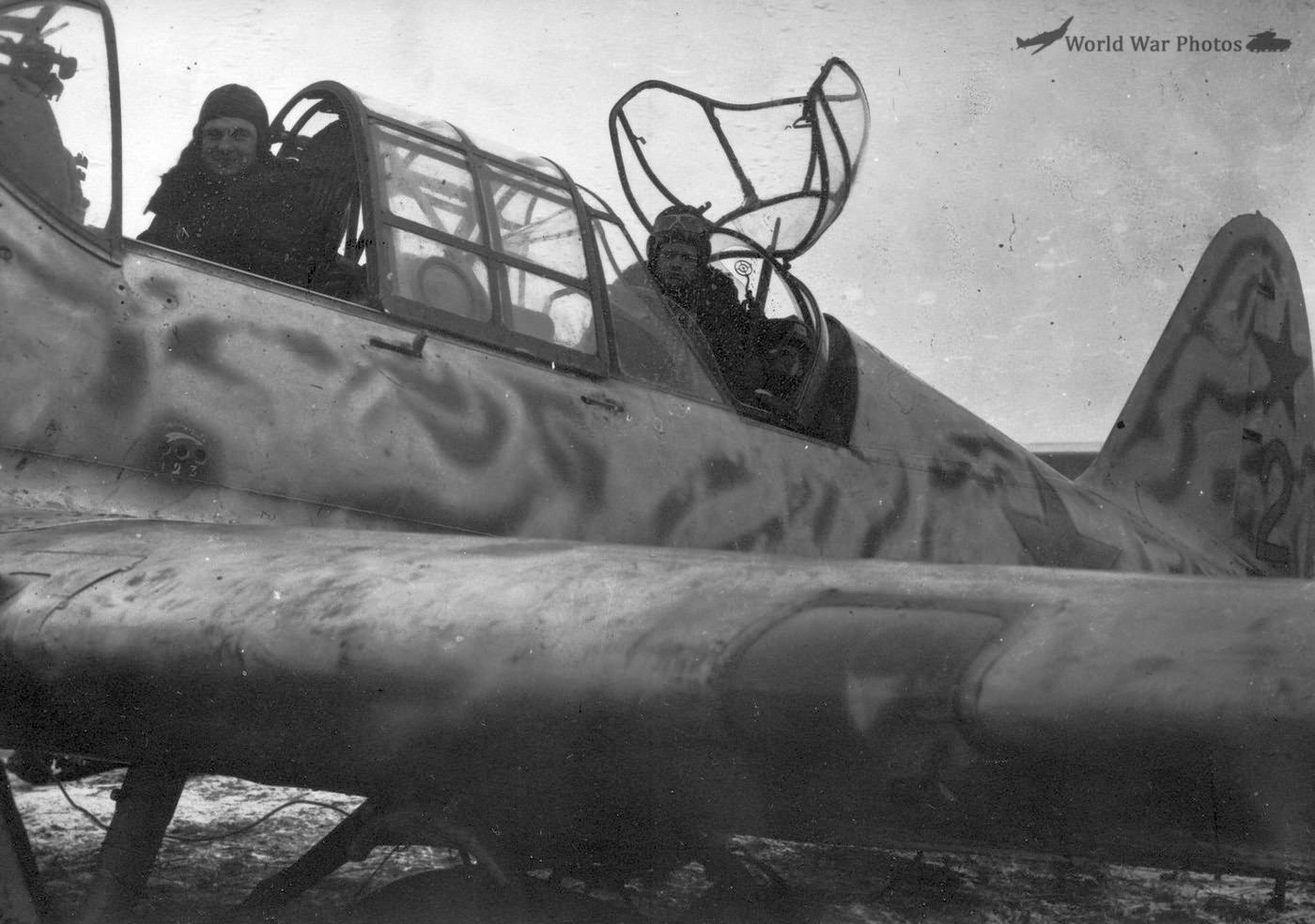
Su-2 of the 210 BBAP
The cockpit of the Sukhoi Su-2 was designed to accommodate a two-man crew consisting of a pilot and a navigator-observer. This internal space was noted by contemporary evaluators for being "culturally designed," signifying a higher standard of ergonomic and technical sophistication compared to earlier Soviet aircraft types. The entire crew area was enclosed by a large, glazed canopy which provided an exceptional field of view, a feature that proved critical for the aircraft's reconnaissance and artillery spotting missions. This canopy was composed of a fixed forward windscreen, a middle section over the pilot that could slide backward on rails, and a fixed rear section.
A prominent safety feature located directly behind the pilot's seat was a reinforced steel rod pyramid intended to protect the crew members in the event of a nose-over (capsize) during takeoff or landing. For combat protection, the pilot’s station featured an armored backrest manufactured from 8.5 mm thick cemented steel. The navigator’s station, while initially less protected, was later retrofitted with various 10 mm and 4 mm armored plates to protect the chest and lower body.
The Su-2 cockpit was distinguished by its standard inclusion of dual flight controls, which allowed the navigator to take command of the aircraft from the rear station if the pilot became incapacitated. The observer’s workspace functioned effectively as a mobile office, equipped with a dedicated map desk, the RSB "Dvina" radio station, and controls for specialized reconnaissance equipment such as the AFA-13 or NAFA-19 cameras. Instrument panels in both stations utilized indirect lighting and featured shock-absorption mounts, which were considered advanced technical implementations for the era.
Operational comfort was a significant priority in the Su-2's design; the cabin was fully enclosed and heated via a specialized pipeline that drew warm air from the engine's exhaust manifold. Pilots reported that this heating system was so effective that they could operate in light tunics even during the extreme cold of the Soviet winter, a marked improvement over the open cockpits of older reconnaissance machines like the Polikarpov R-5. Access for the navigator to the rear station was facilitated by an opening flap in the transparent spherical screen of the defensive turret, such as the MV-5 model.