Su-2 of the 14 OKRAE, pilot in the cockpit
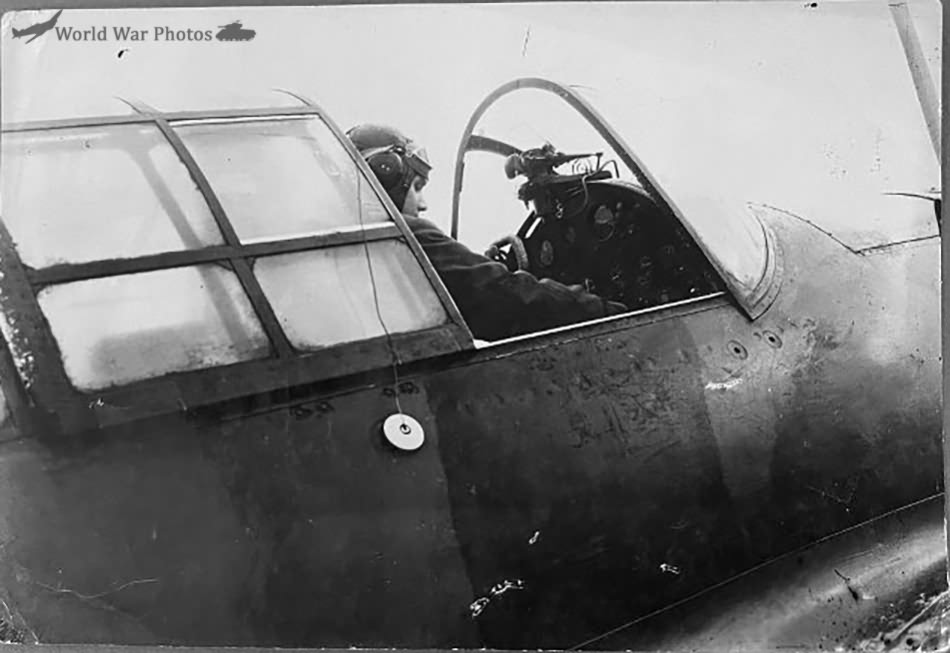
Su-2 of the 14 OKRAE 1943
The term OKRAE (and its variations such as OKAE or KAE) refers to the Otdel'naya Korrektirovochno-Razvedyvatel'naya Aviatsionnaya Eskadril'ya (Separate Correction-Reconnaissance Aviation Squadron), specialized units that became the primary operational home for the Sukhoi Su-2 during the latter half of its frontline service. Following the high attrition rates of 1941 and the decision to prioritize the Ilyushin Il-2 for ground attack, the Soviet Air Force reorganized the remaining Su-2 airframes into these specialized artillery spotting and reconnaissance formations.
Operational Justification and Role
The transition of the Su-2 into these units was driven by its specific design characteristics, which the Air Force Scientific Research Institute (NII VVS) determined made it "simply indispensable" for artillery correction. While other aircraft like the Petlyakov Pe-2 were suitable for general reconnaissance, the Su-2 offered a superior field of vision through its large, glazed canopy, making it more effective for observing ground targets and shell splashes. Furthermore, its stability at a wide range of speeds—from 220 km/h for observation to 450 km/h for egress—and its standard dual controls allowed the navigator to focus entirely on visual tasks while providing a backup in case the pilot was incapacitated.
Formation and Preparation
The systematic formation of these units began in March 1942 under orders from the VVS command. Damaged or surviving airframes were collected from across the front, repaired, and sent to the 10th Spare Aviation Regiment in Kamenka-Belinskaya for assignment to these new squadrons. Preparation for these units was rigorous; pilots were required to have at least 100 hours of flight time, and crews received specialized training in artillery observation and the use of the AFA-13 reconnaissance camera. By the summer of 1942, 77 crews had been prepared for these roles, 52 of whom operated the Su-2.
Key OKRAE and OKAE Units
Several specific squadrons are highlighted in historical records for their service:
- 45th OKAE (later 1st Guards OKAE): Originally the 1st squadron of the 209th BAP, this unit was reorganized in September 1942 under the 15th Separate Reconnaissance Spare Aviation Regiment. It performed exceptionally well during the liquidation of the German forces at Stalingrad, often correcting the fire of seven artillery batteries simultaneously. In recognition of its performance, it was granted the title of 1st Guards Correction-Reconnaissance Aviation Squadron.
- 12th OKAE: This unit served with distinction at the Leningrad Front, where it was credited with allowing artillery corps to effectively suppress long-term German firing points through precise "spotting".
- 34th and 44th KAE: These units also operated at the Stalingrad Front, where they provided "very valuable information" through deep reconnaissance raids reaching 200 to 250 kilometers into the enemy rear.
Unit Organization and Equipment
The typical strength of these squadrons was between six and seven aircraft. In some sectors, independent squadrons were eventually consolidated into larger regiments, such as the 187th Separate Correction-Reconnaissance Aviation Regiment (OKRAP), which continued to utilize the Su-2 effectively alongside newer types until the final phase-out of the airframe. Despite their "patchwork" appearance by 1943—often returning to base with dozens of holes and requiring constant engine changes—the crews of these squadrons held the Su-2 in high regard for its durability and comfortable, heated cabin during winter operations. The Su-2 remained a mainstay of these specialized units until early 1944, when it was finally superseded by dedicated versions of newer aircraft like the Il-2KR.