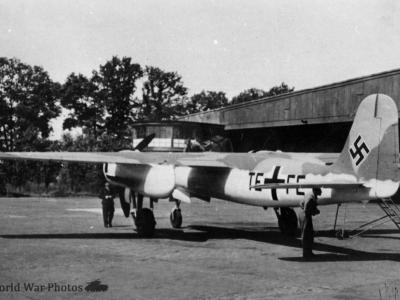
Ta 154
Click the thumbnails to enlarge them
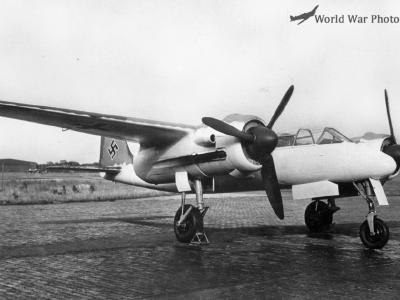
Ta 154 V1
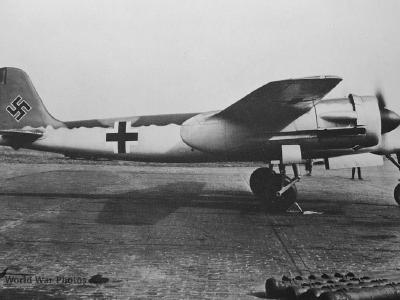
Ta 154 V1
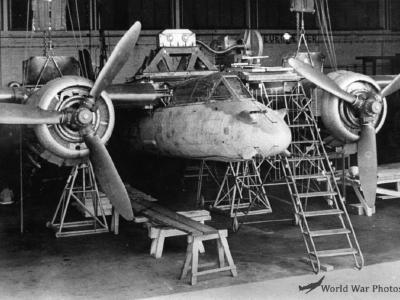
Ta 154 V2 during static vibration tests
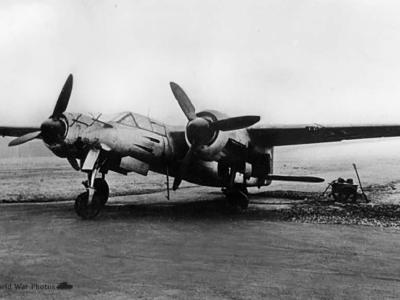
Ta 154 V3
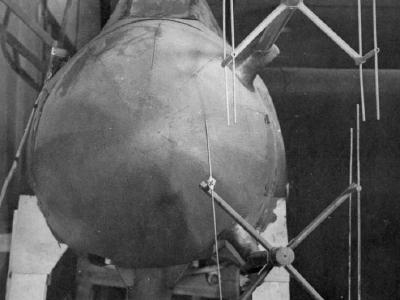
Ta 154 V3
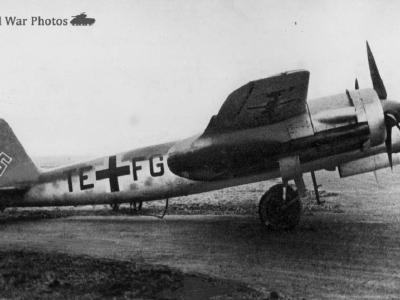
Ta 154 V3 TE-FG
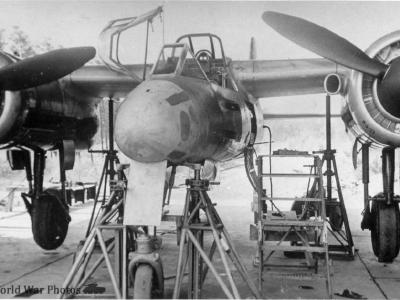
Ta 154 V4
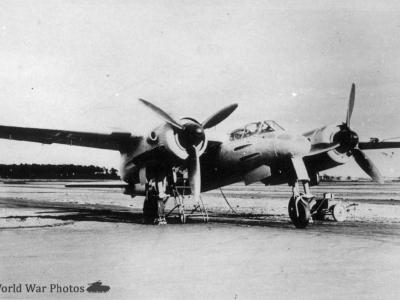
Ta 154 V7
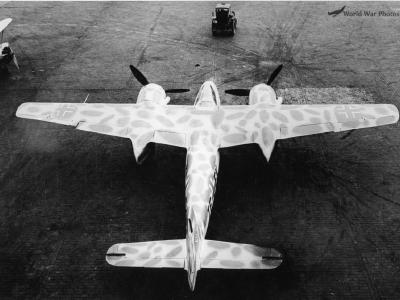
Ta 154 V7
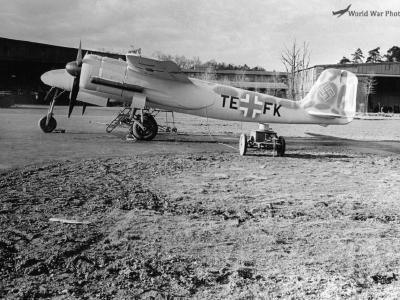
Ta 154 V7 TE+FK 1944
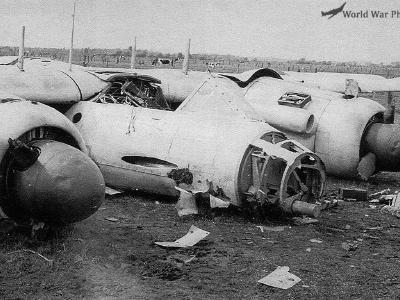
Ta 154A-2/U4 of the III/NJG 3 1945
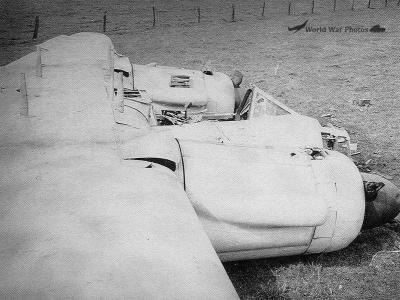
Ta 154A-2/U4 of the III/NJG 3 1945
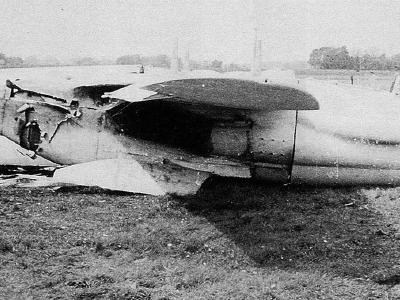
Ta 154A-2/U4 of the III/NJG 3 after it had made a belly-landing on April 30, 1945
The development of the Focke-Wulf Ta 154 was largely a reaction to the strategic success of the British de Havilland Mosquito, an all-wood "wooden wonder" that proved difficult for existing German night fighters like the Bf 110 and Ju 88 to intercept. In September 1942, the German Air Ministry (RLM) tasked Focke-Wulf with investigating a high-performance combat aircraft built primarily of wood to conserve strategic materials like aluminum. The project, initially designated the Ta 211 before being officially renamed the Ta 154 in November 1942, was led personally by Professor Kurt Tank.
Design and Engineering
The Ta 154 was a twin-engined, shoulder-wing (high-wing) aircraft, notable for being the first German combat design to incorporate a nosewheel (tricycle) landing gear to ensure safer night operations. The airframe was comprised of approximately 53% wood, 30% steel, and 17% light metal, with the wood components primarily utilizing beech plywood and pressed beechwood bonded with specialized adhesives. Despite its wooden construction, the aircraft was lauded for its maneuverability, which test pilots compared favorably to the single-engine Fw 190 fighter.
Prototype Development and Testing
The first prototype, the Ta 154 V1, made its maiden flight from Langenhagen on July 1, 1943, piloted by Hans Sander. Early tests were promising, but the program soon encountered serious technical setbacks:
- Landing Gear Failures: The nosewheel and main undercarriage units were prone to collapse, often caused by excessive sink rates or inadequate casting ranges.
- Engine and Cooling Issues: Early models used Junkers Jumo 211 engines, which suffered from fragile radiators and persistent cooling problems.
- The Glue Problem: The most critical failure involved the adhesive used to bond the wood components. The factory producing the high-quality "Tego-Film" glue was destroyed in an Allied air raid, and substitute adhesives proved inferior, often eroding the wood and leading to structural failures in flight.
By early 1944, several prototypes were lost to crashes. The V3 prototype, the first fully-equipped night fighter with radar and four MG 151/20 cannon, crashed in February 1944 after its nosewheel collapsed during landing. Another catastrophic crash occurred with the V9 in April 1944, resulting in the death of its observer.
Variants and Production
Focke-Wulf planned several variants to fulfill different roles:
- Ta 154 A-0: Pre-production series for operational testing.
- Ta 154 A-1 & A-2: Two-seat and single-seat day fighters, respectively.
- Ta 154 A-4: A two-seat night fighter equipped with FuG 220 Lichtenstein SN-2 radar.
- Ta 154 C-series: A planned improved version featuring a metal nose section, Jumo 213 engines, and ejection seats for the crew.
Production was decentralized across areas like Posen, Thuringia, and Silesia to minimize the risk from Allied bombing. However, these efforts were constantly hampered by a shortage of skilled woodworkers and the destruction of assembly plants by the Allied air forces in April and August 1944.
Operational History and Legacy
Operational trials were conducted by Erprobungskommando 154, while a few production machines were assigned to NJG 3 for "Moskitobekämpfung" (anti-Mosquito operations) in late 1944. Pilots reported that the aircraft had excellent acceleration and handling, though they criticized the poor visibility to the rear and sides caused by the engine nacelles. Experimental proposals even included using the Ta 154 as a Mistel (composite aircraft) or a Pulkzerstörer (formation destroyer) carrying massive explosive charges into Allied bomber streams.
Ultimately, technical failures and the overwhelming Allied air superiority led to the cancellation of the Ta 154 program in August 1944. Only approximately 50 aircraft, including prototypes, were ever completed. Most were either destroyed in air raids or scrapped at the end of the war.