Fi 156C-5 DO+AI of the JG27
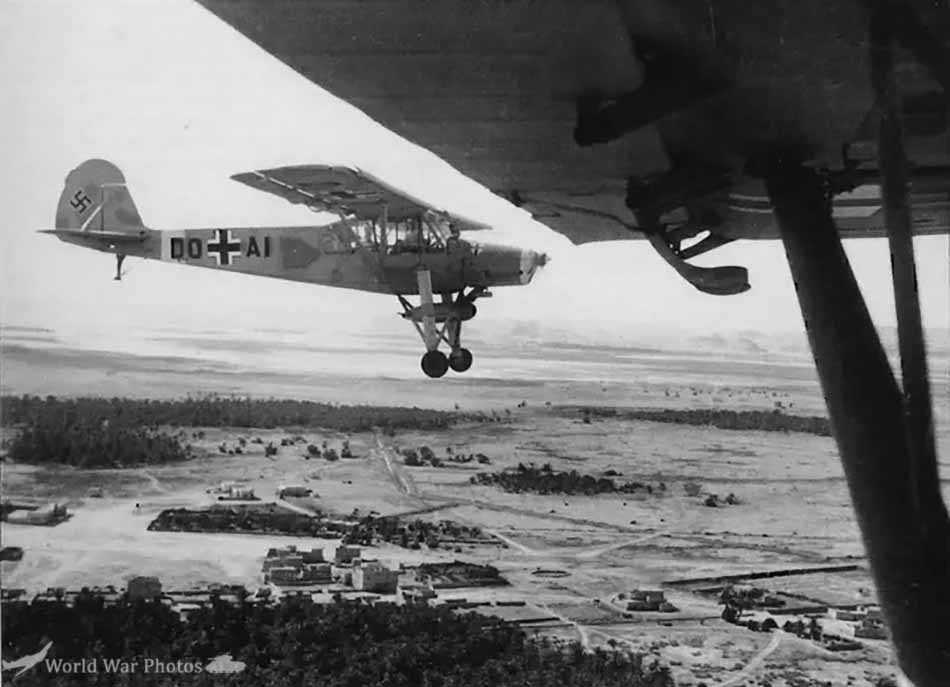
Fi 156C-5 DO+AI of the JG27
The deployment of the Fieseler Fi 156 "Storch" to the North African theater required extensive technical modifications to the airframe and engine to ensure operational viability in extreme desert conditions. These specialized aircraft, primarily of the C-3 and C-5 sub-variants, were designated as "trop" (tropicalized) models. The most critical mechanical adaptation was the installation of specialized Delbag air filters designed to prevent the ingestion of abrasive desert sand and dust into the eight-cylinder Argus As 10 engine. Furthermore, to manage the intense thermal load of the African climate, these variants were equipped with significantly enlarged oil coolers, increasing the cooling surface. Additional ventilation and supplementary engine venting were also incorporated to mitigate overheating during the aircraft's characteristic low-speed maneuvers.
Crew survivability and comfort within the extensively glazed "greenhouse" cockpit were addressed through several specific modifications. To reduce solar glare and cabin temperatures, internal cockpit curtains (Sonnenschutzgardinen) were provided for both the pilot and the observer. Operational safety in the vast, uninhabited desert necessitated the inclusion of an emergency survival kit (Notlandeausrüstung), which typically consisted of two backpacks containing concentrated rations, water supplies, and lightweight tents. For defense against ground threats or for foraging after a forced landing, the kit also included specialized survival weapons, such as a "drilling" (a triple-barrel firearm) or carbines.
The operational history of the Storch in North Africa is closely linked to the command style of Generalfeldmarschall Erwin Rommel, who utilized the aircraft as a "flying observation post". The Fi 156's exceptional short take-off and landing (STOL) capabilities allowed Rommel to land directly among mobile panzer divisions to conduct rapid inspections and maintain a real-time overview of the shifting front lines. His personal aircraft, such as the C-3/trop (SF+RL) and C-5/trop (DL+AA), became iconic symbols of the German Afrikakorps (DAK).
A vital role was performed by the specialized Wüstennotstaffel (Desert Emergency Squadron), which utilized the Fi 156 for the location and extraction of downed Luftwaffe pilots from deep within the desert interior. The squadron commander, Hauptmann Heinz Kroseberg, achieved significant fame for his hazardous rescue missions before his aircraft was lost over the Mediterranean in May 1941. These rescue operations often involved landing in soft sand or rocky terrain that would be inaccessible to any other contemporary aircraft.
Camouflage schemes for the North African front were distinct, featuring a base color of sand-brown (sandgelb) often overlaid with dark green or brown spots, or a wavy "snake" pattern (Schlangenmuster) to blend with the desert landscape. Due to the vast distances and isolated nature of desert airfields, many Storchs in this theater were field-modified or standard-equipped with auxiliary fuel tanks to extend their operational range.