Whitewashed Fi 156C DJ+PE in flight
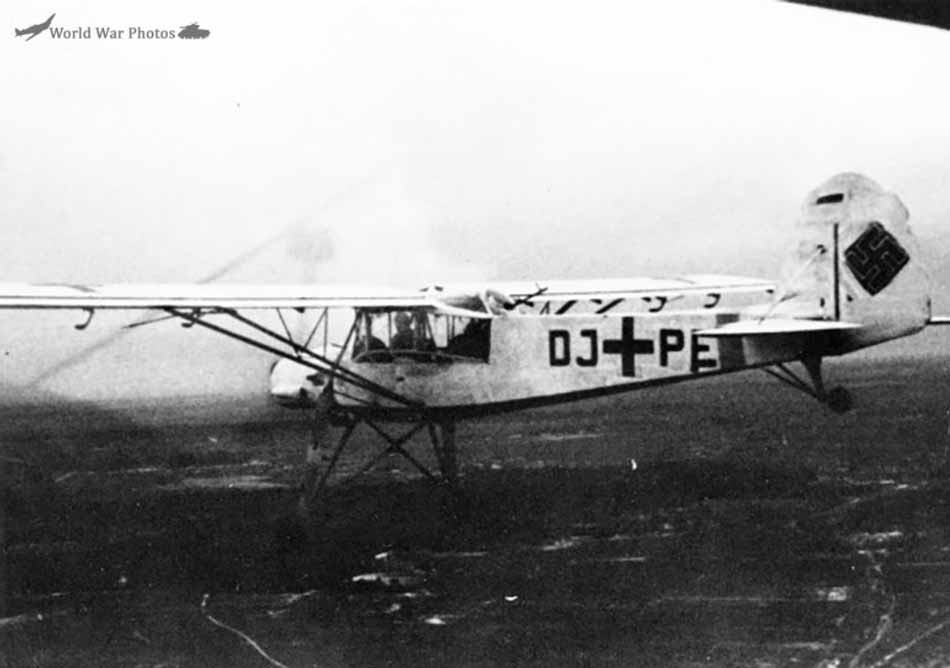
Fi 156 DJ+PE
The winter camouflage (Wintertarnung) of the Fieseler Fi 156 "Storch" was a critical operational adaptation designed to conceal the aircraft against snow-covered landscapes, primarily on the Eastern Front and in Northern European theaters such as Norway and Finland.
Historical documentation and photographic evidence characterize these schemes by the following features:
Visual Characteristics and Patterns
- Solid White Schemes: Many Storchs were finished in a near-uniform coat of white paint over their standard factory camouflage.
- Segmented and Blotchy Patterns: In many instances, the white paint was applied in a less uniform manner, creating a blotchy or segmented effect that allowed portions of the underlying dark green or grey-green camouflage (Splittertarnung) to show through. This "disturbed" white pattern was particularly effective during periods of partial snow cover or when operating near forest edges.
- Identification Elements: To prevent "friendly fire" incidents, winter-camouflaged aircraft frequently retained or added high-visibility identification markings. Common elements included yellow fuselage bands, yellow under-wing tips, and occasionally yellow engine cowlings or rudders.
Application and Materials
- Temporary Coatings: The winter camouflage was typically applied using a temporary, water-soluble white paint known as Schlämmkreide (whitewash). This allowed ground crews to apply the coating quickly as the seasons changed and to remove it easily with water and brushes once the snow melted.
- Field Application: Due to its temporary nature, the camouflage was almost always applied "in the field" by the units' own maintenance personnel rather than at the factory. This resulted in significant variation in the quality and style of the finish, ranging from smooth, spray-painted surfaces to rougher textures applied with brushes or even rags.
- Wear and Weathering: In operational conditions, the temporary paint often weathered rapidly, becoming chipped, translucent, or stained by engine exhaust and oil, which inadvertently enhanced the aircraft’s disruptive concealment in rugged terrain.
Operational Context
The use of winter camouflage was often combined with other seasonal equipment, most notably the ski undercarriage (Schneekufen), which allowed the Storch to maintain its STOL performance on frozen surfaces. This combination was vital for specialized tasks such as medical evacuation (Sanitätsflugwesen), where the "Sanitäts-Storch" would frequently be seen in full white livery, sometimes with reduced-size Red Cross markings to lower its visibility in contested airspace.