Fi 156D winter
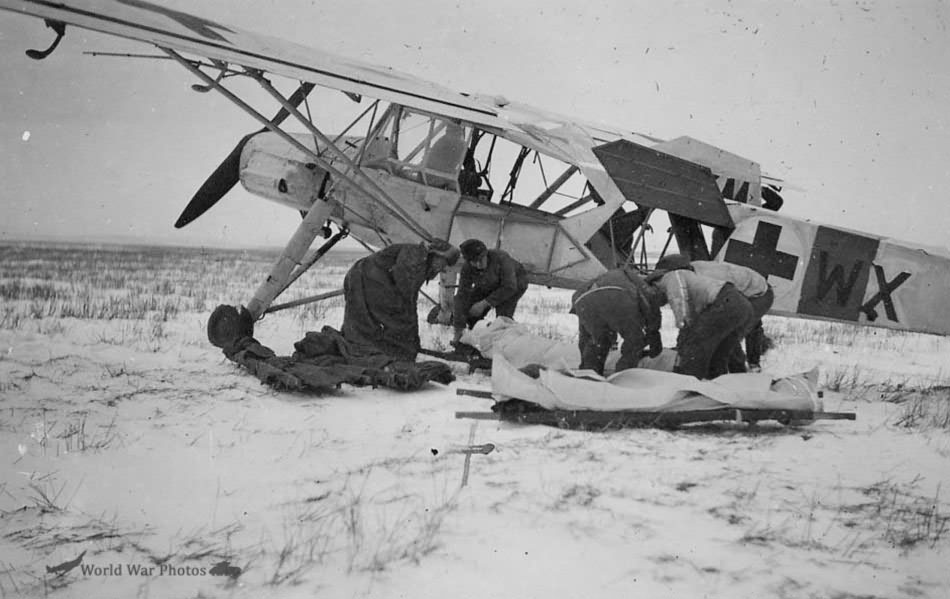
Fi 156 D winter
The Fieseler Fi 156 D series represented a specialized development of the basic Storch airframe, specifically engineered to fulfill the role of a dedicated medical evacuation aircraft (Sanitätsflugzeug). This variant emerged in late 1941 as a response to the need for a more efficient method of transporting wounded personnel from the front lines, building upon the foundations of the Fi 156 C-3 and C-5 multi-purpose models. While earlier variants could be field-modified to carry stretchers, the D-series incorporated structural changes to optimize this function.
The most prominent technical characteristic of the Fi 156 D was the modification of the rear cockpit area, featuring an enlarged, rectangular loading hatch on the starboard (right) side of the fuselage. This hatch consisted of two large, hinged flaps that opened to provide unobstructed access to the cabin interior, significantly facilitating the manual loading and unloading of patients on stretchers. This configuration allowed the aircraft to accommodate two stretchers, arranged in an upper and lower tier, along with a seat for a medical attendant or paramedic.
The series was divided into two primary sub-variants based on production timing and power plant:
- Fi 156 D-0: A pre-production batch introduced in the autumn of 1941, typically powered by the eight-cylinder, air-cooled Argus As 10 C engine.
- Fi 156 D-1: The main production version manufactured between 1942 and 1945, which was frequently equipped with the more powerful Argus As 10 P engine to maintain performance while carrying a full medical load.
In terms of defensive capabilities, the Fi 156 D was generally operated without fixed armament to reduce airframe weight and prioritize its humanitarian mission. Although it retained the upper rear glazing position for the "fisheye" mount, the MG 15 machine gun was typically removed in front-line service, and the circular opening was often sealed with a simple rubber cover (Gummiabdichtung). This distinction helped identify the medical variant from a distance, as did the frequent application of prominent Red Cross markings on the fuselage and wings, though these were sometimes reduced in size or rendered in low-visibility colors in contested environments to avoid attracting enemy fire.
Operationally, the "Sanitäts-Storch" proved invaluable across all theaters of the conflict, from the arid conditions of North Africa to the frozen expanses of the Eastern Front. Its short take-off and landing (STOL) capabilities enabled it to land directly at forward aid stations or even in the middle of active battlefields to extract critically wounded soldiers who could not survive traditional ground transport.