Su-2 M-82 March 1942 with ski undercarriage
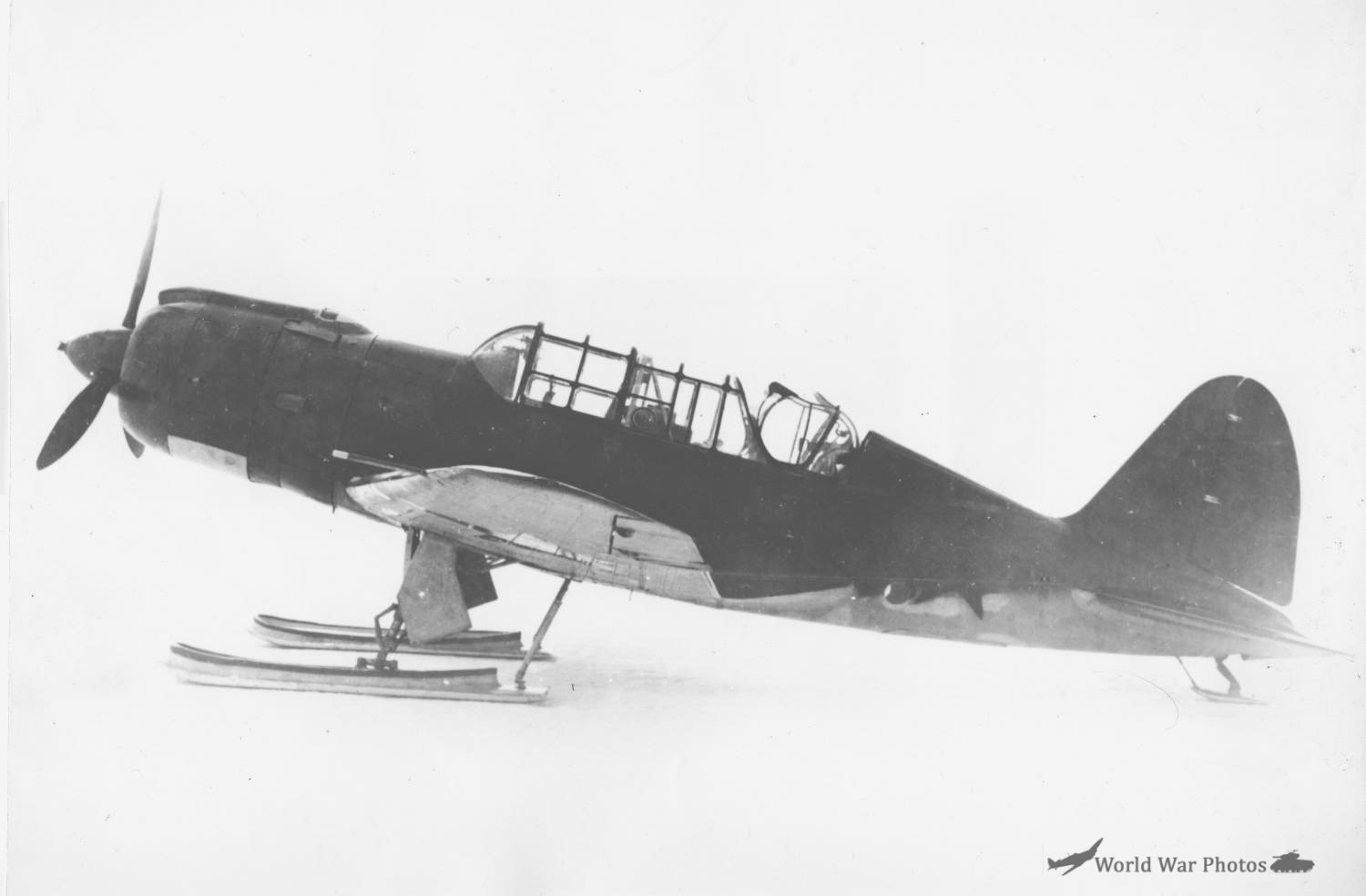
Su-2 M-82 March 1942 with ski undercarriage
The landing gear of the Sukhoi Su-2 was designed to be versatile, allowing for the transition from a standard wheeled configuration to a retractable ski system to ensure effective operations during the harsh Soviet winter. All series-produced aircraft were standardly supplied with a dedicated ski kit manufactured by Plant No. 135, Plant No. 207, and Moscow Factory No. 2.
Construction and Materials
The main skis were of mixed construction, primarily utilizing wood and duralumin to maintain structural integrity while minimizing weight.
- Main Skis: Each main ski was a wooden structure composed of birch veneer glued to ash or oak planks. The internal framework consisted of three box-section spars, nine ribs, and four longitudinal walls. The sliding surface, or skid, was fashioned from ash or beech and reinforced with duralumin edging and linings.
- Ski Pylon: The ski was attached to the aircraft's shock absorbers via a welded steel pylon.
- Tail Ski: The tail wheel was replaced with a smaller ski constructed similarly to the main units, featuring veneer and birch planks with an ash skid and duralumin lining.
Dimensions and Installation
The main skis measured 2,700 mm in length and 650 mm in width. The tail ski was significantly smaller, with dimensions of 615 mm by 290 mm. To install the ski system, the standard wheels and the lower portions of the main landing gear shock absorbers were removed. The skis were then secured to the remaining shock absorber structures using a system of cables and tensioners (guys) to maintain their proper orientation during flight and landing.
Retraction and Aerodynamics
One of the most advanced features of the Su-2's winter undercarriage was that the main skis were fully retractable. In flight, the skis were drawn upward into the center section of the wing, where they fit tightly against the airframe to minimize aerodynamic drag. This retractable capability was a significant technical achievement compared to the fixed ski gear found on many contemporary reconnaissance and light bomber aircraft, such as the Polikarpov R-5.
Operational Performance
State trials and frontline experience demonstrated that the installation of skis had a negligible impact on the aircraft's general piloting characteristics. However, some technical evaluations noted that while the skis did not hinder stability, they did alter certain performance metrics. For instance, on the modernized Su-2 equipped with the M-82 engine, the use of skis resulted in a landing angle of 18.5° (compared to the required 26.5°), which necessitated more cautious use of brakes during the landing run to prevent a nose-over. Additionally, the skis slightly reduced the aircraft's maximum range compared to the wheeled version. Despite these minor trade-offs, the retractable ski system was considered highly successful and essential for maintaining the VVS's operational tempo during winter campaigns.