Su-2 of the 289th SHAP
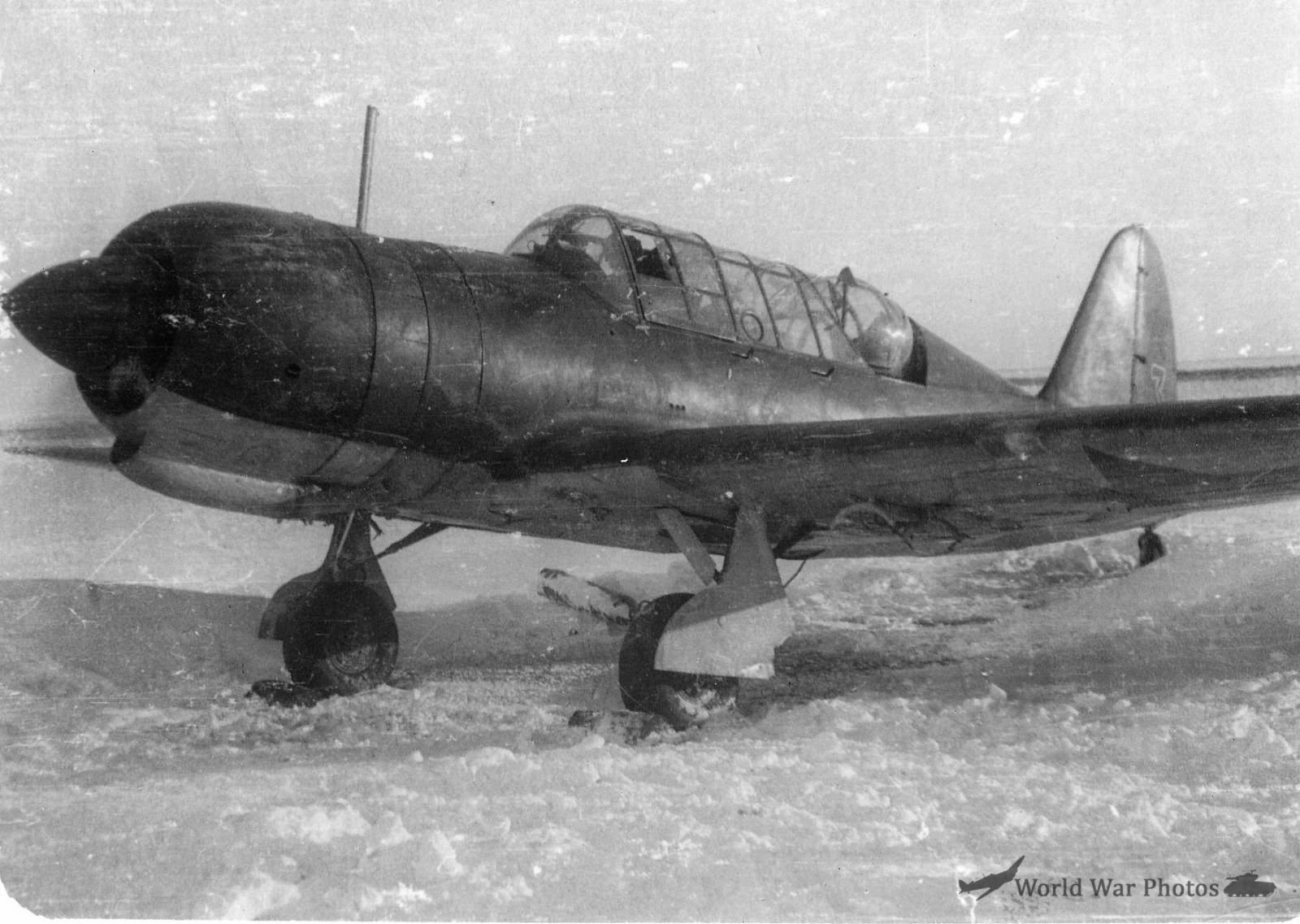
Su-2 of the 289th SHAP
The Sukhoi Su-2 and the Ilyushin Il-2 represented fundamentally different design philosophies in Soviet military aviation during the late 1930s and early 1940s. The Su-2 was born from the "Ivanov" competition as a multi-purpose machine designed to serve as a short-range bomber, reconnaissance scout, and ground-attack aircraft. In contrast, the Il-2 was a highly specialized ground-attack platform (sturmovik) that eventually superseded the multi-purpose concept as operational requirements on the Eastern Front became more demanding.
Flight Performance and Handling
In terms of flight characteristics, the Su-2 generally offered superior speed and altitude capabilities compared to its contemporaries in the multi-role category. A 1941 production Su-2 equipped with the M-88B engine could achieve a maximum speed of 460 km/h at altitude and possessed a service ceiling of 8,900 meters. Modernized versions utilizing the M-82 engine increased this speed further to 486 km/h. While side-by-side technical tables for the Il-2 are limited in these specific sources, the Su-2 was notably highly regarded for its "cultural design," excellent stability, and ease of piloting, which allowed crews with limited training to master the machine relatively quickly.
Construction and Survivability
The most significant divergence between the two aircraft lay in their construction and protection levels. The Su-2 featured a mixed construction with a wooden monocoque fuselage and duralumin wings, a method chosen to simplify mass production and reduce the consumption of strategic metals. While the Su-2 was famous among its crews for its structural sturdiness—often returning to base with dozens of bullet and shrapnel holes—it lacked the heavy, integral armor that defined the Il-2. German pilots frequently referred to the Il-2 as a "flying tank" due to its "unbelievably powerful armor," which protected the engine and cockpit from light-caliber ground fire and aircraft machine guns. When pressed into a ground-attack role for which it was not originally armored, the Su-2 proved more vulnerable to the intensive light anti-aircraft fire encountered at low altitudes.
Armament and Combat Roles
The armament configurations of the two aircraft reflected their differing operational priorities. The Su-2’s offensive power primarily relied on four 7.62 mm ShKAS machine guns mounted in the wings and a normal bomb load of 400 kg. Its defensive capabilities were centered on its observer’s turret, which was considered one of the most effective in Soviet service but could not compensate for the lack of heavy offensive weapons like the cannons typically carried by the Il-2. By late 1941, the Soviet leadership concluded that specialized machines like the Il-2 and the Pe-2 dive bomber were more effective tactical weapons than the general-purpose Su-2.
Visibility and Reconnaissance Superiority
Despite the Il-2's combat superiority in ground-attack missions, the Su-2 maintained a distinct advantage in visibility and specialized secondary roles. Its large, glazed canopy provided the pilot and navigator with an exceptional field of view, making it far more effective than the Il-2 for reconnaissance and artillery spotting. Additionally, the Su-2 offered a more comfortable environment for its crew, featuring a spacious and heated cabin that was highly valued during winter operations. Ultimately, while the Su-2 was sacrificed industrially to maximize the output of the Il-2, it remained a vital asset in reconnaissance and spotting units until it was phased out of frontline service by early 1944.