Crashed Su-2 14
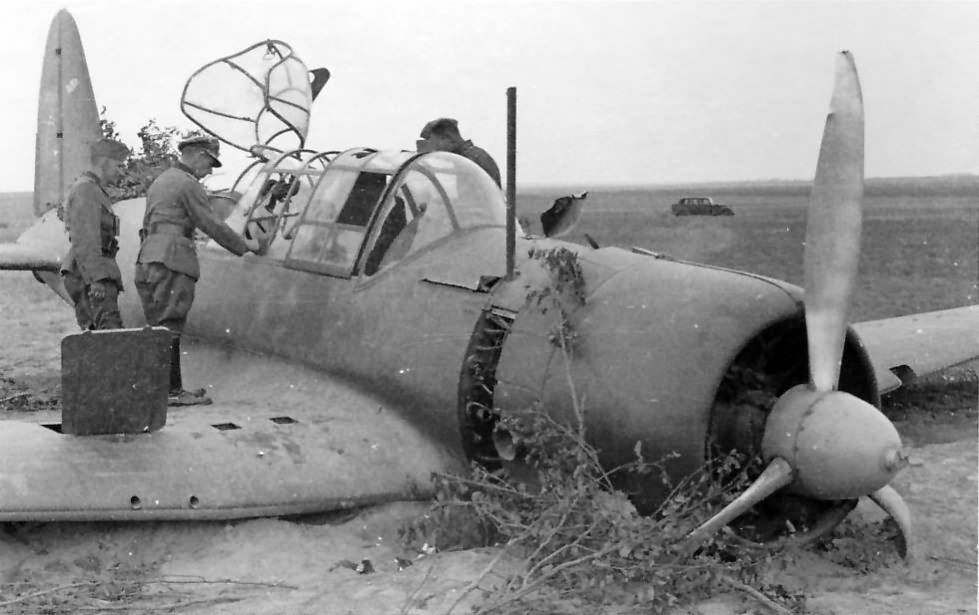
Su-2 14
The operational record of the Su-2 in 1941 is characterized by catastrophic attrition, particularly during the initial months following the German invasion on June 22. At the outbreak of hostilities, approximately 195 Su-2 aircraft were stationed in the western border districts, with 132 of these considered serviceable. By the conclusion of 1941, more than 400 Su-2 aircraft had been written off, including 222 lost to combat causes such as enemy fighters, anti-aircraft fire, and airfield bombings.
The most severe losses occurred within individual aviation regiments during the chaotic first weeks of the conflict:
- 97th Short-range Bomber Aviation Regiment (BAP): Stationed at Bobruisk on the Western Front with 50 Su-2s, the regiment suffered heavily from Luftwaffe airfield strikes and intense air combat. On June 26 alone, the unit lost 14 aircraft, including ten shot down in combat and two in accidents. By July 7, 1941, the 97th BAP had effectively lost its combat capability and was withdrawn for reorganization after having performed 146 sorties.
- 211th Short-range Bomber Aviation Regiment: This unit experienced one of the most tragic single-day losses for the type. On July 21, 1941, during a mission against German-Romanian crossings over the Dniester, 16 aircraft failed to return to base. The following day, an additional eight crews were lost, with another six failing to return on July 23.
- 103rd and 135th Short-range Bomber Aviation Regiments: Operating in the southern sector, these units were severely depleted by mid-July. By July 10, out of an initial combined total of 81 aircraft, only 57 remained, and many of these required extensive repairs. In these first weeks, 27 pilots and navigators from these two regiments were killed or reported missing.
Statistical analysis of the Western Front from June 22 to July 31, 1941, reveals a total loss of 120 Su-2 aircraft. Of these, seven were confirmed as shot down by enemy fighters, 22 by anti-aircraft fire, and 71 were classified as "failed to return," many of which were likely victims of interception. Additionally, 14 aircraft were destroyed on the ground, and six were lost to non-combat accidents.
The primary factors contributing to these high loss rates were tactical and situational. In the early stages of the war, Su-2 units frequently conducted missions without fighter escorts, leaving them vulnerable to superior German fighters like the Bf 109F. Desperate operational requirements often forced the aircraft to attack at extremely low altitudes (as low as 300 meters), significantly increasing their exposure to light anti-aircraft fire. Furthermore, the rapid Soviet retreat meant many damaged or unserviceable aircraft were abandoned or destroyed by their own crews on airfields to prevent capture. Despite these losses, crews often noted the Su-2's remarkable structural durability, with many aircraft returning to base with dozens of bullet and shrapnel holes.