Tupolev SB Finland
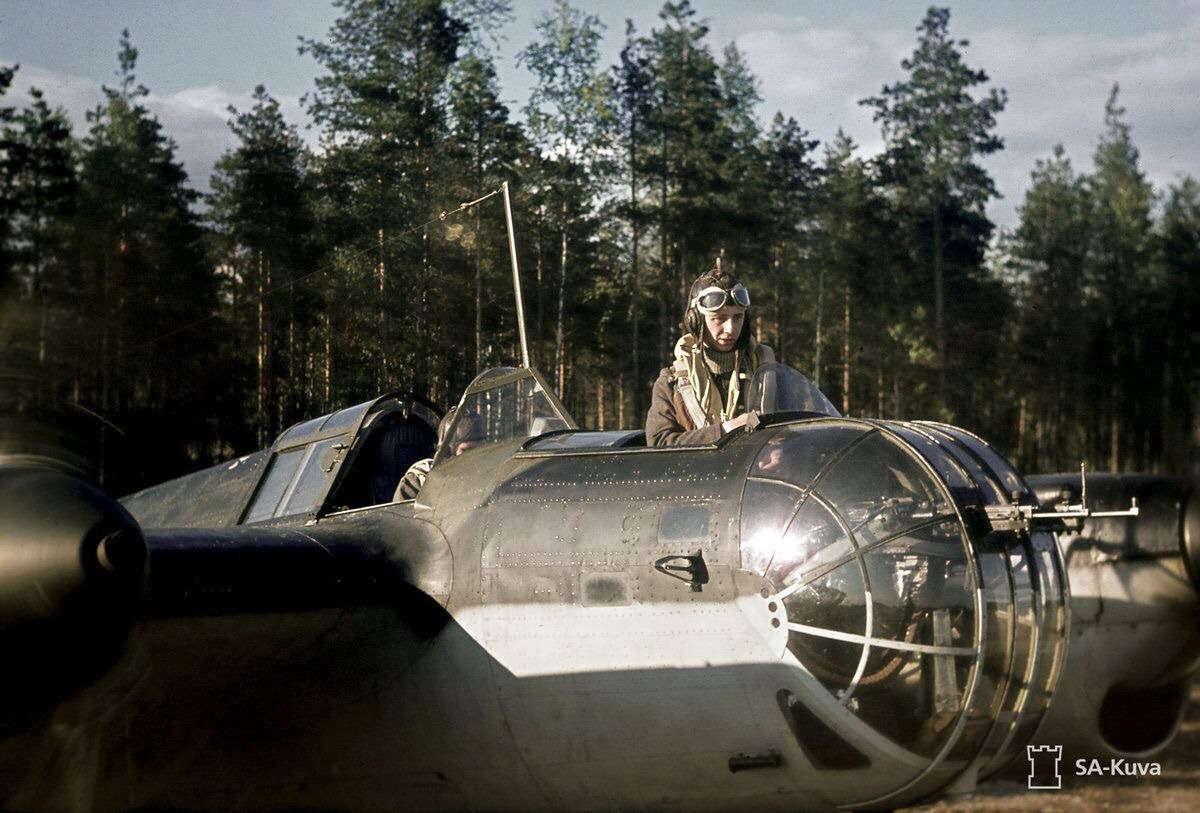
Tupolev SB Finland
The operational history of the Tupolev SB in the Finnish Air Force (Ilmavoimat) characterizes the service of a captured asset repurposed for specialized maritime and reconnaissance roles. During the conflict, Finland operated a total of 23 to 24 SB aircraft, primarily the SB-2-M-103 variant, alongside a single SB-2-M-100-A.
Acquisition and Early Deployment
The initial Finnish SB fleet was acquired during the Soviet-Finnish Winter War (1939–1940). Soviet aircraft that made forced landings on Finnish territory were recovered and repaired by Finnish forces. These early captures included eight airframes, seven of which were the M-103 powered version. The first serviceable unit, an SB-2-M-103 (VP-10), was overhauled at the State Aircraft Factory (Valtion Lentokonetehdas or VL) and delivered to the Ilmavoimat on August 13, 1940.
On October 15, 1940, the SB units were assigned to Lentolaivue 6 (LeLv 6; Flying Squadron 6) at Nummela. Initially, the aircraft carried registrations prefixed with "VP" (e.g., VP-1 through VP-10), but in September 1941, the registration code was changed to "SB" (e.g., SB-1 through SB-20).
Expansion via German Purchases
In the summer of 1941, following the start of Operation Barbarossa, Finnish representatives purchased 16 additional SB-2-M-103 aircraft from German war booty depots. These aircraft arrived in Finland in three batches between November 1941 and August 1942. All purchased units underwent refurbishment at the VL, which included the installation of additional carburetor air intakes on the engine cowlings.
Operational Roles and Tactical Success
The primary mission of the Finnish SB fleet was maritime reconnaissance and anti-submarine (ASW) patrols over the Gulf of Finland. The aircraft were well-suited for these roles due to their speed and endurance. Finnish SB crews claimed significant success against the Soviet Navy, reporting the destruction of eight submarines and various small vessels.
Technical Modifications and Training
Finnish SBs featured several technical adaptations. Most were equipped with the MV-3 dorsal turret and some received the LU MV-2 ventral gun mount to improve defensive fire. For winter operations, the undercarriage wheels were frequently replaced with skis.
The Ilmavoimat also operated a specialized training variant known as the USB. In 1943, a captured SB-2-M-103 was converted into a dual-control trainer, which remained in service until February 1945, accumulating 268 flight hours.
Final Years and Scrapping
During the 1941–1944 Continuation War, the Ilmavoimat did not lose a single SB to Soviet enemy action, although six were lost to accidents or technical failures. After the armistice with the Soviet Union in September 1944, Finnish SBs were utilized in the Lapland War to fly ASW patrols against German U-boats (Unterseeboote), though no sinkings were recorded during this phase.
On April 1, 1945, the Finnish national markings were changed from the blue swastika to a white, light blue, and white roundel. The surviving 16 SBs were placed in storage after the conflict and were finally scrapped in January 1950.