Tupolev SB China 2
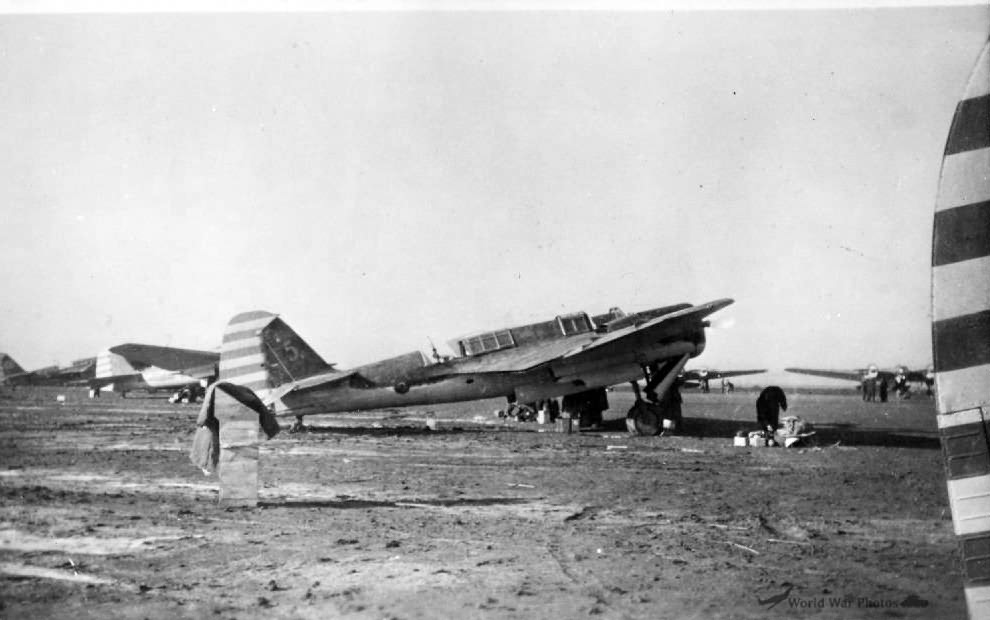
Tupolev SB China
The operational employment of the Tupolev SB in the Republic of China represents a significant chapter in the pre-World War II military cooperation between the Soviet Union and the Kuomintang government. At the time of its introduction to the theater, the SB was the fastest bomber available to either combatant, often possessing the capability to outpace contemporary Japanese fighter aircraft. Following the Japanese invasion of China on July 7, 1937, the Soviet Union entered into a non-aggression pact with the Chinese Central Government on August 21, 1937, which included secret clauses allowing for substantial military aid. This assistance program, conducted under the codename Operation "ZET," saw the first 185 Soviet aircraft, including 62 SB bombers, prepared for transport in October 1937.
Logistics and Deployment
The delivery of these aircraft was a complex logistical undertaking involving approximately 450 Soviet pilots and technicians assembled at Alma-Ata. Two primary ferry routes were established: a "southern route" from Alma-Ata through Urumchi and Hami to Lanzhou, and a "northern route" from Irkutsk through Mongolia to Lanzhou. The initial bombers provided were primarily SB-2-M-100-A models produced at State Aircraft Factory No. 125 in Irkutsk. Upon arrival, the aircraft were typically finished in a natural metal or silver-grey scheme, with the twelve-point Kuomintang star markings applied directly to the wings and fuselage.
Early Combat Operations
Soviet volunteer units initially manned the bombers while training Chinese personnel to master the high-performance aircraft. The first documented combat action occurred on December 2, 1937, when a group of nine SBs led by Captain I.N. Kozlov attacked Japanese naval vessels in the East China Sea near Shanghai. Shortly thereafter, another volunteer group under M.G. Machin deployed to Hankou and conducted successful raids against Japanese airfields.
The most strategically significant operation of this period took place on February 23, 1938, targeting the Japanese airbase at Hsin-chu on Formosa (modern-day Taiwan). Captain F.P. Polynin led a formation of 28 SBs on a high-altitude mission that achieved complete tactical surprise by approaching the island from the north. The bombers destroyed an estimated 40 Japanese aircraft on the ground and various hangars, returning to Lanchow after a seven-hour flight without sustaining any losses. For this success, the Soviet airmen were personally rewarded by Madame Chiang Kai-shek.
Transition to Chinese Command and Technical Challenges
As the conflict progressed, more advanced SB-2M-103 variants were introduced, and China eventually became the largest foreign operator of the type, receiving a total of 392 airframes. However, the transfer of operations to Chinese crews was fraught with technical and human difficulties. Inexperienced pilots struggled with the SB's sophisticated handling characteristics, leading to a high rate of accidents and aircraft write-offs. Furthermore, technical deficiencies in Chinese logistical support led to tragic incidents; Chinese crews often lacked adequate oxygen equipment for the high-altitude sorties the SB was designed for, resulting in several cases of altitude poisoning and death during missions flown at 7,000 to 8,000 meters.
Late Service and the Decline of Aid
The tactical superiority of the SB began to wane as the Japanese Imperial Army Air Force introduced faster, more maneuverable fighters like the Nakajima Ki.27. This shift forced Chinese SB units to operate at higher altitudes and necessitated the provision of fighter escorts, which were eventually provided by the American Volunteer Group, also known as the "Flying Tigers".
Soviet military aid to China was abruptly curtailed following the signing of the Stalin-Japanese neutrality pact on April 13, 1941. By the spring of 1941, although the Chinese Air Force nominally possessed over 300 SBs, the actual number of serviceable aircraft had drastically reduced due to combat attrition and a shortage of spare parts. By early 1943, only 19 SBs remained in service with the 1st Aviation Group. The type's long career in China finally concluded after the end of World War II, with the few remaining airframes utilized during the subsequent Chinese Civil War in 1946.