SB 2M-103 crew 2
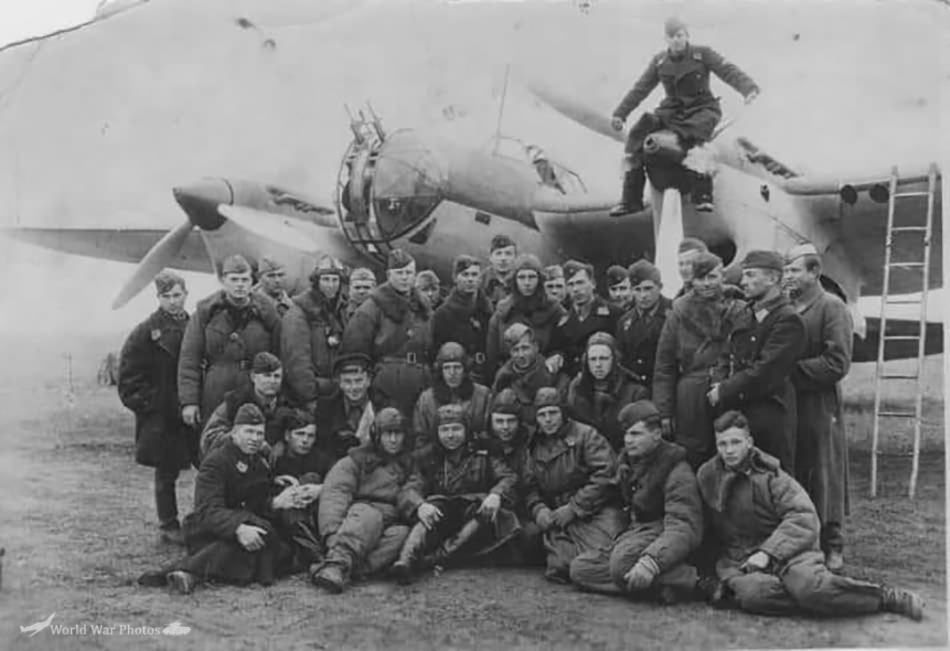
SB 2M-103 crew
The Tupolev SB-2-M-103 represented the definitive and most numerous production standard of the Soviet high-speed bomber series during the late 1930s, incorporating significant enhancements in engine performance, structural strength, and offensive payload. Testing for this variant commenced in September 1937 following the availability of the Klimov M-103 engine, a 12-cylinder liquid-cooled inline powerplant that provided 960 hp at takeoff, a substantial 100 hp increase over the preceding M-100-A. While early M-103 units utilized the same nacelle-mounted oil cooler configurations as earlier models, late-production aircraft transitioned to a more aerodynamically efficient "horseshoe" or tunnel-shaped radiator layout positioned beneath the engine nacelles.
The introduction of the M-103 engine necessitated structural reinforcement of the fuselage and wing sections to accommodate a significantly higher maximum bomb load, which was increased from 600 kg to a total of 1,500 kg or 1,600 kg. This expanded capacity was facilitated by the installation of external DER-19 bomb racks mounted under the wing center section, each capable of carrying 250 kg or 500 kg bombs to complement the internal bomb bay. For extended range missions, these same wing pylons could be fitted with 368-liter teardrop-shaped drop tanks, extending the aircraft’s range by approximately 300 km to a total of 1,900 km,.
Defensive systems on the SB-2-M-103 were also modernized during its production run. The standard armament suite typically consisted of twin 7.62mm ShKAS machine guns in the nose (860 rounds each), a single ShKAS in the dorsal position (1,000 rounds), and a single ShKAS in the ventral position (500 rounds),. While early models retained the open TUR-9 dorsal mount, later production series and field-retrofitted units were equipped with the MV-3 spherical glazed turret, which offered a full 360° field of fire and improved protection for the gunner from the high-speed airstream. The ventral station utilized the LU MV-2 retractable hatch mount, providing improved fire angles for the lower rear hemisphere.
Technical refinements introduced with the M-103 variant improved crew survivability and operational reliability. A 6mm thick armor plate was added behind the pilot's seat, and late-series models, such as the "96th series," featured duplicated bomb release levers in the pilot’s cockpit and an electro-hydraulic system for landing gear control,. Propeller technology evolved from the two-bladed VISh-2 to the VISh-22 three-blade variable-pitch metal propellers, which enhanced climb rates and takeoff performance. For winter operations, the aircraft was frequently equipped with retractable ski undercarriages, which featured specialized recessed fairings underneath the nacelles to minimize drag when the gear was stowed.
In terms of flight performance, the SB-2-M-103 achieved a maximum speed of 450 km/h (280 mph) at an altitude of 4,100 meters and maintained a service ceiling of 9,300 meters. Despite being considered technically obsolescent by the onset of the Great Patriotic War in June 1941, it remained the most numerous medium bomber in the VVS inventory during Operation Barbarossa,. Beyond Soviet service, the M-103 variant was the mainstay of Chinese bombardment forces against Japan, with 392 airframes delivered, and saw continued use by the Finnish Air Force, which operated 23 captured units primarily for anti-submarine patrols until 1945.