SB-2M-103 Bomber on Airfield
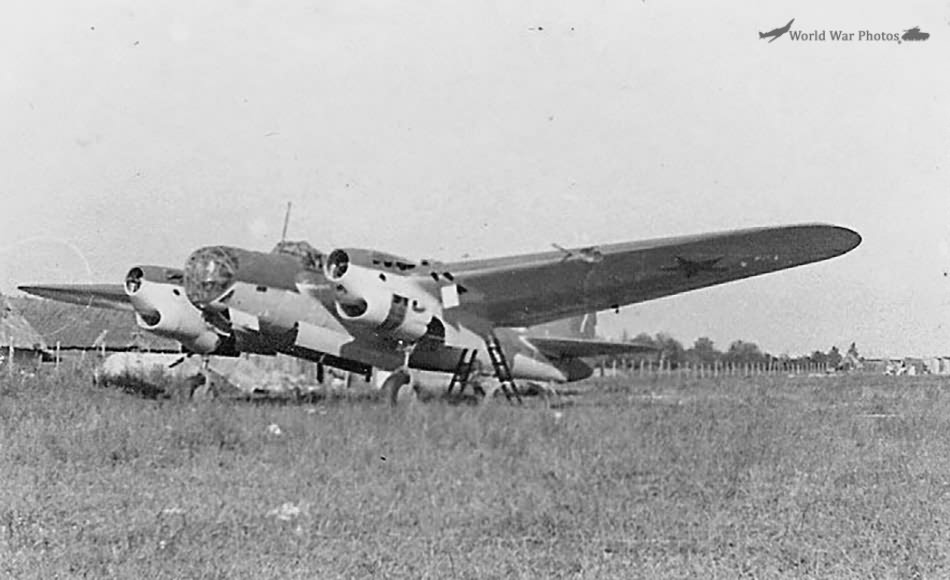
SB-2M-103 Bomber on Airfield
The SB-2M-103 variant represented the definitive production standard of the Tupolev SB high-speed bomber during the late 1930s, incorporating significant improvements in engine power, structural integrity, and offensive capabilities over its predecessors. The variant first underwent testing in September 1937 and was officially introduced into series production shortly thereafter.
Powerplant and Aerodynamic Evolution
The variant was defined by the installation of two Klimov M-103 12-cylinder liquid-cooled inline engines, each providing 960 hp. This represented a 100 hp increase over the earlier M-100-A powerplant. While early M-103-powered aircraft retained the nacelle-mounted oil coolers and cowlings of the earlier models, technical research conducted by TsAGI and the development of the SB-bis-3 prototype led to a significant redesign of the cooling system.
On late-production M-103 units, the radiators were repositioned to a more aerodynamically efficient "horseshoe" or tunnel configuration located underneath the engine nacelle. This modification, coupled with refined engine cowlings, allowed the aircraft to reach a maximum speed of 450 km/h (280 mph) at an altitude of 4,100 meters. The service ceiling was established at 9,300 meters, and the aircraft maintained a normal range of 1,600 kilometers.
Enhanced Ordnance and Defensive Systems
A primary advantage of the SB-2-M-103 was its vastly increased bomb load. While earlier variants were generally limited to 600 kg of internal ordnance, the M-103 version could carry a maximum of 1,500 kg to 1,600 kg. This was made possible by the addition of external DER-19 bomb racks mounted under the wing center section, which could support 250 kg or 500 kg bombs to complement the 600 kg internal bay.
Defensive armament was also modernized throughout the production run:
- Nose: Remained equipped with twin 7.62mm ShKAS machine guns supplied with 860 rounds each.
- Dorsal: The initial TUR-9 open mount was increasingly replaced by the MV-3 spherical glazed turret, which provided the gunner with a full 360° field of fire and wind protection.
- Ventral: The station utilized the LU MV-2 retractable hatch mount armed with a single ShKAS gun and 500 rounds of ammunition.
Structural Refinements and Production Iterations
The M-103 variant introduced several architectural changes compared to the earlier SB-2-M-100-A:
- Fuselage Details: The two balance weights on the lower right wing were deleted, and two rectangular windows were added to the right side of the nose. The cartridge case ejection tunnel in the nose was removed and replaced by Plexiglas guide sheets to reduce cockpit drafts.
- Pilot Protection: A 6mm thick armor plate was installed behind the pilot's seat for improved survivability.
- The "96th Series": This specific production block introduced duplicated bomb release levers in the pilot’s cockpit and utilized an electro-hydraulic system for landing gear control.
- The "201st Series": Produced in 1940, these late-model aircraft featured VISh-22 three-blade variable-pitch propellers (replacing the earlier two-blade VISh-2) and were often equipped with retractable ski undercarriages for winter operations.