Fi 156A-1 D-INPC
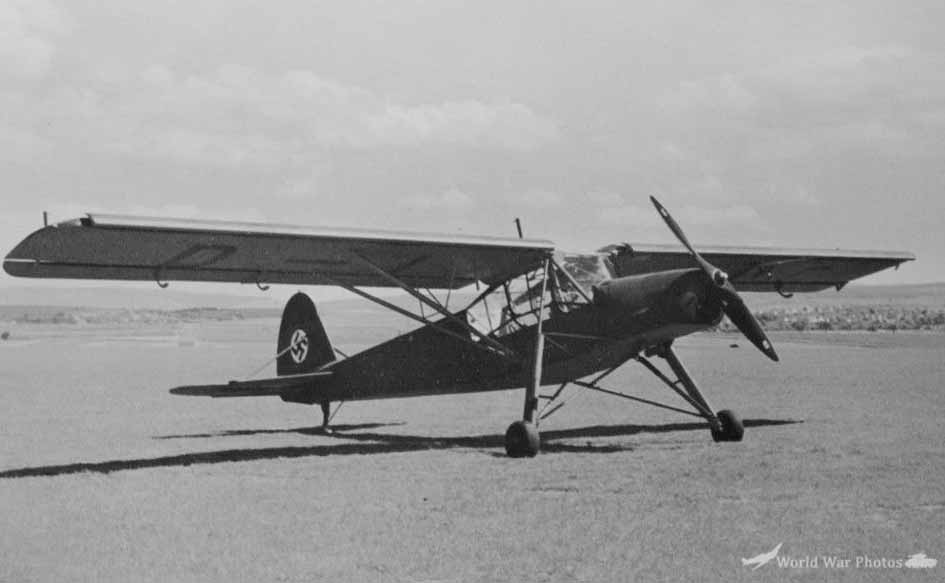
Fi 156A-1 D-INPC
The Fieseler Fi 156 A-1 represented the first definitive military production series of the "Storch" (Stork), following the successful evaluation of the pre-production A-0 "Nullserie" airframes in the late 1930s. Often referred to by the phonetic designation "Anton," this variant codified the aircraft’s role as a primary liaison, reconnaissance, and observation platform for the German Luftwaffe. Production of the A-1 series commenced in 1938 at the Gerhard Fieseler Werke in Kassel-Bettenhausen.
Technical Characteristics and Design
The Fi 156 A-1 was powered by an eight-cylinder, air-cooled Argus As 10 C engine, which produced approximately 240 horsepower. This powerplant drove a two-blade wooden propeller, typically manufactured by Heine. The aircraft’s design was optimized for short take-off and landing (STOL) performance, utilizing a specialized high-wing braced configuration with fixed Handley-Page slats along the entire leading edge and large Fowler-style trailing-edge flaps. These high-lift devices allowed the aircraft to remain airborne and controllable at speeds as low as 50 km/h and to land within a distance of only 20 to 25 meters under favorable wind conditions.
The structure consisted of a fabric-covered, welded steel-tube fuselage and two-spar wooden wings. Its extensively glazed "greenhouse" cockpit provided the crew with exceptional visibility, a feature prioritized by the RLM (Reichsluftfahrtministerium) during the initial design phase. The landing gear was another defining feature, utilizing long-stroke, stilt-like legs equipped with VDM oil-damped shock absorbers to manage heavy landings on unprepared or rugged terrain.
Armament and Equipment
In its initial production form, the Fi 156 A-1 was typically delivered without fixed defensive armament. Unlike the subsequent C-series, it did not feature the circular "fisheye" mount (Linsenlafette) in the rear glazing. Instead, self-defense for the crew was facilitated by personal weapons, such as the MP 28 or MP 40 machine pistol, which were often stowed in specialized holders within the cockpit.
Standard internal equipment included two fuel tanks located in the wing roots with a total capacity of approximately 148 to 150 liters, providing a maximum range of roughly 380 to 400 kilometers. Early radio installations for the series included various versions of the FuG VII, FuG 14, and FuG 17 sets.
Operational Deployment
The Fi 156 A-1 saw its earliest combat deployment during the Spanish Civil War, where several airframes (such as W.Nr. 4602) were utilized by the Legion Condor for reconnaissance, liaison, and staff transport duties. In Spanish service, the aircraft was colloquially named "Cigüeña" (Stork).
While the total production of the A-1 variant was relatively small - with some records suggesting approximately forty series airframes were manufactured before the more heavily armed C-series became standardized - the A-1 established the STOL principles that would define the Storch’s legacy throughout the conflict.