Fi 156C Storch MG 15 Defensive Mount
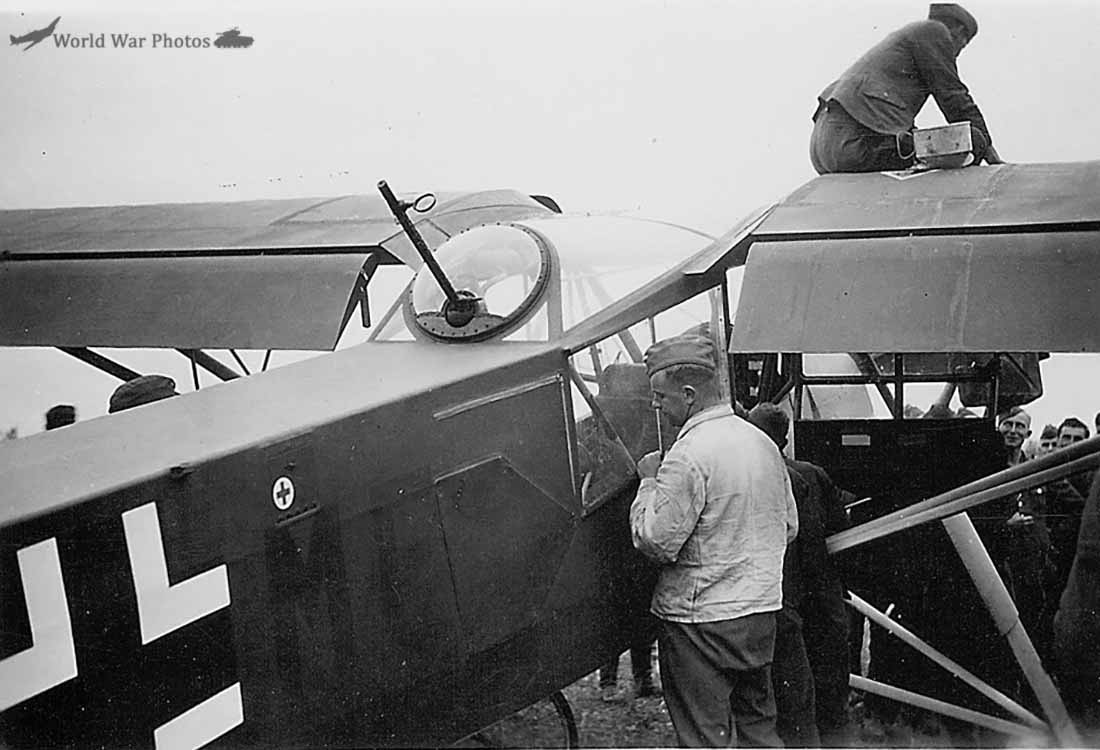
Fi 156 Storch
The armament of the Fieseler Fi 156 was primarily designed for defensive purposes and evolved significantly as the aircraft’s operational roles expanded during the Second World War. Early models, such as the pre-production A-series and early B-series, were generally unarmed, leaving them vulnerable to enemy fighter aircraft. The necessity for defensive firepower became apparent during the Polish campaign, leading to the standardization of weapons in the subsequent C-series.
The primary defensive installation for the Storch was characterized by the following technical features:
- The MG 15 Defensive Mount: The standard armament consisted of a single 7.92 mm Rheinmetall-Borsig MG 15 machine gun. This weapon was installed in the rear part of the glazed cockpit roof, a position often designated as the B-Stand. The mounting mechanism was a specialized circular unit known as a "Linsenlafette" (lens mount) or colloquially as a "fisheye" mount, which allowed the observer or passenger to track and fire at pursuing aircraft.
- Ammunition and Effectiveness: The MG 15 was typically provided with 150 rounds of ammunition, often stored in double-drum magazines. Luftwaffe pilots referred to this armament as Respect-Bewaffnung ("respect armament"), signifying that its purpose was less about achieving kills and more about deterring aggressive enemy pilots during the Storch's low-speed maneuvers.
- Personal Weapons: In addition to the fixed MG 15, crews frequently carried personal automatic weapons for ground defense or supplementary aerial defense. These included MP 28 or MP 40 machine pistols, which were often stowed in the cockpit in specialized holders.
As the conflict progressed, specialized variants were developed with more aggressive armament configurations:
- Anti-Partisan and Police Versions (Fi 156 P and F-0): For internal security and anti-partisan roles behind the Eastern Front, the armament was increased. These variants sometimes replaced the single rear MG 15 with two MG 15s mounted in the side windows of the cabin.
- Bombing and Ground Attack: The Storch could be fitted with bomb racks, typically the ETC 50 or ETC 50/VIII. These allowed the aircraft to carry up to three SC 50 (50 kg) bombs (one under the fuselage and two under the wings) or specialized canisters containing up to 48 SD 2 fragmentation bombs.
- Experimental Anti-Submarine Role (Fi 156 U): Experimental versions were tested for coastal defense and anti-submarine operations, equipped with depth charges or heavy bombs, though these did not see widespread deployment.
The integration of these weapons systems transformed the Fi 156 from a purely passive observation platform into a versatile multi-role machine capable of limited offensive action and self-preservation in contested airspace.