
USS Wasp (CV-7)
Click the thumbnails to enlarge them
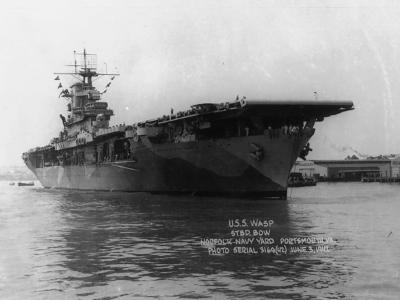
Aircraft Carrier USS Wasp CV-7 June 1942

Aircraft carrier USS Wasp CV-7 on fire 15 September 1942
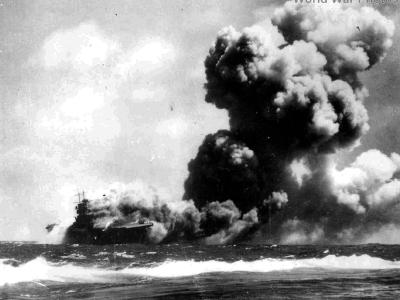
Burning USS Wasp September 15, 1942
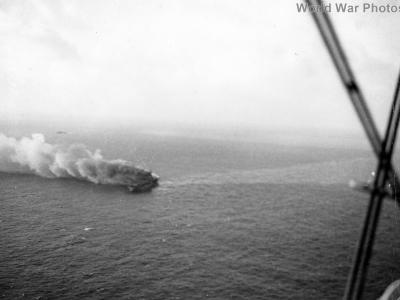
Burning USS Wasp September 15, 1942 2
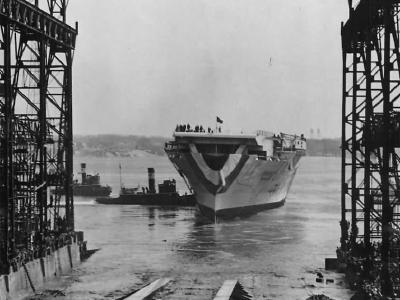
Launch of carrier USS Wasp CV-7, 4 April 1939
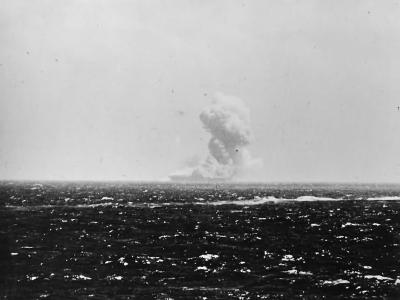
The Sinking of the aircraft carrier USS Wasp CV-7
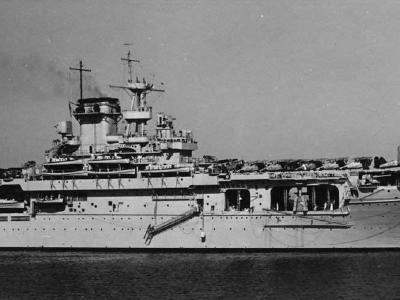
USS Wasp 1940
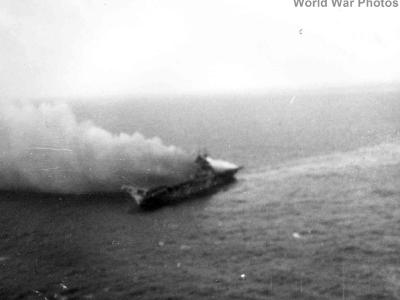
USS Wasp after being torpedoed
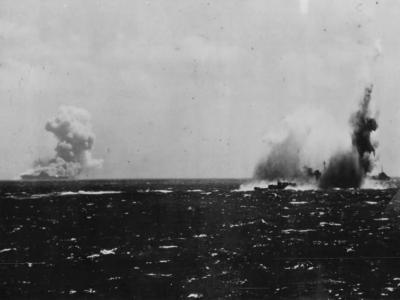
USS Wasp and Destroyer USS O'Brien DD-415 hit by Japanese torpedoes, 15 September 1942
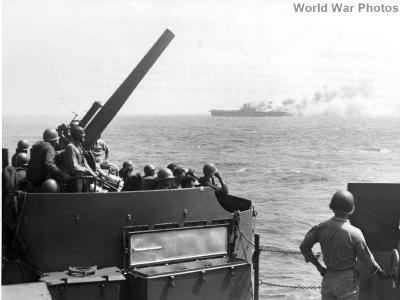
USS Wasp burn after she was torpedoed while operating in the Solomon Islands
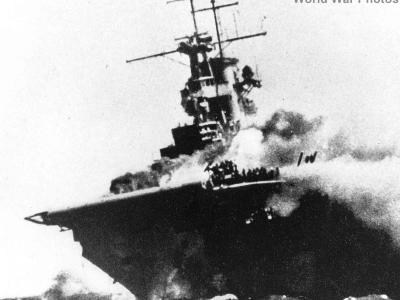
USS Wasp CV-7 after being torpedoed
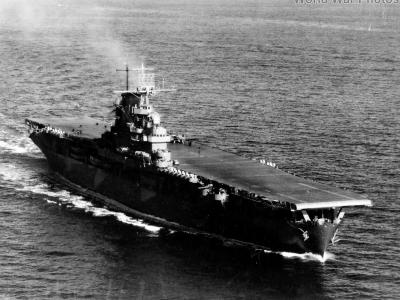
USS Wasp CV-7 underway 1942
Wasp was a United States Navy aircraft carrier. She was the sole ship of her class. Built to use up the remaining tonnage allowed to the United States for aircraft carriers under the treaties of the time, she was built on a reduced-size version of the Yorktown class hull. Wasp was a byproduct of the Washington Naval Treaty. With the construction of Yorktown and Enterprise, the United States still had 15,000 tons available to flesh out its carrier fleet. The Navy sought to squeeze a large air group onto a ship with nearly twenty five percent less displacement than the Yorktown class. In order to save weight and space, Wasp was constructed with low power machinery (compare Wasp’s 75,000 shp machinery with the Yorktown’s 120,000 shp, the Essex’s 150,000 shp, and the Independence class’ 100,000 shp). Additionally, Wasp also was launched with almost no armor, although this may have been upgraded after completion. Most significantly, Wasp had an almost complete lack of protection from torpedoes. Even so, her tonnage was significantly understated, and her actual displacement was closer to 20,000. The end result was a ship with major inherent design flaws. These flaws, combined with a relative lack of damage control experience in the early days of the war, would prove to be fatal.