
Kwajalein
Click the thumbnails to enlarge them
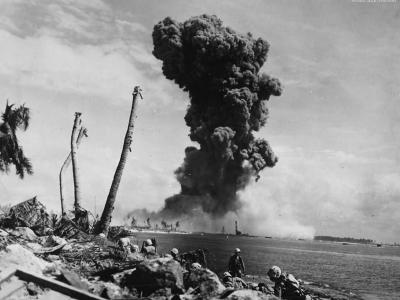
23rd Marines on Roi watch giant explosion on Namur
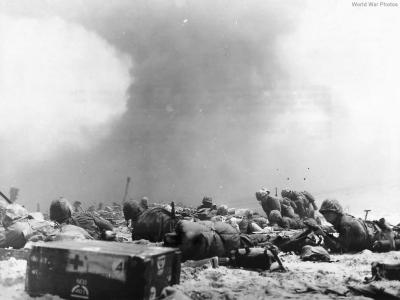
24th Marines assault troops pinned down on a Namur beach
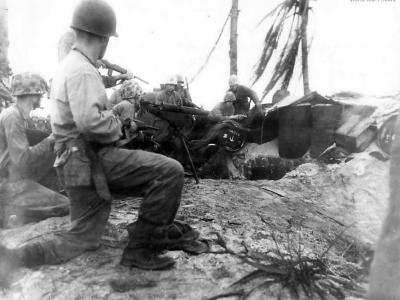
4th Div Marines work to coax Japanese from pillbox on Namur

4th Division Marine Lt Willis amid ruins on Namur Island

4th Division Marines check Japanese dead at Roi Airfield

4th Division Marines guard Japanese soldier on Roi Namur

4th Division Marines land under fire February 13, 1944
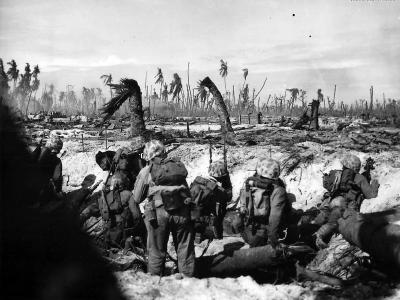
4th Division Marines scan the front on blasted Roi Namur Island

4th Marine Division Machine Gun crew advancing on Namur

4th Marine Division search for Japanese snipers on Namur

7th Division M10 and machine gunners advance on Kwajalein
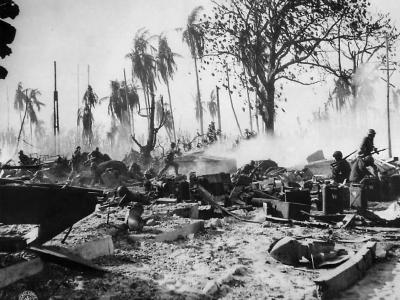
7th Division troops attack Japanese pillbox on Kwajalein

7th Infantry Division at Japanese radio and power HQ
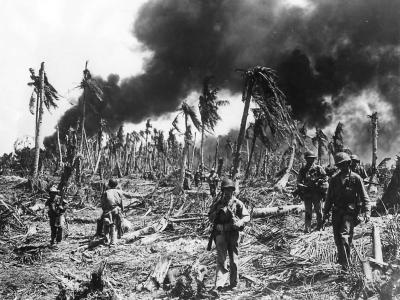
7th Infantry Division soldiers advance on Kwajalein

7th Infantry Division soldiers and 767th Tank Battalion M10 advance on Kwajalein

Aerial view of shell torn Kwajalein with U.S. ships offshore 1944

Aerial view of US Invasion of Namur and Roi Islands
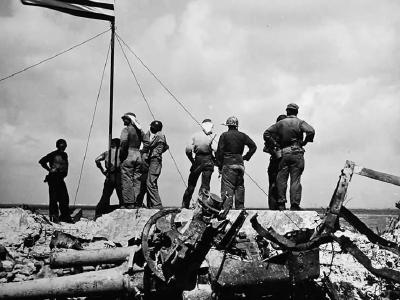
American flag Kwajalein Atoll

American flag over ruins of Japanese Headquarters on Namur

Avengers flying over Marines advancing to the north end of Namur
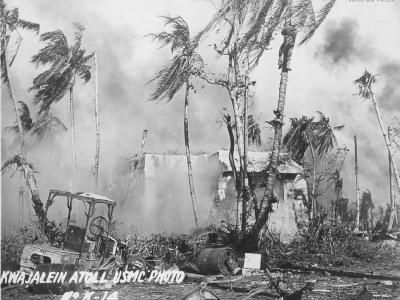
Battle of Kwajalein 2
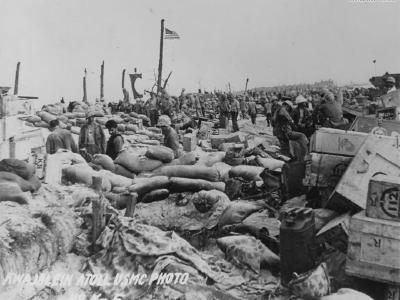
Battle of Kwajalein 3
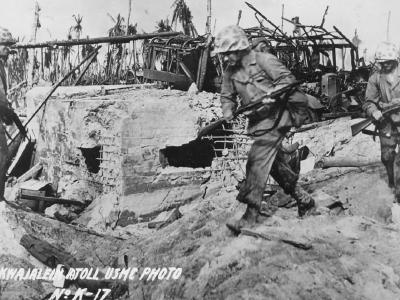
Battle of Kwajalein 4
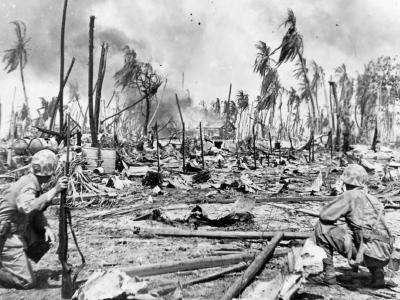
Battle of Kwajalein Marines

Bodies of fallen Japanese soldiers in trench on Namur Island
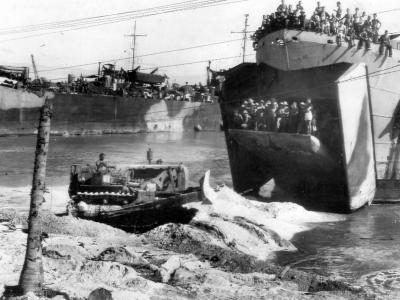
Bulldozer aids USS LST-241 Roi Island
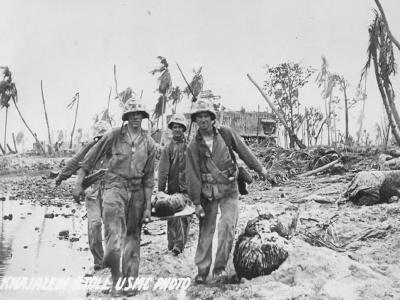
Corpsmen carry a wounded Marine on a stretcher
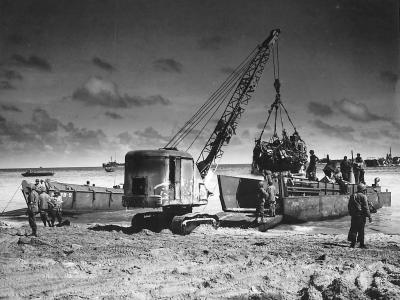
Crane unloads landing craft from USS Leedstown on Kwajalein

Japanese soldier surrendering to troops of the 4th Marine on Roi-Namur near concrete blockhouse
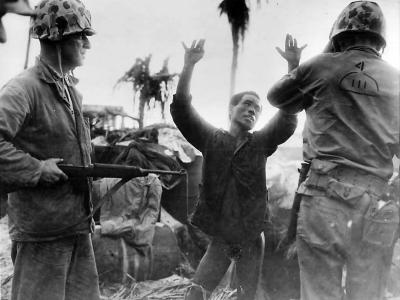
Japanese soldier surrenders to Marines on Namur
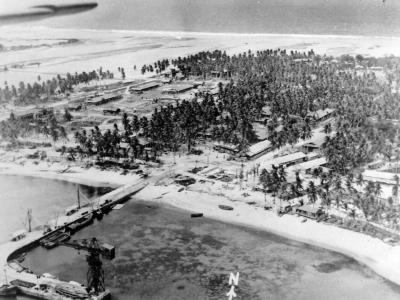
Kwajalein on day before bombardment
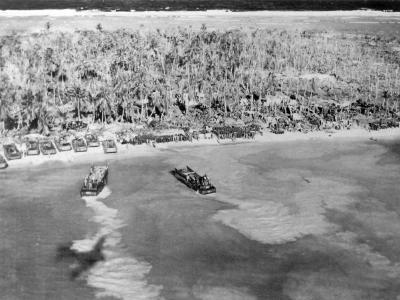
Landing crafts tanks supplies troops on Kwajalein

Landing Crafts transporting troops to Kwajalein Beach
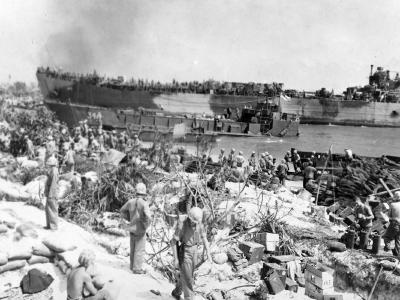
LSTs bringing Seabees and supplies to Kwajalein
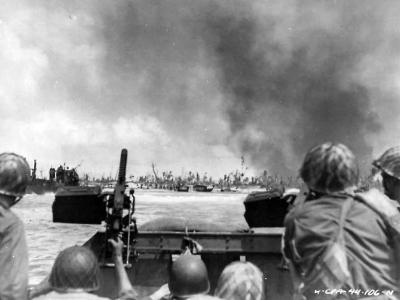
LVT landing 7th Division troops on Enubuj
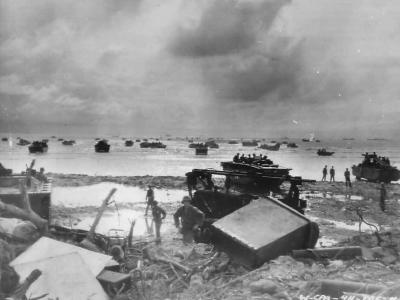
LVTs come in to the beach at low tide on Enubuj in the Kwajalein Atoll, landing 7th Division troops and equipment

M5A1 light tanks stalled on Green 2 Namur

M5A1 of Co B, 4th Tank Battalion, roll ashore at 13.00 on Green 2 Namur Island
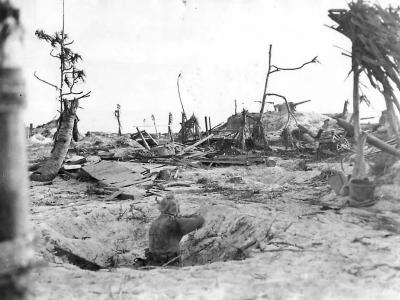
Marine fires on Japanese sniper from Kwajalein shell hole
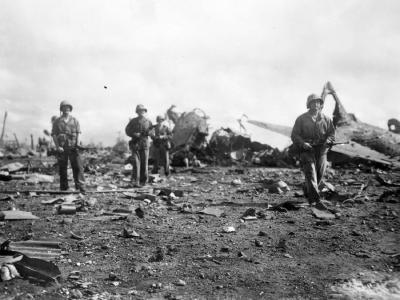
Marine patrol and Japanese aircraft wrecks at Roi Airfield

Marines at camp after the capture of Kwajalein
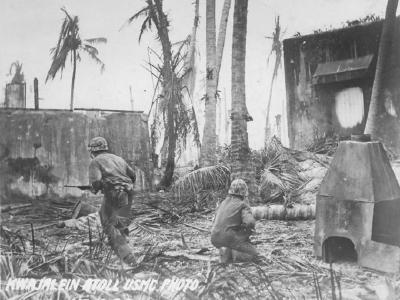
Marines attacking pillbox on Kwajalein
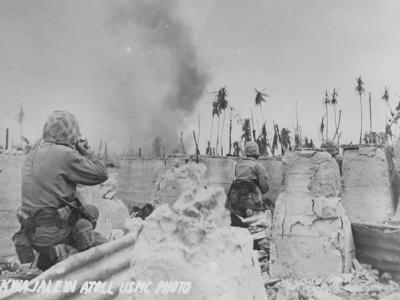
Marines in action
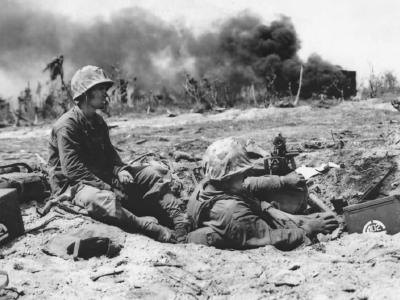
Marines in machine gun nest on Namur
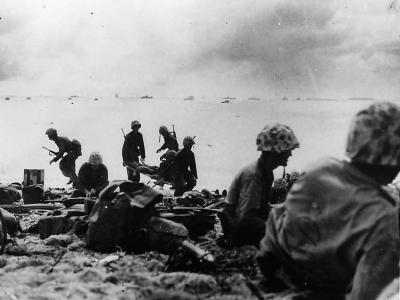
Marines landing on beach at Namur

Marines landing on Kwajalein Atoll in LVT 31 January 1944

Marines landing on Kwajalein Atoll in LVT 31 January 1944 2

Marines move inland after landing on Roi Island

Marines of V Amphibious Corps pull an injured Japanese soldier from a bunker
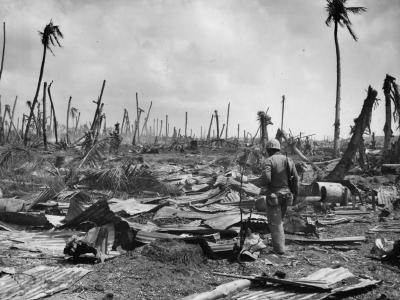
Marines search thru wreckage on Namur Island
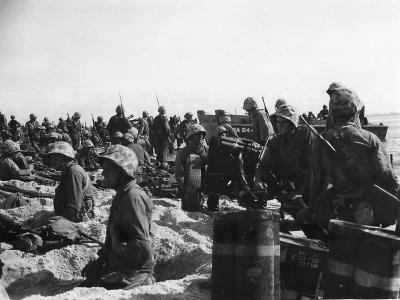
Marines unload equipment on Namur Beach

Red Cross gives cigarettes to 4th Division Marines on Kwajalein
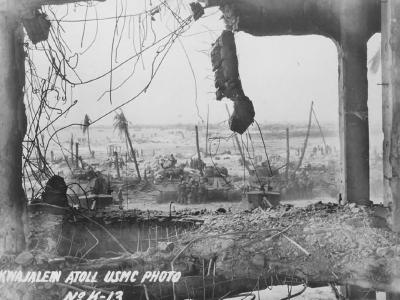
Row of Shermans
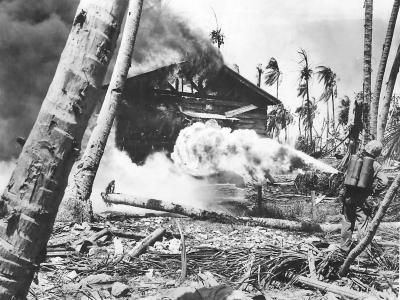
Soldier in action with flame thrower on Namur Island

Soldier with flamethrower views fallen soldiers on Namur
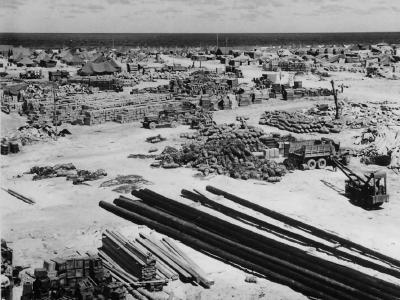
Troops and reconstruction materials on Kwajalein Beach

Troops check IDs on fallen soldiers on Kwajalein
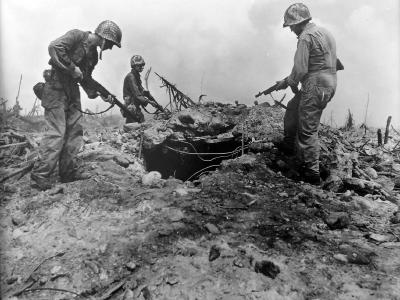
Troops inspect a bunker after capturing the Kwajalein

U.S .Coast Guardsmen with captured Japanese at Kwajalein 1944
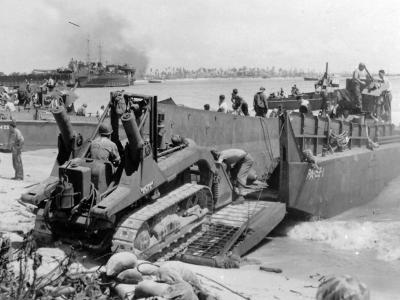
Unloading LCM with tractor at Roi
The Battle of Kwajalein was a battle of the Pacific campaign of World War II, fought from 31 January 1944 to 3 February 1944 on Kwajalein Atoll in the Marshall Islands. After the capture of Makin and Tarawa in the Gilbert Islands, the next step in the United States Navy’s campaign in the central Pacific was the Marshall Islands. These islands had been German colonies until World War I, then assigned to Japan in the post-war settlement as the “Eastern Mandates”. After the loss of the Solomon Islands and New Guinea in 1943, the Japanese command decided that the Gilbert and Marshall islands would be expendable: they preferred to fight a decisive battle closer to home. However, at the end of 1943 the Marshalls were reinforced to make their taking expensive for the Americans. By January 1944 the regional commander in Truk, Admiral Masashi Kobayashi, had 28,000 troops to defend the Marshalls, but he had very few planes. Expecting the US to attack the outermost islands in the group first, most of the defenders were stationed on Wotje, Mille, Maloelap, and Jaluit atolls to the east and south. This disposition was revealed to the Americans by ULTRA decryptions of Japanese communications, and Nimitz decided instead to bypass these outposts and land directly on Kwajalein. To do this, sea and air superiority were necessary. Accordingly, on 29 January 1944 US carrier planes attacked the Japanese airfield on Roi-Namur, destroying 92 of the 110 Japanese planes in the Marshalls. The American forces for the landings were Rear Admiral Richmond K. Turner’s 5th Amphibious Force, and Major General Holland M. Smith’s V Amphibious Corps, which was comprised of the 4th Marine Division commanded by Maj. Gen. Harry Schmidt, the 7th Infantry Division commanded by Maj. Gen. Charles H. Corlett, plus the 22nd Marine, 106th Infantry, and the 111th Infantry regiments. The 4th and 7th Divisions were assigned to the initial landings at Kwajalein, while the 2nd Battalion of the 106th was assigned to the simultaneous capture of Majuro Atoll, about 490 km to the southeast. The rest of the 106th and the 22nd Marines were in reserve for Kwajalein, while awaiting the following assault on Eniwetok, scheduled for three months later. The 7th Infantry Division began by capturing the small islands labeled Carlos, Carter, Cecil, and Carlson on 31 January, which were used as artillery bases for the next day’s assault. Kwajalein Island is 4 km long but only 800 m wide. There was therefore no possibility of defence in depth and the Japanese planned to counter-attack the landing beaches. They had not realized until the battle of Tarawa that American amphibious vehicles could cross coral reefs and so land on the lagoon side of an atoll; accordingly the strongest defences on Kwajalein faced the ocean. Bombardment by battleships, B-29 bombers and artillery on Carlson was devastating. The US Army history of the battle quotes a participant as saying that “the entire island looked as if it had been picked up 20,000 feet and then dropped”. By the time the 7th Division landed on Kwajalein Island on 1 February 1944 there was little resistance: by night the Americans estimated that only 1,500 of the original 5,000 defenders were still alive. On the north side of the atoll, the 4th Marine Division followed the same plan, first capturing islets Ivan, Jacob, Albert, Allen, and Abraham on 31 January, and landing on Roi-Namur on 1 February. The airfield on Roi (the eastern half) was captured quickly, and Namur the next day. The worst setback came when a Marine demolition team threw a satchel charge of high explosive into a Japanese bunker which turned out to be a torpedo warhead magazine. The resulting explosion killed twenty Marines and wounded dozens more. Only 51 of the original 3,500 Japanese defenders of Roi-Namur survived to be captured. The relatively easy capture of Kwajalein demonstrated US amphibious capabilities and showed that the changes to training and tactics after the bloody battle of Tarawa had been effective. It allowed Nimitz to speed up operations in the Marshalls and invade Eniwetok Atoll on 17 February 1944. The Japanese learned from the battle that beachline defenses were too vulnerable to bombardment by ships and planes. In the campaign for the Mariana Islands the defense in depth on Guam and Peleliu was much harder to overcome than the thin line on Kwajalein.