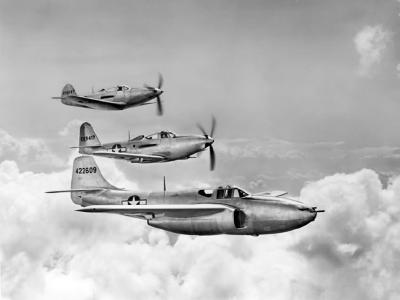
P-59 Airacomet
Click the thumbnails to enlarge them
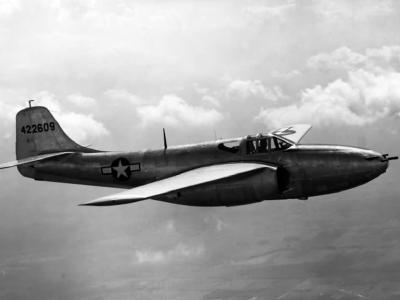
Bell P-59A 44-26609 in flight
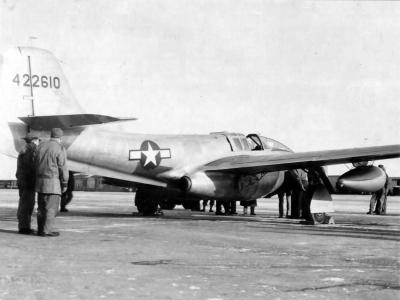
Bell P-59A-1-BE Airacomet 44-22610 Alaska 1945
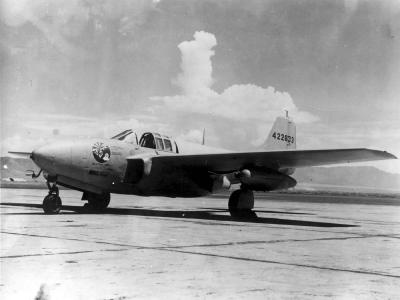
Bell P-59B 42-22633 named "Reluctant Robot"
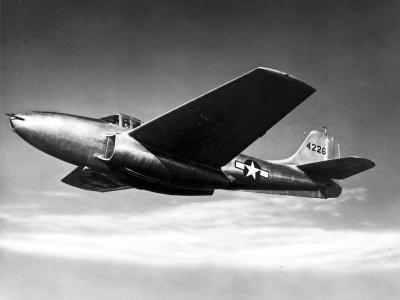
Bell P-59B Airacomet n a test flight
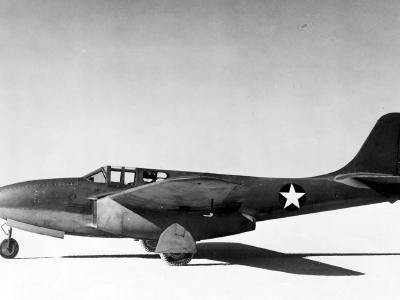
Bell XP-59 Airacomet
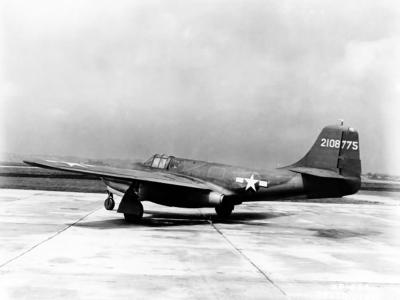
Bell YP-59A 42-108775 Wright Field
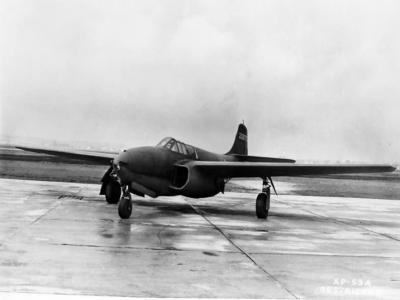
Bell YP-59A 42-108775 Wright Field 3

Jet fighter Bell P-59 Airacomet 44-22625 in flight
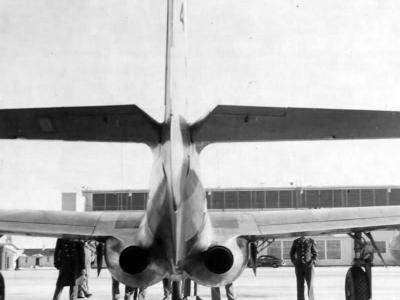
Jet fighter Bell P-59A Airacomet rear view 1945
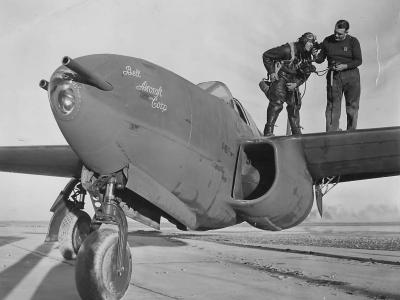
Jet fighter Bell YP-59 Airacomet and test pilot Jack Woolams 1943
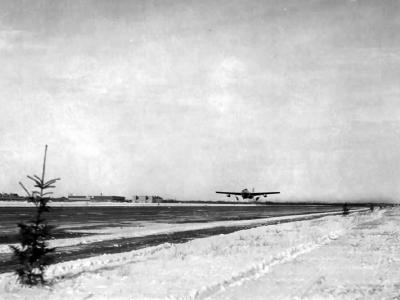
P-59 Airacomet takes off Fairbanks Alaska 1945

P-59 Airacomet, serial number have been censored 1944
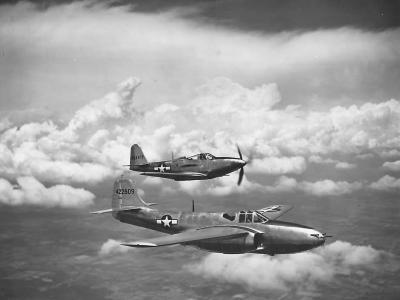
P-59A 44-22609 and P-63A
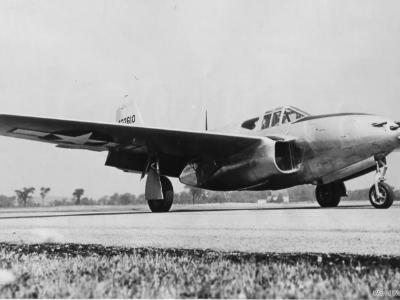
P-59A 44-22610 "Smokey Stover" 1944
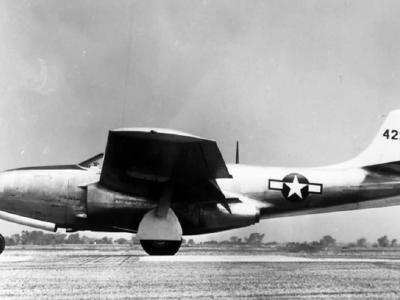
P-59A Airacomet 44-22610
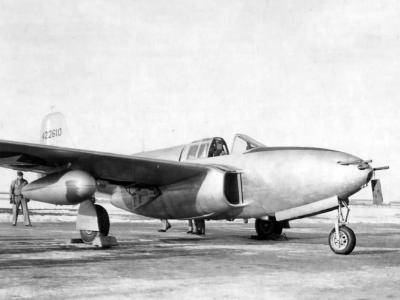
P-59A Airacomet 44-22610 "Smoky Stover" Alaska
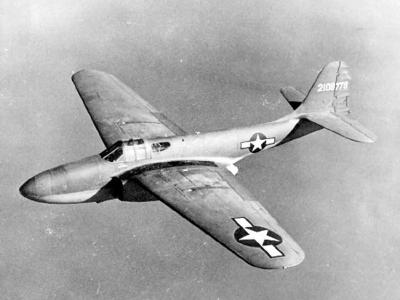
Prototype Bell YP-59A in flight
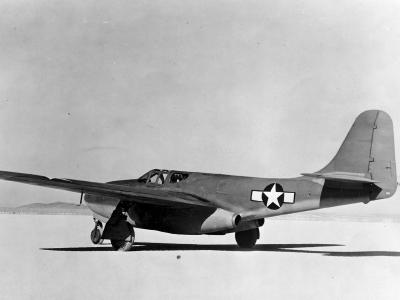
Prototype XP-59 Airacomet 2
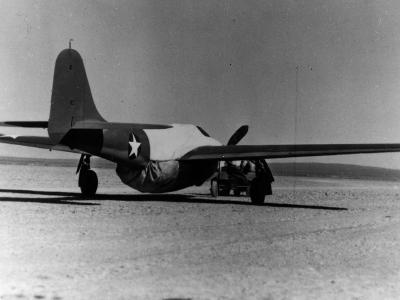
Prototype XP-59 Airacomet with a fake propeller
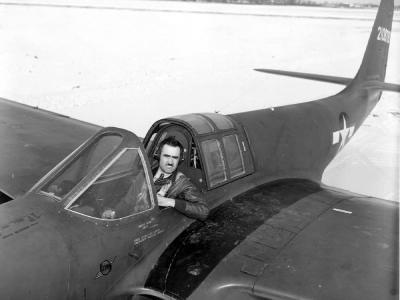
Prototype YP-59A Airacomet
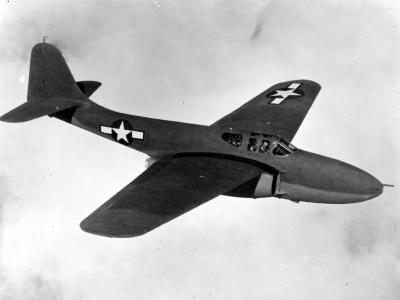
XP-59 Airacomet in flight
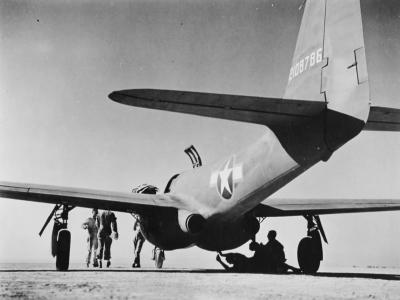
XP-59A Airacomet 42-108786 rear view
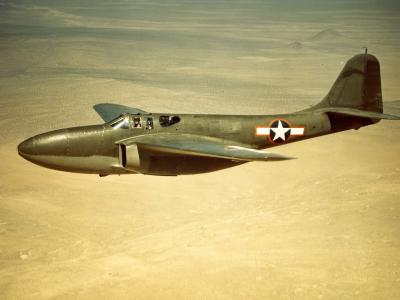
XP-59A Airacomet color photo
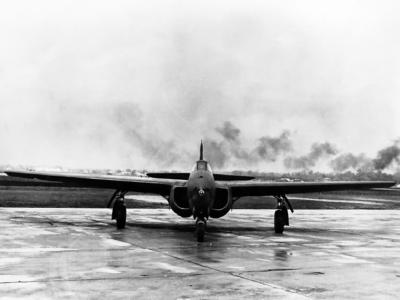
YP-59A 42-108775 Wright Field 2
Bell P-59 Airacomet (US Navy designation: YF2L-1) was a twin jet engined fighter aircraft, the first for the USAAF, designed and built by Bell Aircraft during World War II. Bell Aircraft was one of the companies asked to explore the development of jet-powered fighter aircraft, a technology that had caught the United States by surprise. While Britain, Germany, and Italy were already progressing with jet aircraft projects, the United States lagged behind. Impressed by the potential of jet engines, General ‘Hap’ Arnold, the Chief of the US Army Air Forces (USAAF), requested the blueprints of the British jet engine to manufacture it under license in the USA. Given the support provided through the Lend-Lease program, the British government agreed to share the technology.
On September 4, 1941, a meeting at Wright Field led to the selection of the General Electric Corporation as the primary contractor for the American production of the British jet engine, due to their extensive experience with turbines. Fifteen engines were initially ordered, with all production and testing conducted under strict secrecy. The next day, Bell Aircraft was approached to build a jet fighter using these engines. Bell was chosen because of its available capacity and proximity to the General Electric plant, essential for maintaining secrecy.
Bell agreed to construct three prototypes, with the first due eight months after the contract signing on September 30, 1941. The project was given the cover designation ‘XP-59A’ to mislead Axis intelligence into thinking it was related to the unrelated XP-59 piston-engine fighter. The original XP-59 project was quietly canceled on December 1, 1941, as work on the new jet fighter began.
The General Electric jet engine, designated I-A, was portrayed as a new turbocharger. Bell’s conservative aircraft design featured a conventional layout with a mid-mounted wing and retractable tricycle landing gear. It was powered by two 1,400 lb (5.12 kN) thrust General Electric I-A jet engines mounted under the wing roots. The aircraft had a high-set tailplane and a pressurized cockpit accessed via a side-hinged canopy. The fuselage was divided into a forward section, containing the armament bay and cockpit, and a rear section of stressed-skin, semi-monocoque construction. The control surfaces were fabric-covered and manually operated.
Though primarily an engine test bed, the XP-59A was also viewed as a potential combat aircraft, equipped with two 37mm cannons in the nose. The USAAF approved the design and the construction of three prototypes on January 9, 1942. Before the first prototype flew, the USAAF ordered thirteen YP-59As for service testing in March 1942. These had serial numbers 42-108771 to 108783 and were powered by an improved General Electric engine, the 1-16 (later J31), rated at 1,650 lb (6.04 kN) thrust. The YP-59As featured sliding canopies instead of the hinged ones used on the prototypes. Toal production: 66. Specifications:
| variant | P-59B |
| crew | 1 |
| wingspan (m) | 11,62 |
| lenght (m) | 13,87 |
| height (m) | 3,66 |
| wing area (m2) | 35,84 |
| empty weight (kg) | 3705 |
| take-off weight (kg) | 5010 |
| max take-off weight (kg) | 6215 |
| engines | General Electric J31-GE-5 turbojets, 8,89 kN each |
| fuel (l) | 1350 + 1140 |
| speed (km/h) | 615 km/h at 1500 m; 665 km/h at 10668 m |
| ceiling (m) | 14080 |
| range (km) | 885-1450 |
| climb to | 6092 m - 7'24'' ; 9144 m 15'30'' |
| bombs (kg) | 2 x 454 kg |
| armament | 1 x 37mm, 3 x 12,7 mm |
- Steve Pace: Bell P-59 Airacomet, Air Force Legends Number 208
- David M. Carpenter: P-59 Airacomet First Jet Flame Powered
- Pelletier - Bell Aircraft Since 1935, Putnam Aeronautical Books
- Hugh Harkins: USAF Jet Powered Fighters: XP-59 - XF-85
- Hugh Cowin; X-Planes - Research Aircraft 1891-1970; A Unique Pictorial Record of Flying Prototypes, their Designers and Pilots, Osprey Aviation Pioneers 1
- Antony L. Kay: Turbojet - History And Development 1930-1960 Volume 2: USSR, USA, Japan, France, Canada, Sweden, Switzerland, Italy and Hungary
- Various Authors: United States Army and Air Force Fighters 1916-1961, Harleyford Publications 1961
- Kev Darling: American X & Y Planes Volume I - Experimental Aircraft to 1945; Crowood Aviation Series