YP-38 in flight 6
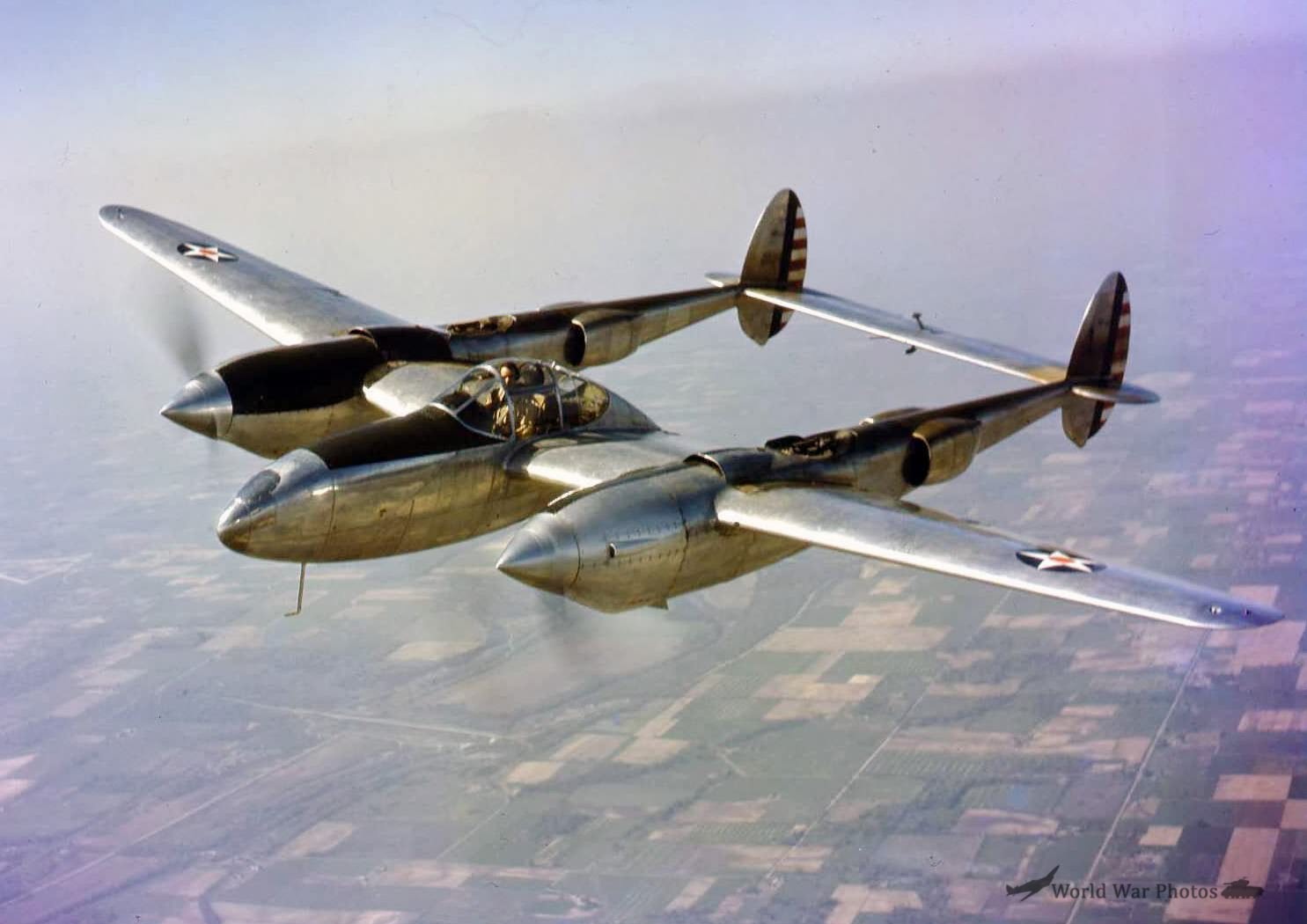
YP-38 color photo
The Lockheed YP-38, manufacturer designation Model 122-62-02, comprised a service test batch of thirteen aircraft (serial numbers 39-689 to 39-701) plus one structural test airframe. Ordered on April 27, 1939, following the record-breaking but ill-fated transcontinental flight of the XP-38 prototype, the YP-38 represented a critical evolutionary stage in the Lightning's development, transitioning the hand-built interceptor concept into a mass-producible combat platform.
Technical Evolution and Design Changes
The YP-38 featured comprehensive structural and mechanical redesigns based on lessons learned from the XP-38 prototype:
- Powerplant and Propulsion: It was equipped with Allison V-1710-27 (port) and -29 (starboard) engines. A major change was the direction of propeller rotation; while the XP-38's propellers rotated inward at the top, the YP-38’s propellers were geared to rotate outward. This modification improved longitudinal stability and reduced the buffeting caused by propeller wash on the tail surfaces.
- Weight Reduction: The airframe was lightened by approximately 1,500 pounds compared to the XP-38 to meet Army requirements.
- Nacelle and Cowling Redesign: Adoption of the Allison F-series engines, which utilized spur reduction gears rather than epicyclic gears, necessitated raising the engine thrust line and expanding the cowling lines.
- Cooling Systems: The radiators in the tail booms were enlarged and fitted with individual adjustable exit doors. The small, retractable oil cooler scoops of the prototype were replaced by two large, fixed, elliptical intakes located under the propeller spinners.
- Structural Refinements: Large wing-fuselage fillets were eventually added to smooth airflow over the tail. By direction of the Army, external mass balances were added to the elevators to counter potential flutter, a feature project engineer Kelly Johnson initially protested as unnecessary.
Physical Characteristics and Finish
The YP-38s were delivered in a highly polished natural metal (dural) finish. They featured the colorful pre-war USAAC markings, including red, white, and blue rudder stripes and the blue cocarde with a red center on the wing panels. A distinctive feature of this batch was the needle-pointed spinners, which were more streamlined than the blunted spinners used on later production P-38 models. The initial aircraft retained the frameless, rounded windshield of the prototype, though this was later replaced during the test program by a three-piece framed windshield with flat bulletproof glass.
Armament Configuration
While many YP-38s were flown without actual weapons for evaluation, the series introduced a revised armament suite intended to be standard for the fighter:
- One 37mm Oldsmobile (Browning M9) cannon with 15 rounds.
- Two .50-caliber machine guns with 200 rounds per gun.
- Two .30-caliber machine guns with 500 rounds per gun. On many YP-38s, the upper .50-caliber weapons were covered by prominent tubular fairings on the nose to maintain streamlining.
Performance and Flight Testing
The first YP-38 (serial 39-689) made its maiden flight on September 17, 1940, with Lockheed test pilot Marshall Headle at the controls. The type demonstrated a maximum speed of 405 mph at 20,000 feet and could reach that altitude in six minutes.
The YP-38 flight test program was marred by the discovery of "compressibility" (also known as "shock stall") during high-speed dives. In May 1941, Major Signa Gilkey survived a terrifying encounter with compressibility in a YP-38, reaching speeds of nearly 500 mph while losing control of the aircraft. Tragically, Lockheed test pilot Ralph Virden was killed on November 4, 1941, when the first YP-38 (39-689) suffered a structural tail failure during a power dive test intended to evaluate the new wing fillets.
Operational Service
Most YP-38s were delivered to the 1st Pursuit Group at Selfridge Field, Michigan, for service evaluation. These aircraft allowed the USAAF to develop tactics and familiarize pilots with the complex twin-engine fighter before the onset of World War II. The second YP-38 (39-690) was notably assigned to the NACA Langley facility for full-scale wind tunnel testing to address the aerodynamic issues identified during flight trials.