Experimental Lockheed XF-5D 42-12975
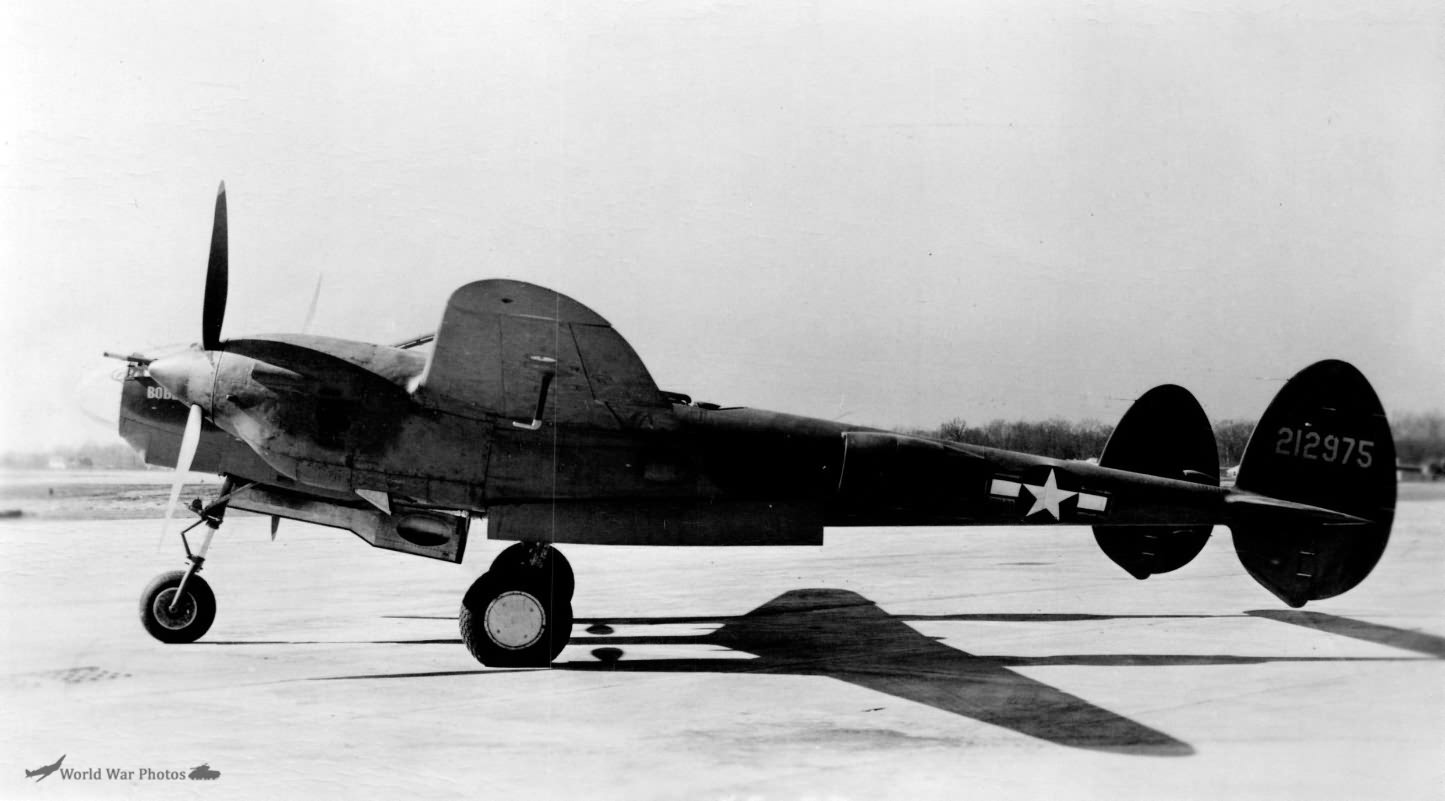
XF-5D 42-12975
The Lockheed XF-5D was a unique, one-off experimental modification of the P-38 Lightning series, specifically designed as a two-seat armed reconnaissance aircraft. Engineered by the Air Technical Service Command at Wright Field and nicknamed "Bobbie," the aircraft first flew in the spring of 1943. It is historically significant as the inadvertent progenitor of the subsequent "Droop Snoot" bombing leaders and "Pathfinder" variants.
Genesis and Base Airframe
The XF-5D was a hybrid conversion based on a production F-5A-10-LO (serial number 42-12975), which itself was a photographic reconnaissance derivative of the P-38G fighter. The project originated from a July 1943 requirement for a specialized photographic airplane capable of operating effectively at low altitudes, generally under 12,000 feet. While there were initial discussions about using a P-38J airframe and retaining turbosuperchargers and oxygen equipment, the priority for P-38J production led to the selection of an F-5A for the conversion instead.
Design and Crew Accommodation
The most distinctive physical feature of the XF-5D was its elongated, glazed nose compartment.
- Glazed Nose: The nose was constructed with clear Plexiglas to provide maximum visibility for the forward-seated crew member.
- Second Crew Member: Unlike standard F-5 reconnaissance models, which were single-seat aircraft, the XF-5D accommodated a second crewman who served as a photo-navigator and camera operator.
- Escape Provisions: To ensure the safety of the observer, the design incorporated both upper and lower escape hatches.
Armament and Camera Configuration
The XF-5D was uniquely configured to carry both offensive armament and a sophisticated camera suite, a departure from standard unarmed reconnaissance Lightnings:
- Armament: It retained two .50-caliber machine guns mounted in the upper portion of the nose. It was noted by observers that the proximity of these weapons to the navigator’s position would have been "deafening" had they been fired in combat.
- Cameras: The aircraft was equipped with three Fairchild K-17 cameras. These were distributed to provide wide coverage: one was mounted vertically to shoot through the nose (or below it), and one was installed in each of the two tail booms.
Historical Significance
Although the XF-5D itself was never put into production, its configuration proved the viability of a two-man crew in the P-38’s central nacelle. The concept of utilizing a glazed nose for a second crew member directly informed the development of the Droop Snoot bombing leader, which replaced the cameras and guns with a bombardier and a Norden bombsight. The XF-5D remains a notable example of the Lightning's inherent versatility, demonstrating its ability to be adapted for roles including fighter, interceptor, trainer, and multi-seat specialized reconnaissance.