RP-38 40-744 2-place test plane
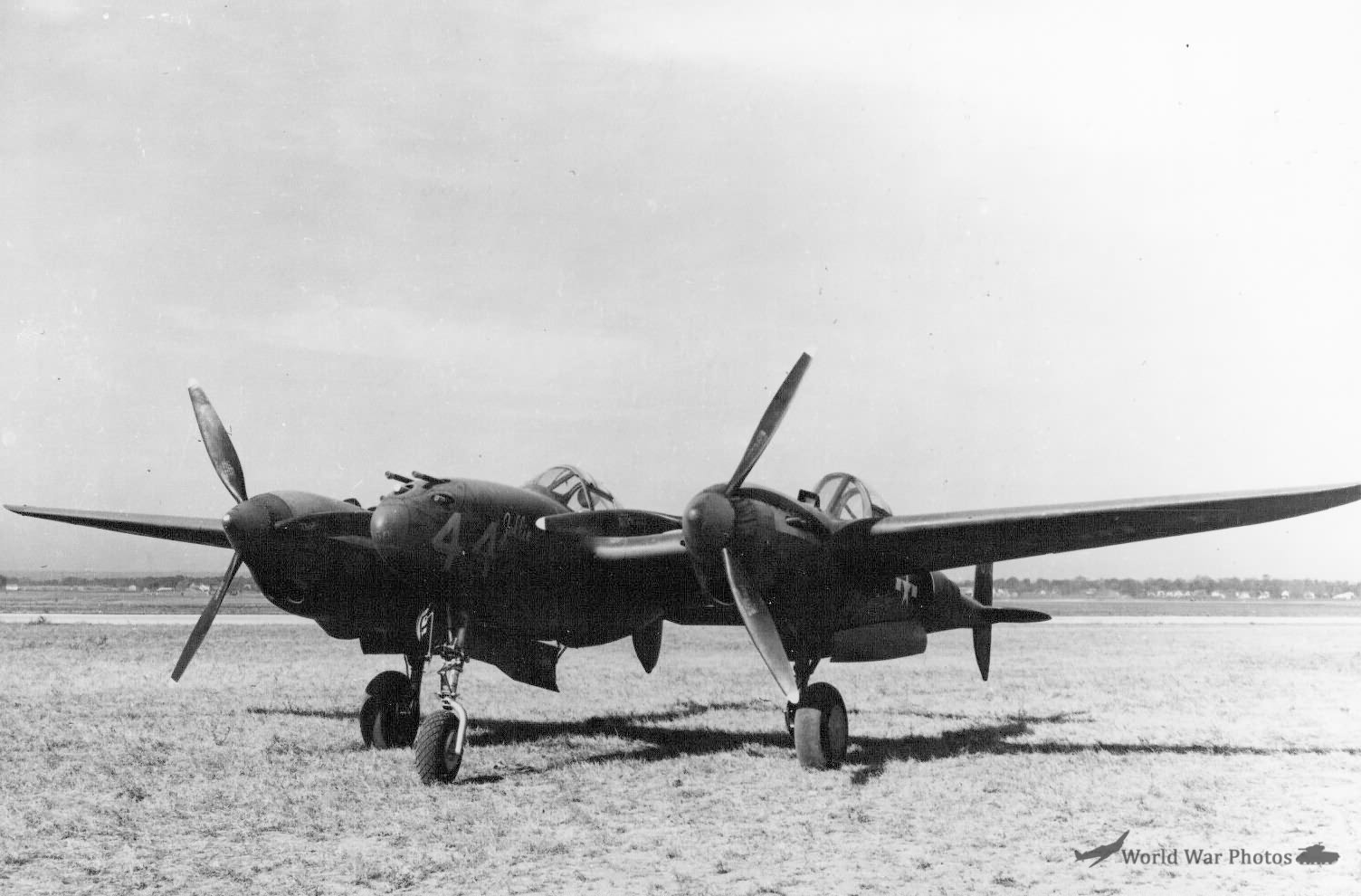
RP-38 40-744 2-place test plane
The aircraft identified by serial number 40-744 was the first production-line Lockheed P-38-LO Lightning (Model 222-62-08). While originally intended as a standard fighter, it was diverted from the production run to serve as a unique experimental testbed for aeromedical research. It was eventually redesignated as an RP-38, with the "R" prefix signifying its restricted, non-combat status.
Configuration and Design
The defining characteristic of 40-744 was the installation of a second cockpit located asymmetrically in the forward section of the left (port) tail boom. This modification created a two-place aircraft that differed significantly from standard Lightning variants:
- Asymmetric Seating: The second cockpit was positioned away from the aircraft's longitudinal centerline. It was notably larger and taller than the pilot’s nacelle to accommodate an observer.
- Lack of Dual Controls: Unlike later trainer modifications, the cockpit in the tail boom was not fitted with flight controls; it contained only a seat and basic instrumentation for monitoring the occupant’s reactions.
- Mechanical Alterations: To provide sufficient space for the second seat and its associated equipment, the turbosupercharger for the left Allison engine was removed. Despite this major structural change, the aircraft retained its standard nose-mounted armament suite.
- Aesthetics: The aircraft was nicknamed "Jollie" and prominently displayed the number "44" (the final two digits of its serial number) on its nose. It was finished in standard wartime Olive Drab over Neutral Gray camouflage.
Experimental Objectives
The aircraft was utilized primarily by Army scientists at Wright Field to study the physiological and psychological effects on the human body when flying in an off-center position. Researchers were concerned that sitting at a distance from the center of gravity might cause disorientation or other adverse effects during high-performance maneuvers.
The second seat was frequently occupied by a flight surgeon who served as an observer during these trials. Data gathered from 40-744 provided valuable insights into human factors and the reaction of aircrew to off-center seating, which later informed the development of aircraft such as the North American XP-82 Twin Mustang.
Historical Significance
As the first production P-38, 40-744 represents a pivotal transition point from the YP-38 service test batch to mass production. Its subsequent conversion into "Jollie" highlights the inherent versatility of the Lightning airframe, demonstrating its utility as a research vehicle for complex aerodynamic and medical problems that could not be easily simulated on the ground. Following the conclusion of its testing program, the type was not put into operational use, and no further asymmetric boom-cockpit conversions were performed.