Lockheed RP-322 AF101
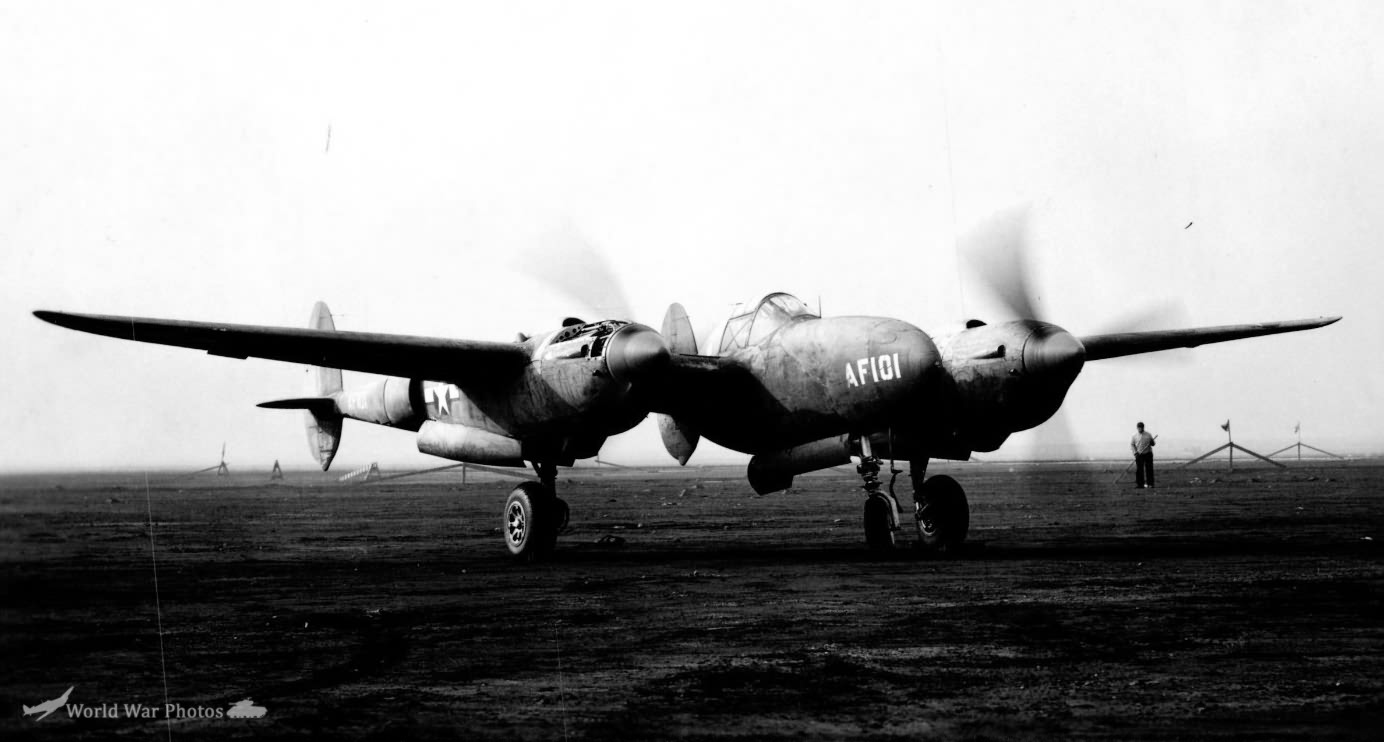
RP-322 AF101
The aircraft identified by the serial AF101 was a Lockheed Model 322-61-04, originally manufactured as a Lightning Mk I for the Royal Air Force (RAF) but subsequently absorbed into the United States Army Air Forces (USAAF) as a restricted trainer under the designation RP-322. This specific airframe represents a significant chapter in the early developmental struggles of the P-38 series, particularly regarding export requirements and performance compromises.
Technical Configuration
As a P-322-I variant (the designation for the first 22 unmodified airframes and several others from the initial batch), AF101 was characterized by several major departures from the standard American P-38 configuration:
- Powerplant: It was equipped with two Allison V-1710-C15 engines. Unlike the American "handed" engines which featured counter-rotating propellers, the engines on AF101 both utilized right-hand rotation to ensure commonality with the Curtiss Tomahawks already in RAF service.
- Lack of Turbosuperchargers: At the specific request of the British and French purchasing commissions, the General Electric turbosuperchargers were deleted. This resulted in smooth upper boom surfaces, devoid of the characteristic air intakes and exhaust shrouds found on combat-ready Lightnings.
- Aerodynamic Features: AF101 featured the early, smaller oil cooler intakes located under the spinners, which were shallower and more rounded than those on the later YP-38 and production models. It was also among the first to incorporate large wing-fuselage fillets designed to cure tail buffeting.
- Armament: The armament suite was reduced to two .50-caliber and two .30-caliber machine guns in the nose, with the 20mm or 37mm cannon typical of American models being omitted to save weight and simplify logistics.
Operational Role and Service
Following the British government's cancellation of the bulk of the Model 322 order due to the type's dismal high-altitude performance, AF101 was retained by the USAAF. Because the deletion of superchargers rendered the aircraft effectively useless for combat above 12,000 to 15,000 feet, it was relegated to the role of an advanced low-altitude trainer.
The "R" in its RP-322 designation officially signified "Restricted," meaning it was barred from combat operations. In this role, AF101 and its counterparts served as "hot ships" for cadet pilots, offering handling characteristics that were significantly lighter and more pleasant at low altitudes than the heavier, combat-equipped P-38 variants. However, some student pilots noted the type could be underpowered and possessed "vicious" engine cut-out characteristics.
Identification and Markings
Throughout its service life, AF101 was notable for retaining its original British serial number as its primary identification and radio call sign, a rare occurrence in the USAAF inventory.
- Camouflage: Early in its career, it wore the standard RAF day fighter scheme of Dark Green and Dark Earth over Sky undersurfaces.
- Final Appearance: In its later years, the aircraft appeared "very well-worn" and was refinished in standard USAAF Olive Drab and Neutral Gray, though it still prominently displayed the "AF101" serial on its nose.