Lockheed Lightning Mk I AF106
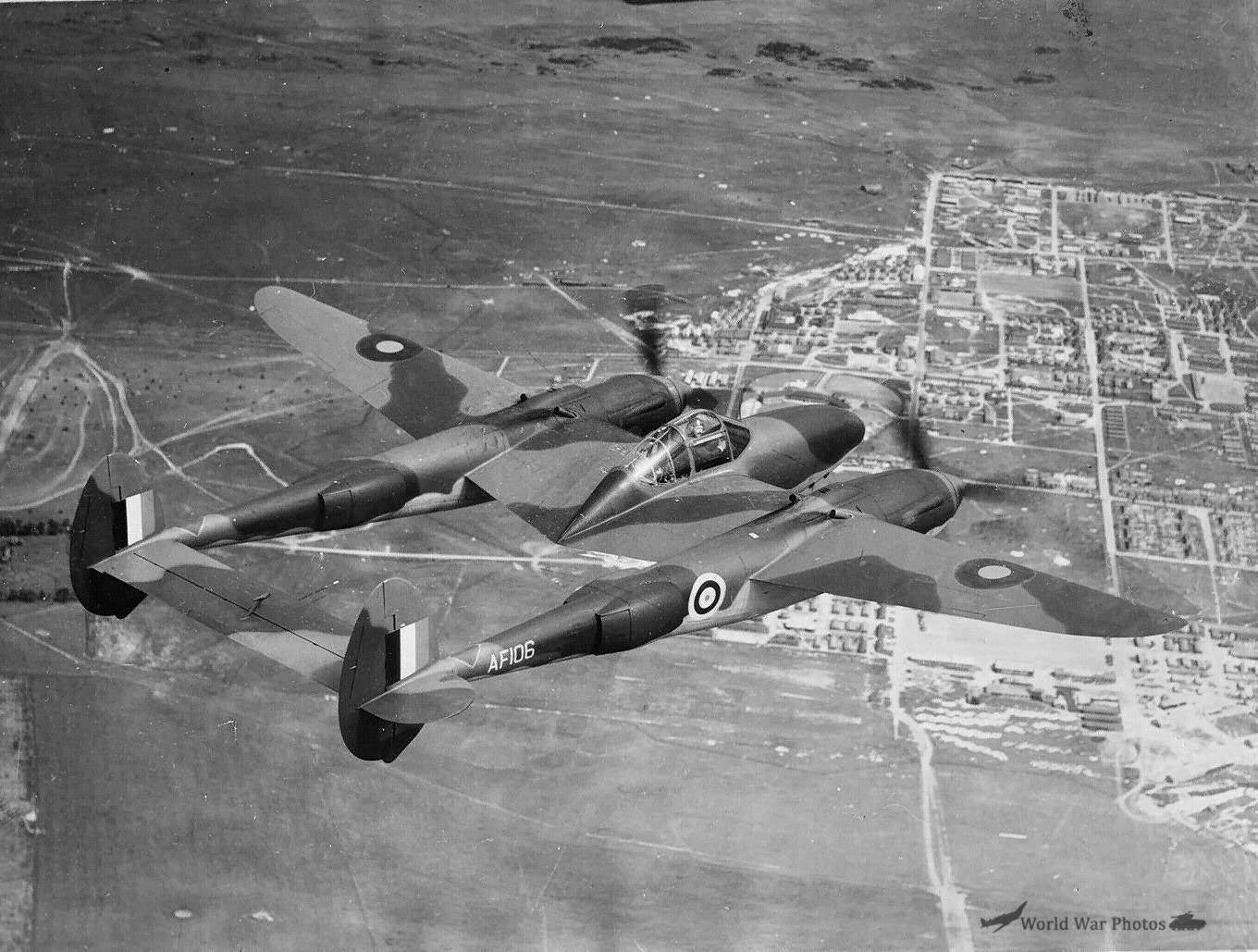
Lightning Mk I AF106
The Lockheed Lightning Mk I, designated Model 322-61-04 by the manufacturer, was an export variant of the P-38 designed to meet requirements issued by a joint British-French Purchasing Commission in 1940. The variant is characterized by significant design compromises requested by the purchasing nations to simplify maintenance and ensure commonality with other contemporary aircraft, such as the Curtiss Tomahawk.
Technical Configuration and Powerplant
The primary distinguishing feature of the Lightning Mk I was its propulsion system. It was powered by a pair of Allison V-1710-C15 engines, which produced 1,090 horsepower at 14,000 feet. At the specific insistence of the British and French commissions, the General Electric turbosuperchargers standard on American P-38s were deleted. Furthermore, the engines were geared such that both propellers rotated in the same (right-hand) direction, rather than being counter-rotating. This decision was made to simplify logistics, as it allowed the use of the same engine and propeller combination utilized by the Royal Air Force's Curtiss Tomahawks.
Physically, the Mk I could be identified by its smooth boom upper surfaces, as the absence of turbosuperchargers meant there were no external intakes or exhaust shrouds in those areas. The oil cooler intakes were located under the spinners and were shallower and more rounded than those on early American production models. Additionally, the Lightning Mk I was the first variant to incorporate large fillets at the wing-fuselage junction, a design feature later retrofitted to American models to cure tail buffeting.
Armament and Equipment
The armament suite for the Lightning Mk I was lighter than its American counterparts. It typically carried two .50-caliber machine guns and two .30-caliber machine guns in the nose. Unlike the U.S. Army Air Corps (USAAC) versions, no cannon—neither the 37mm nor the 20mm—was specified or fitted. The aircraft also utilized high-pressure oxygen systems and RAF-standard VHF radio equipment.
Performance and RAF Evaluation
The deletion of the turbosuperchargers and the use of identical rotation propellers had a deleterious effect on the aircraft's performance. The lack of high-altitude boost rendered the Mk I effectively useless above 12,000 feet. The same-direction propellers created significant torque, which made handling difficult during takeoff and landing.
Only three examples of the Lightning Mk I (serial numbers AF105, AF106, and AF108) were actually shipped to the United Kingdom for evaluation. AF106 arrived at the Aeroplane and Armament Experimental Establishment (A&AEE) at Boscombe Down in April 1942 for handling trials. While pilots generally reported that the handling was pleasant at low speeds, they noted that elevator movement was heavy and that the aircraft suffered from a speed restriction of 300 mph. The RAF condemned the type as being unsuitable for the aerial combat conditions then existing over Europe.
Rejection and Subsequent Disposition
Following these negative evaluations, the British government cancelled the remainder of the order for 667 aircraft. The USAAF subsequently took over the contract, absorbing the 143 completed Mk I airframes into its own inventory. These were designated as P-322 (or RP-322, with "R" for restricted) and were primarily utilized as advanced low-altitude trainers for pilots transitioning to more powerful Lightning models.
Historically, the Lightning Mk I project is significant for bestowing the enduring name "Lightning" on the P-38 series. Lockheed had originally intended to name the aircraft the "Atlanta," but the British choice was officially adopted for U.S. versions as well. Despite its failure as a combat aircraft for the RAF, the Mk I served as a vital developmental step, introducing airframe refinements such as wing fillets and shortened nose gear doors that became standard on all later P-38 variants.