Mechanics checking the engine of a B-18 at a base in the Caribbean 1942
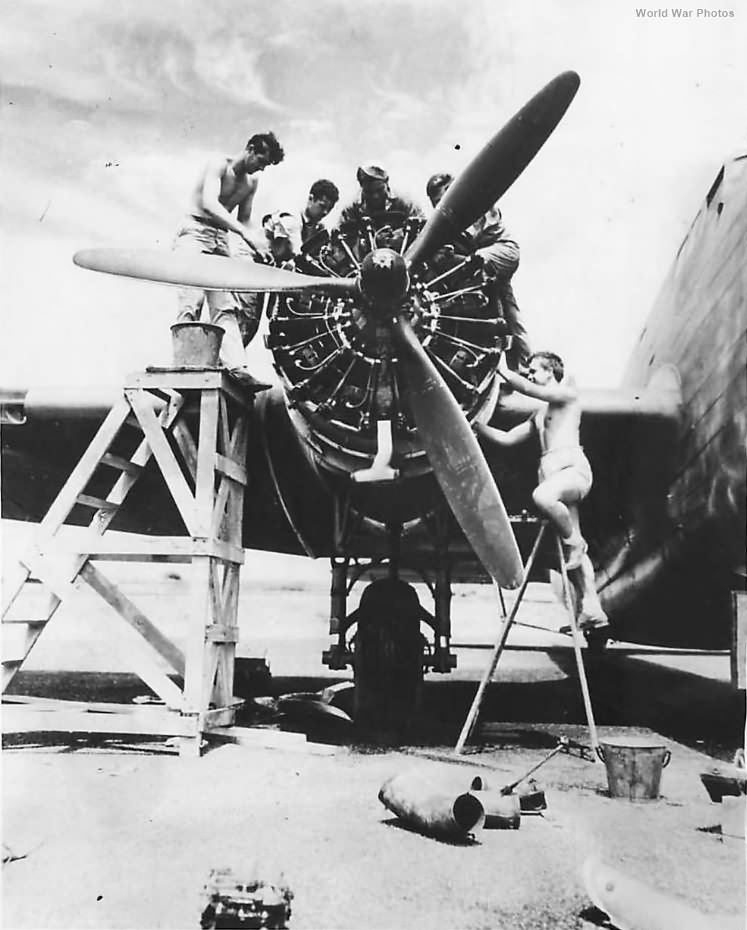
Mechanics checking the engine of a B-18 at a base in the Caribbean 1942
The B-18 Bolo was powered by two Wright R-1820-45 radial engines, each a robust and reliable powerplant with several key features and specifications. Below is a detailed overview of these engines, along with the propellers they drove:
Wright R-1820-45 Radial Engines:
-
Type and Series:
- The engines were nine-cylinder, one-row, air-cooled radial engines from the Wright Cyclone series. Specifically, they were part of the G-series, which replaced the F-series at the start of World War II.
- These engines were widely produced during the war, with Studebaker manufacturing the majority of them in South Bend, Indiana, and supporting factories in Fort Wayne, Indiana, and Chicago.
-
Construction:
- The engine featured a steel crankcase made of two sections split along the cylinder centerline.
- The cylinder heads were made of cast aluminum and were both screwed and shrunk into steel barrels.
- Each cylinder was equipped with one inlet valve and one sodium-cooled exhaust valve, both actuated by push rods.
-
Supercharger:
- The R-1820-45 engines were equipped with a gear-driven, two-speed supercharger developed by Wright, replacing the less efficient General Electric type used in earlier F-series engines. This improved engine performance, particularly at higher altitudes.
-
Carburetor:
- The engines used a Bendix-Stromberg PD-12H3 two-barrel injection type downdraft carburetor with automatic mixture control, along with a four-position manual mixture control.
-
Cooling:
- Cooling was enhanced with deeper and more numerous cooling fins. The G-series engines featured an additional cooling fin compared to the F-series, helping to mitigate the chronic overheating issues associated with radial engines.
-
Attachment:
- The engines were mounted to the nacelle firewall at nine points using rubber fittings to reduce vibrations.
-
Exhaust:
- The exhaust collector ring was composed of two sections, each made up of four segments, designed to manage the high temperatures and pressure of exhaust gases.
Engine Variants:
- R-1820-53:
- The B-18, B-18B, and B-18AM models were powered by the R-1820-53 series engines, which were similar to the R-1820-45 but with a larger impeller. These engines were specifically designed to use 100 octane gasoline instead of the standard 87 octane fuel, offering better performance.
Performance Specifications:
- Rated Horsepower:
- 930 hp at 2,100 rpm for takeoff
- 830 hp at 2,100 rpm at sea level
- 860 hp at 2,100 rpm at 3,200 feet
- 810 hp at 2,100 rpm at 10,300 feet
Engine Controls:
-
Throttle and Propeller Pitch:
- The controls were grouped at the upper end of the control pedestal and could be operated individually or together by either the pilot or co-pilot. These were spring-loaded and manually adjusted to hold the desired positions.
- The engine controls were cable-operated, connected to bellcranks on the firewall, and further controlled by push-pull rods forward of the firewall.
-
Carburetor and Supercharger:
- The carburetor was a two-barrel downdraft Holley type mounted on top of the supercharger section. Fuel mixture was fed through an annulus to the General Electric supercharger impeller before being delivered to the cylinders.
-
Ignition and Starting:
- Ignition was provided by two Scintilla magnetos mounted on the rear cover, firing two spark plugs per cylinder.
- The engines were started using an Eclipse Hand Electric Starter (Type C-21), operated by solenoid starting and meshing switches. A hand crank was also provided as a manual backup.
-
Lubrication and Electrical System:
- Lubrication was managed by a dry sump system, with one pressure pump and one scavenge pump.
- Electrical power was supplied by two Type E-5 engine-driven generators, one on each engine, which charged the aircraft's batteries.
Propeller:
-
Type and Features:
- The B-18 was equipped with Hamilton-Standard Hydromatic constant-speed, three-blade, fully feathering propellers.
- These propellers were critical for managing engine performance and efficiency, allowing adjustments to blade pitch to optimize thrust under various flight conditions.
-
Dimensions:
- Blade Length: 6 feet, 6 inches
- Propeller Hub Height (at rest): 8 feet, 6 inches