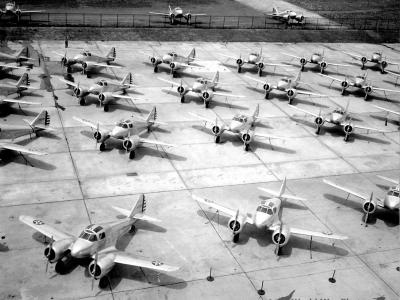
AT-9
Click the thumbnails to enlarge them
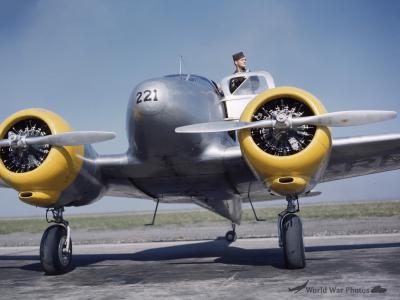
AT-9 221
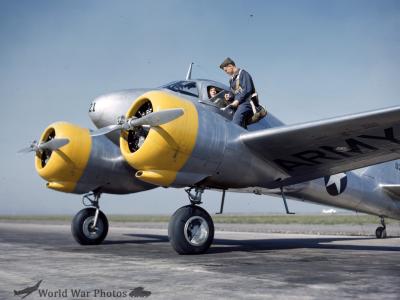
AT-9 221
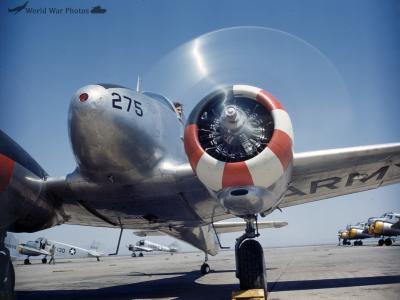
AT-9 275
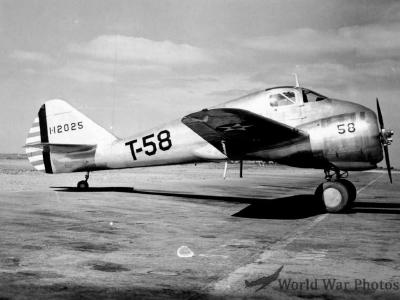
AT-9 41-12025
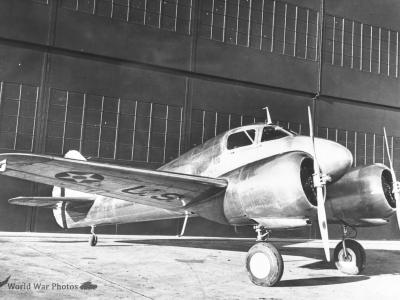
AT-9 41-5746
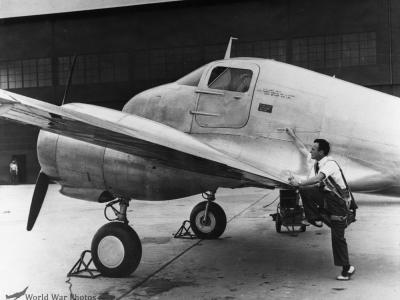
AT-9 41-5746
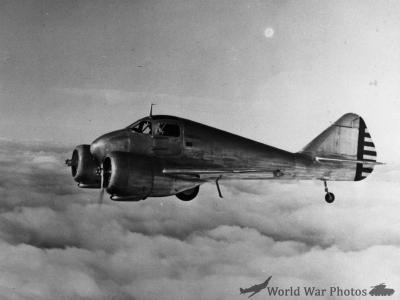
AT-9 41-5746
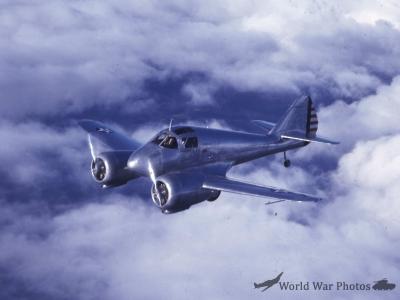
AT-9 41-5746 in flight
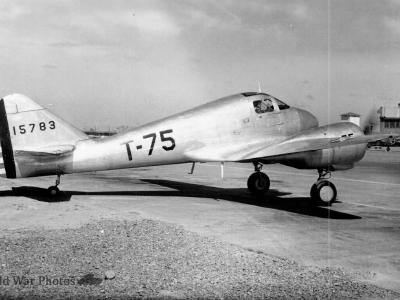
AT-9 41-5783
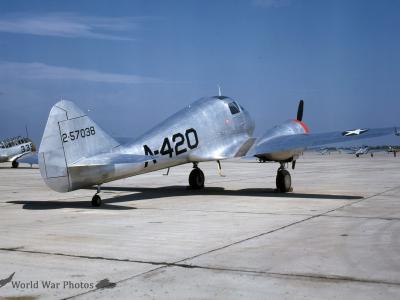
AT-9 42-57038
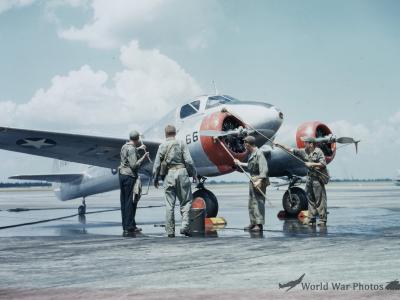
AT-9 66, 1942
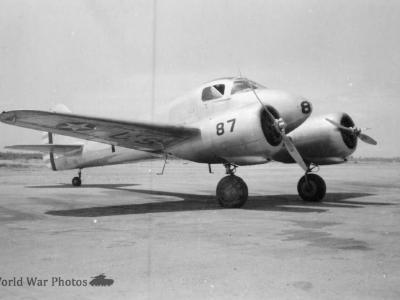
AT-9 87
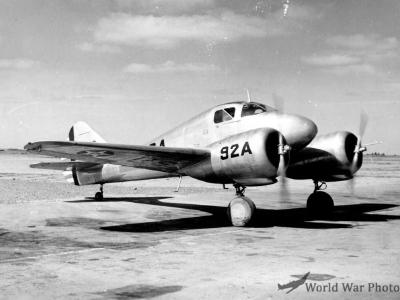
AT-9 92A Kelly Field
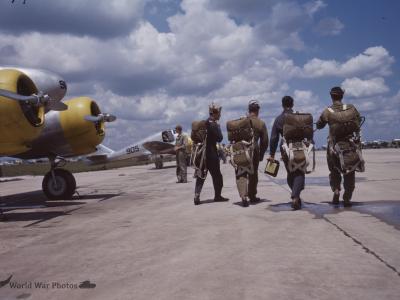
AT-9 Ellington Field
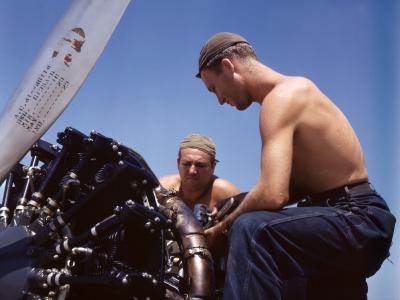
AT-9 engine
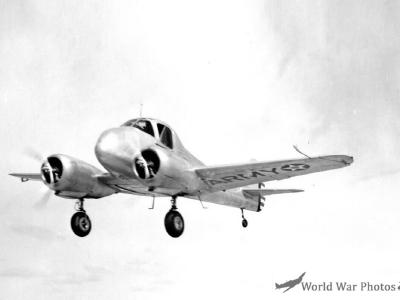
AT-9 Jeep
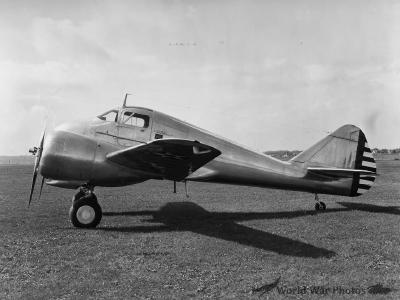
AT-9 left side
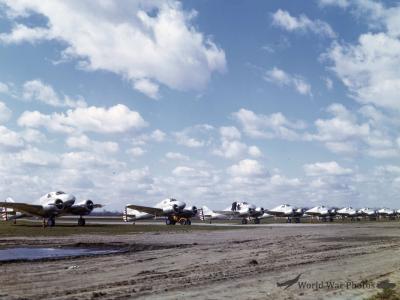
AT-9 line
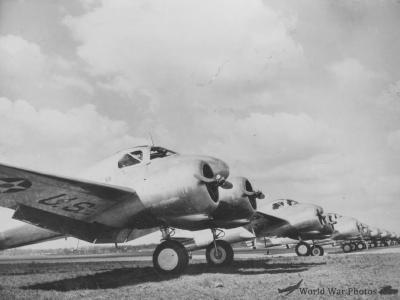
AT-9 line
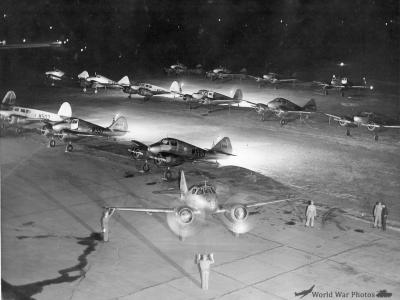
AT-9 Maxwell Field
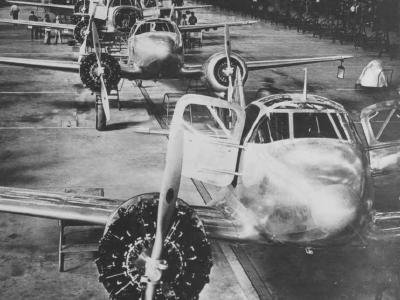
AT-9 production
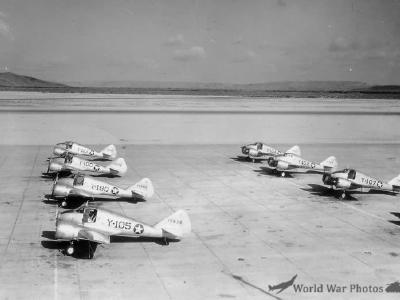
AT-9 Williams Field
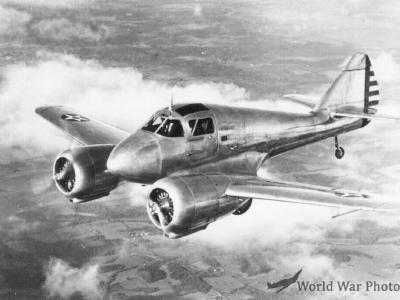
AT-9A
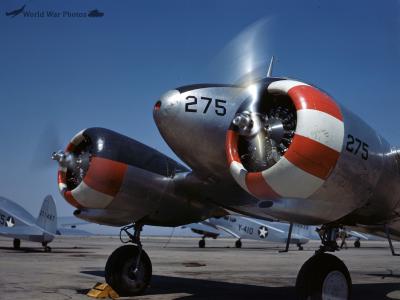
Curtiss-Wright AT-9 275
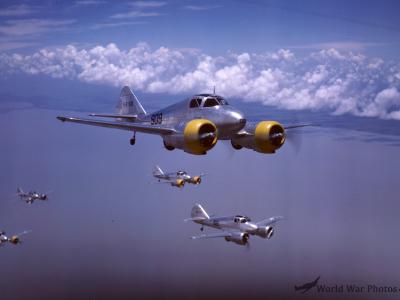
Curtiss-Wright AT-9 41-12150
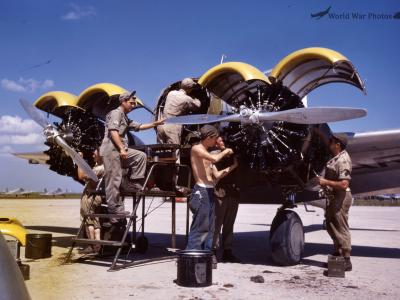
Mechanics working on AT-9 engines

Mechanics Working on Curtiss-Wright AT-9 at Maxwell Field 1942
The Curtiss AT-9, also known as the “Jeep” after a fictitious comic strip animal, was a fast twin-engined trainer developed by the Army Air Corps under an expansion program in 1940. Its primary purpose was to familiarize pilots with the handling characteristics of new medium bombers then entering production, such as the North American B-25 and Martin B-26. The name “Jeep” later gained greater fame when it was also given to the Army’s ubiquitous utility car that appeared around the same time. The AT-9 also appears on some wartime listings as another Curtiss Fledgling.
Curtiss produced the AT-9 from 1941 to 1943, lengthening the basic Model 19 wing for this new two-seat, twin-engined model. It was a special-purpose trainer with side-by-side seats only for the student pilot and the instructor. While the prototype was built with a welded steel-tube fuselage due to concerns about an impending aluminum shortage, all 791 production aircraft were all-aluminum. A total of 491 AT-9s were delivered, equipped with 295 hp Lycoming R-680-9 engines, with initial unit costs of $44,965. Additionally, 300 AT-9A models were delivered, featuring R-680-13 engines and revised undercarriage retraction hydraulics, with unit costs dropping to $40,286. The total production run was 791 aircraft.
The aircraft was a low-wing, two-place, all-metal monoplane with retractable landing gear. Its dimensions included a span of 40 ft 4 in (12.29 m), a length of 31 ft 8 in (9.65 m), and a height of 9 ft 10 in (2.99 m). It had a wing area of 233 sq ft (21.64 sq m), an empty weight of 4,494 lb (2,011 kg), and a gross weight of 6,060 lb (2,749 kg). Performance specifications included a maximum speed of 197 mph (317.03 km/h), a cruising speed of 175 mph (281.63 km/h), and it could climb 10,000 ft (3,048 m) in 8.6 minutes. Its service ceiling was 19,000 ft (5,791 m) and it had a range of 750 miles (1,207 km). The fuselage contained a fully enclosed cockpit for side-by-side seating for the student and instructor. It was built in three main sections: a rear, center, and nose section. The wing structure was all-aluminum, full cantilever, with internally braced neo-geodetic construction, and featured two main spars and three main panel assemblies as primary structural components. Engine mounts were identical and interchangeable.
Service use of the AT-9 was curtailed once B-25s and B-26s became available in sufficient numbers for training. These medium bombers were more versatile as they could double as crew integration trainers in addition to pilot transition trainers, a capability the single-purpose AT-9 lacked. Its limited utility prevented it from finding a useful place in the postwar surplus market.