
Albacore
Click the thumbnails to enlarge them
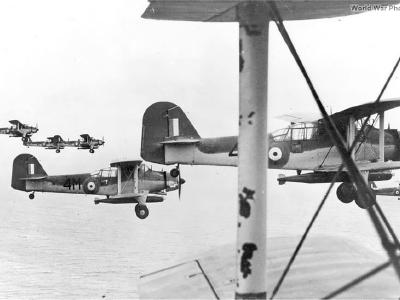
Albacore 4M of No. 827 Naval Air Squadron HMS Indomitable

Albacore aboard HMS Formidable 1942

Albacore BF759 4L of No, 820 Squadron in flight, North Africa
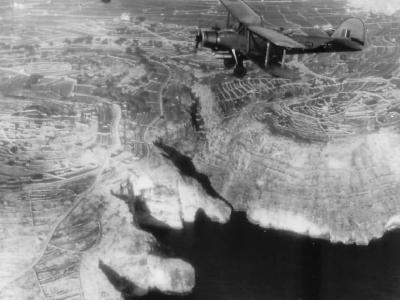
Albacore biplane torpedo bombers over Malta in 1943
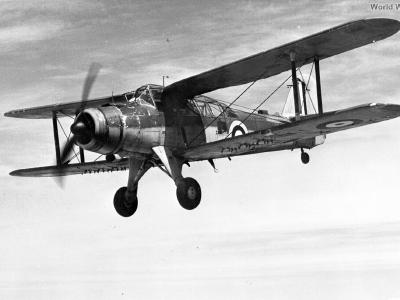
Albacore L7075 in flight
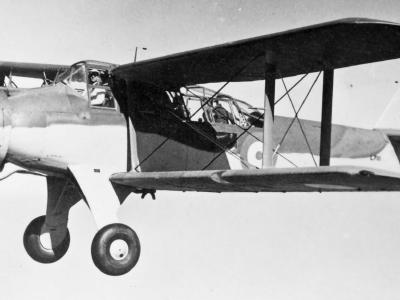
Albacore L7111 in flight
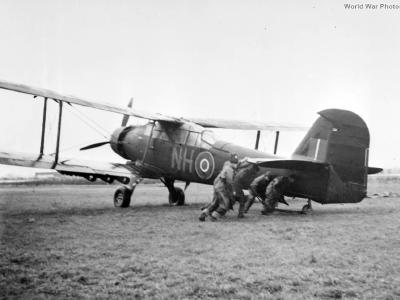
Albacore of No. 119 Squadron Belgium
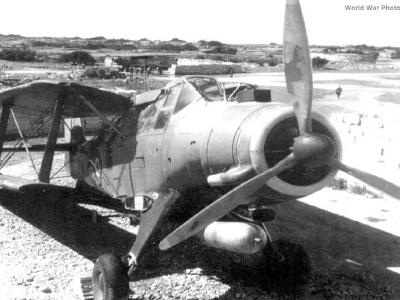
Albacore with folded wings

Albacores of 826 Squadron FAA on patrol over Libya 43
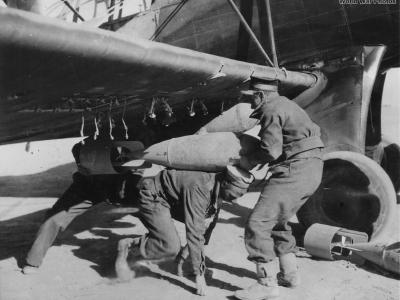
Bombing up Albacore Egypt 1942

FAA pilot supervises loading of torpedo on his Albacore
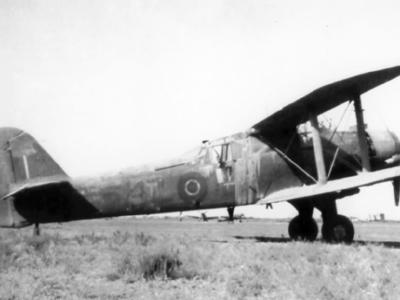
Fairey Albacore in 1942
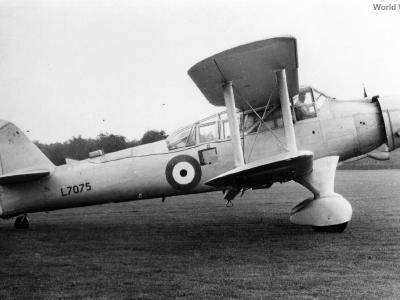
Second prototype Fairey Albacore L7075 in natural finish
British single-engine carrier-borne biplane torpedo bomber Fairey Albacore. The Fairey Albacore, nicknamed “Applecore” in Britain, was intended to replace the obsolete Fairey Swordfish torpedo bomber, which had been in service since 1936. In fact, however, both types of aircraft were used in parallel and the Albacore was taken out of service even before the Swordfish, to be replaced by the Fairey Barracuda. The Albacore prototypes were based on Air Ministry specification S. 41/36 for a three-seat torpedo bomber/observation and reconnaissance aircraft for the Royal Navy’s Fleet Air Arm (FAA). The first two prototypes took off on 12 December 1938 and series production began in 1939, with 98 aircraft initially built. The first Albacores were equipped with the Bristol Taurus II engine, later ones received the more powerful Taurus XII.
In March 1940, the No. 826 Squadron FAA was established specifically for the deployment of the first Albacores. The first carrier-based units entered service in 1941. Eventually there were 15 FAA squadrons equipped with Albacores. These fought in the Mediterranean, the Battle of Cape Matapan, the Battle of El Alamein in 1942, the Sicily landings and the Salerno landings in 1943, among others. Between September 1941 and the end of June 1943, No. 828 Squadron FAA operated from Hal-Far in Malta during heavy attacks in the Axis siege of Malta, mainly against Italian ships and coastal targets in Sicily. In 1943 the Albacores were exchanged for Fairey Barracudas. The last British Albacore squadron, No. 841 Squadron FAA was disbanded towards the end of 1943. The Royal Canadian Air Force took over the aircraft and used them during the Normandy invasion.
Total production: 800
Serials
L7074-L7173 N4152-N4200 N4219-N4268 N4281-N4330 N4347-N4386 N4387-N4391 N4391-N4425 T9131-T9175 T9191-T9215 T9231-T9260 X8940-X8984 X9010-X9059 X9073-X9117 X9137-X9186 X9214-X9233 X9251-X9290 BF584-BF618 BF631-BF680 BF695-BF739 BF758-BF777Bibliography:
- A. Harrison: Fairey Swordfish and Albacore, Crowood Aviation series
- A. Harrison: Fairey Albacore, Warpaint Series No. 52
- A. Taylor: Fairey Aircraft since 1915
- Fairey: Company Profile 1915-1960, Aeroplane Company Profile