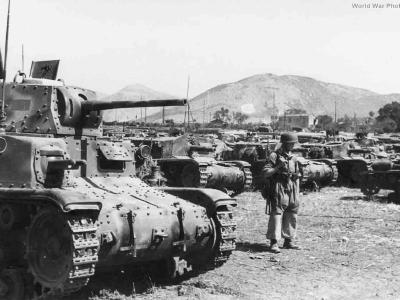
M15/42
Click the thumbnails to enlarge them
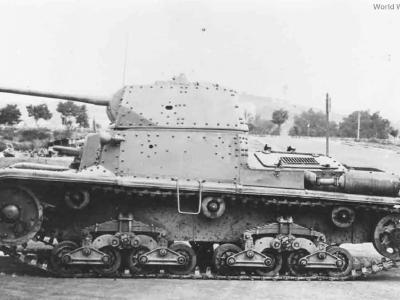
Carro armato M15/42 left side
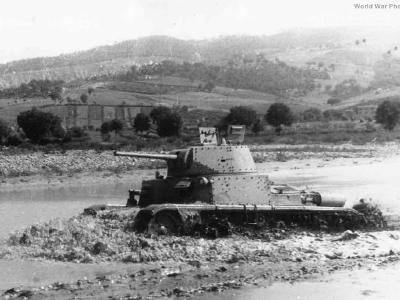
Carro armato M15/42 tank fording the river
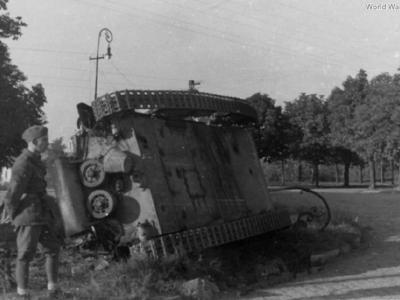
Destroyed German M15/42 of the PzAbt 202 1944
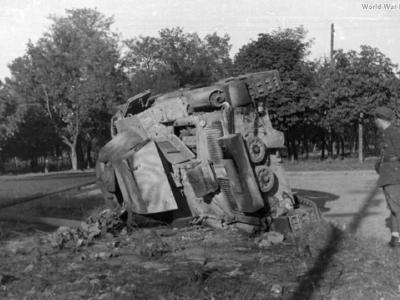
Destroyed German M15/42 of the PzAbt 202 1944 2
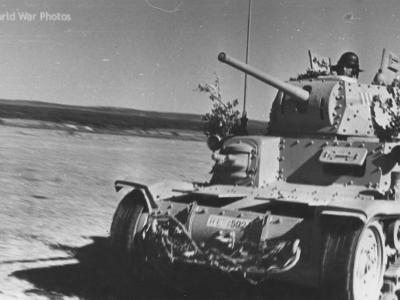
Italian medium tank M15/42 RE5924
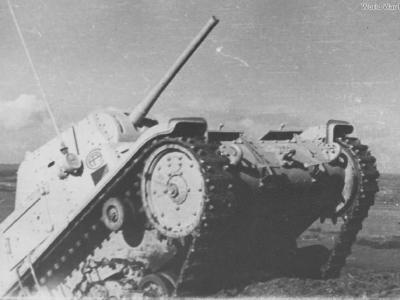
M15/42 1st prototype 1943
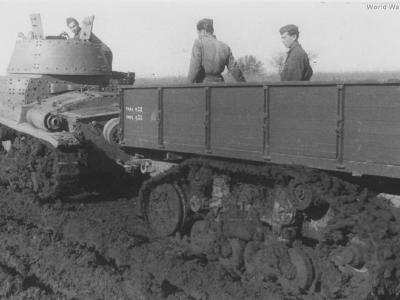
M15/42 and Viberti trailer with tracks
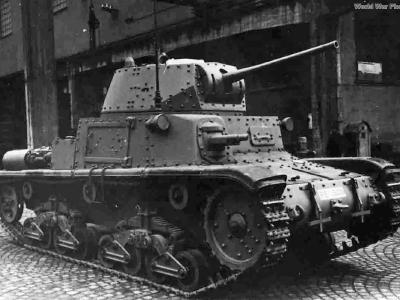
M15/42 factory fresh
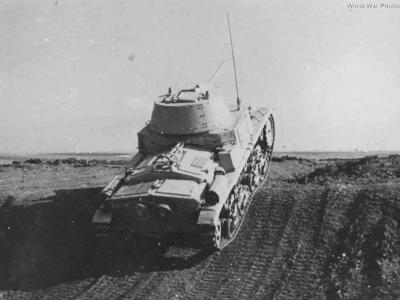
M15/42 prototype 1943
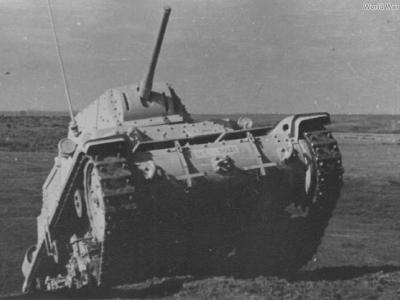
M15/42 RE5031 1943
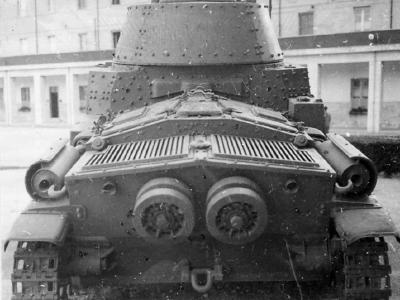
M15/42 rear view
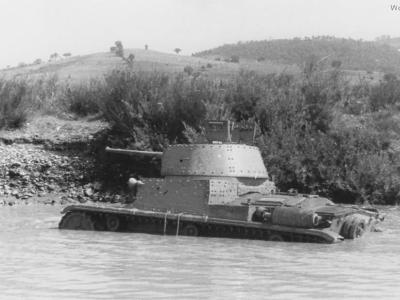
M15/42 tank fording the river 1943
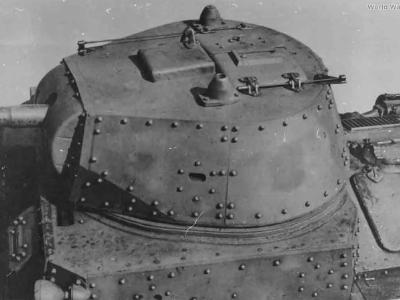
M15/42 tank turret 1943
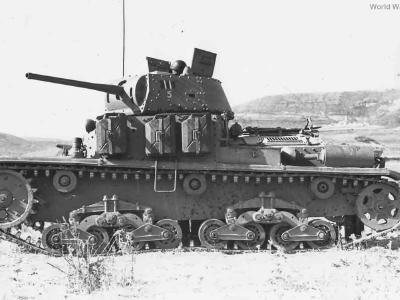
M15/42 tank, right side view 1943
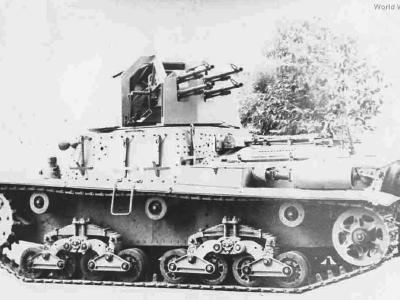
Semovente da 20/70 quadruplo
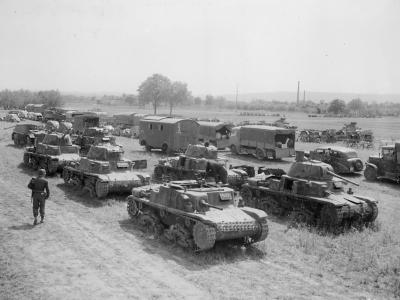
US 34th Infantry Division captures Italian tanks, staff cars and trucks, Ivrea
The Carro Armato M 15/42 represented the final evolution of the Italian medium tank series during World War II. Introduced in 1942 as a stopgap measure while the P 40 heavy tank was still in development, the M 15/42 was based on the chassis of the preceding M 14/41 but featured significant mechanical and structural improvements.
Technical Development and Propulsion
The most defining technical shift in the M 15/42 was the replacement of the diesel powerplants used in earlier Italian medium tanks with a petrol-fuelled engine. This engine, the SPA 15TB M 42, was a 12-liter, 8-cylinder V-type liquid-cooled unit producing 190 HP at 2,400 rpm. While this change increased the tank's maximum road speed to 38–40 km/h, it resulted in a significant increase in fuel consumption. To compensate, the fuel capacity was more than doubled to a total of 407 liters (367 in the main tank and 40 in reserve), which allowed for an operational range of approximately 200–220 km on road.
Structural changes included a lengthening of the hull by 15 centimeters, which required the adoption of new drive components and a gearbox with five forward gears instead of four. Consequently, the tracks were extended to 86 links.
Armament and Protection
The primary armament was upgraded to the 47/40 gun, a longer-barreled version of the standard Italian anti-tank piece. This new gun offered increased muzzle velocity, resulting in a flatter trajectory and greater armor-penetration capabilities than the earlier 47/32 model. The tank typically carried 111 rounds for the main gun.
Secondary armament consisted of:
- One 8mm Breda Model 38 machine gun mounted coaxially with the main gun.
- Two 8mm Breda Model 38 machine guns in a twin mount in the front right of the hull.
- Occasional provision for a turret-mounted machine gun for anti-aircraft defense, though this was often omitted in the M 15/42 in favor of using the coaxial weapon for that purpose.
Armor protection was slightly improved over its predecessors, with thickness ranging from 6mm to 42mm. Notable design changes included moving the hull access hatch from the left side to the right and adding armored heat shields for the exhaust pipes.
Production and Variants
In October 1942, an initial order for 280 units was placed, but this was later reduced to 220 units as the Italian military shifted its priority toward self-propelled guns. Production was completed by July 1943.
Several specialized variants were derived from the M 15/42 chassis:
- Carro Centro Radio: A command version lacking hull machine guns to provide extra internal space for RF 1 CA and RF 2 CA radio sets.
- Carro Comando per Reparti Semoventi: A turretless command vehicle for self-propelled gun units, often armed with a 13.2mm Breda 31 heavy machine gun in the hull.
- Anti-aircraft Prototype: A single prototype mounting four 20mm Scotti–Isotta Fraschini guns in a polygonal turret was tested but never entered mass production.
Operational History
The M 15/42 saw limited service with the Regio Esercito before the September 1943 armistice. Most units were assigned to the Ariete II Armored Division and were engaged in the defense of Rome against German forces between September 8 and 10, 1943.
Following the Italian surrender, the German military seized approximately 152 units, designating them as Panzerkampfwagen M 15/42 738 (i). These tanks were primarily utilized by German units in the Balkans for anti-partisan duties, though their mechanical reliability remained a persistent challenge for German maintenance crews.