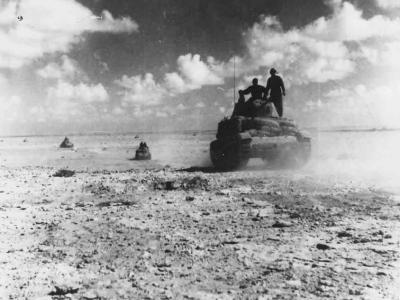
M14/41
Click the thumbnails to enlarge them
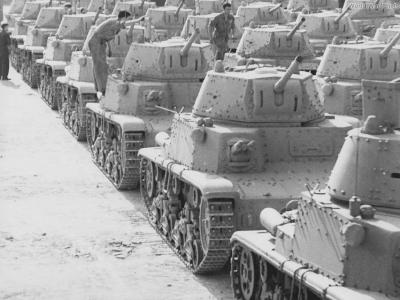
Factory fresh M14/41 tanks
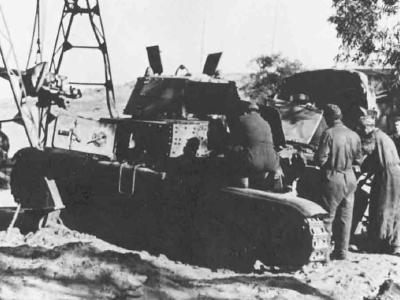
Italian medium tank M14/41 in maintenance
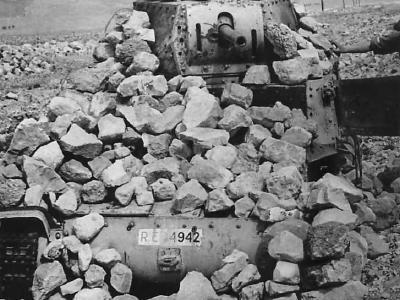
KO'd Italian M14/41 "RE4942" near Gafsa, Tunisia
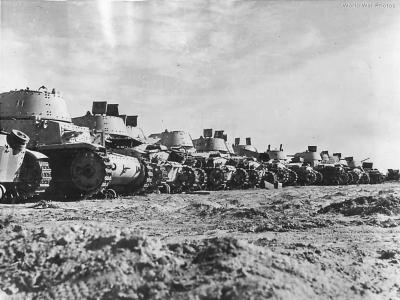
M14/41 abandoned by retreating Italians in Libya
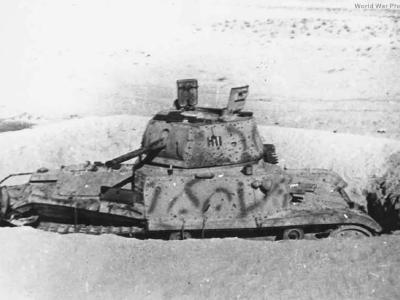
M14/41 dug out
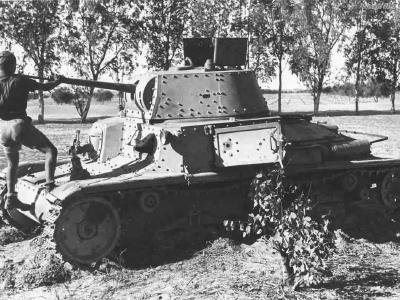
M14/41 from 132nd Armoured Division Ariete in North Africa
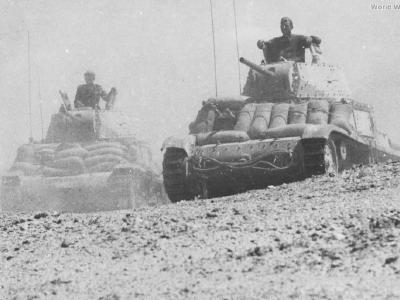
M14/41 in North Africa 1943
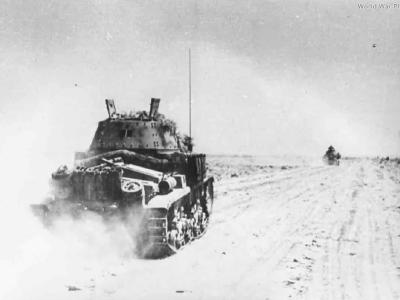
M14/41 Libia
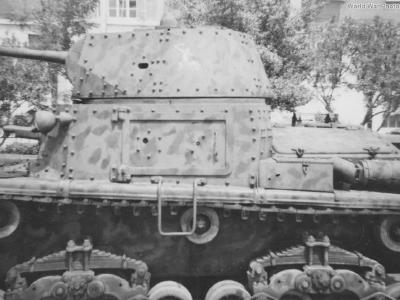
M14/41 od the 31° Reggimento Carristi (31st Tank Regiment), 131st Armoured Division "Centauro"
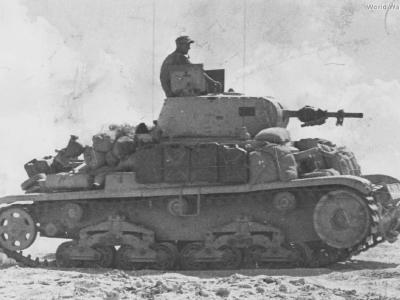
M14/41 of 132nd Armoured Division Ariete Tunisia
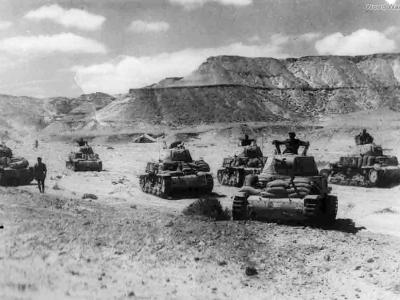
M14/41 of 133° Divisione Corazzata Littorio
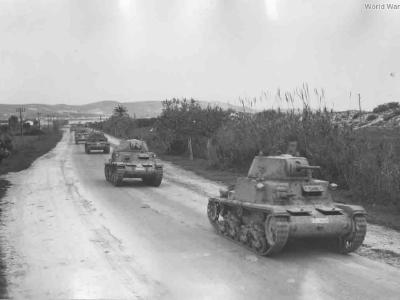
M14/41 of the 131st Armoured Division Centauro Tunisia
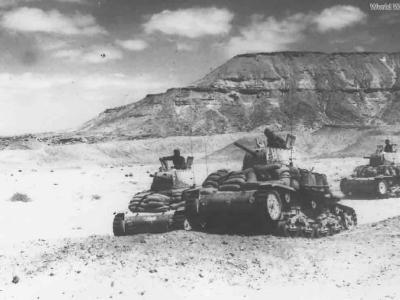
M14/41 tanks of the 133rd Armoured Division Littorio 1942
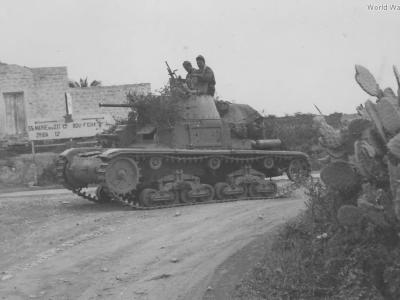
M14/41 Tunisia 1943
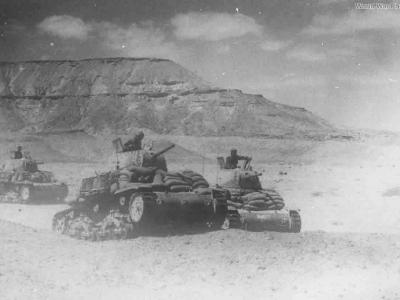
Sandbagged Carro Armato M14/41 Tunisia
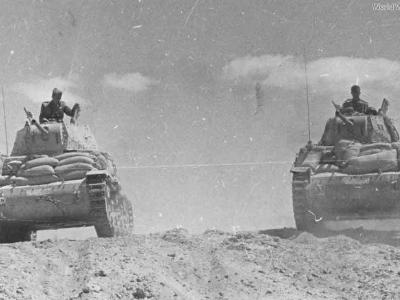
Sandbagged Carro Armato M14/41 Tunisia 2
The Carro Armato M14/41 was an evolutionary development of the Italian medium tank series, serving as a direct successor to the M13/40. While it retained the general layout and structural philosophy of its predecessor, it introduced several mechanical and external refinements designed to address the significant reliability issues encountered during operations in the North African theater.
Mechanical and Technical Evolution
The most critical upgrade in the M14/41 was the installation of the SPA 15T M41 engine, a 12-liter, 8-cylinder V-type liquid-cooled diesel. This new powerplant increased output to 145 HP, providing a modest improvement over the 125 HP SPA 8T engine used in the M13/40. Despite this increase, the vehicle remained underpowered for its 14-ton (14,500 kg) combat weight, resulting in a power-to-weight ratio of approximately 10.4 HP/ton.
To specifically combat the harsh environment of the Western Desert, the M14/41 was equipped with improved air and fuel filters and a redesigned cooling system. It also featured "mud scrapers" located behind the front drive sprockets to prevent sand and debris buildup. The maximum road speed was marginally improved to 33–35.5 km/h, with an off-road speed of approximately 15 km/h.
Design and Armament
The M14/41 utilized the same riveted and bolted construction as earlier Italian medium tanks. Externally, the M14/41 can be distinguished from later batches of the M13/40 by its full-length fenders, which featured X-shaped stiffening ribs stamped into the forward sections. Additionally, the radiator grilles on the engine deck were arranged transversally rather than longitudinally.
- Armament: The tank retained the Ansaldo 47/32 semi-automatic gun as its primary weapon. While effective against light and cruiser tanks in 1941, it was severely outclassed by the arrival of American M3 Grant and M4 Sherman tanks in 1942. Secondary armament consisted of four 8mm Breda Model 38 machine guns: two in a twin hull mount, one coaxial to the main gun, and one on a turret-top anti-aircraft mount.
- Protection: Armor thickness remained largely unchanged, with 30mm frontal plates (increasing to 42mm on the gun mantlet) and 25mm on the sides and rear. To compensate for this inadequate protection, crews frequently stacked sandbags and spare track links on the front hull, though this further strained the underpowered engine.
Operational Service
Production of the M14/41 began in August 1941, with approximately 695 to 750 units completed before it was succeeded by the M15/42. The tank saw extensive service in North Africa, notably during the final stages of the Western Desert campaign and the retreat into Tunisia.
Following the Italian armistice in September 1943, several M14/41 tanks were seized by German forces, who designated them Panzerkampfwagen M14/41 736 (i). These vehicles were primarily used in secondary roles, such as anti-partisan operations in the Balkans, though at least three are recorded to have been destroyed during the Warsaw Uprising in August 1944.
Specialized Variants
The chassis of the M14/41 served as a critical platform for other Italian armored vehicles:
- Semovente da 75/18: 162 units were built on the M14/41 chassis, representing one of Italy's most effective anti-tank platforms.
- Carro Comando M41: A turretless command version equipped with additional RF 1 CA and RF 2 CA radio sets, usually armed with a 13.2mm Breda 31 heavy machine gun in the hull.
- Semovente da 90/53: A limited run of 30 powerful self-propelled guns utilized a modified M14/41 chassis with the engine moved forward to accommodate the heavy 90mm weapon.