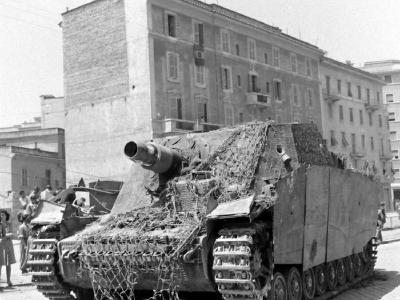
Sturmpanzer
Click the thumbnails to enlarge them
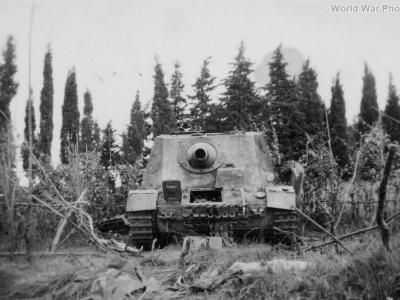
Brummbar Anzio

Brummbar Late production model rear view, June 1944
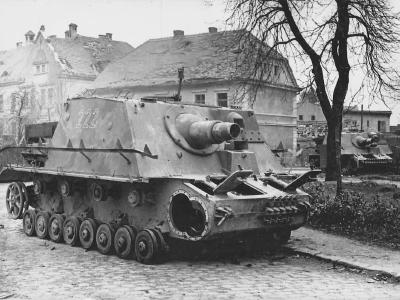
Brummbar number 222 of the Stu.Pz.Abt. 219, 1945
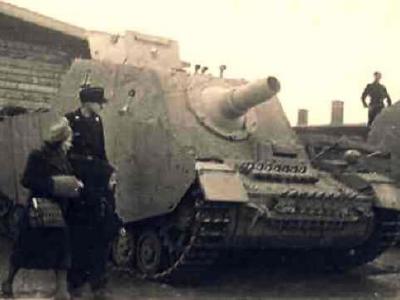
Brummbar of Sturmpanzer Abteilung 216
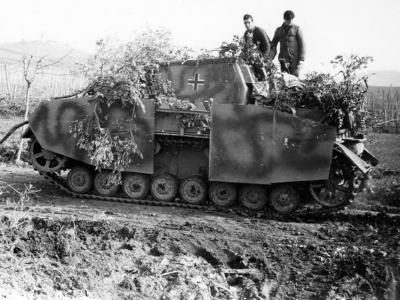
Brummbar of the Sturmpanzer-Abteilung 216, Italy 1944
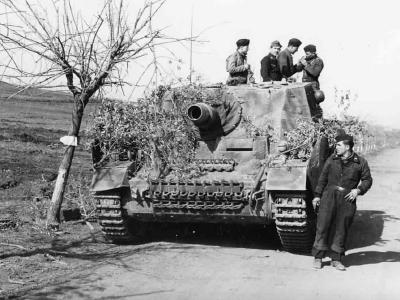
Brummbar of the Sturmpanzer-Abteilung 216, Spring Italy 1944
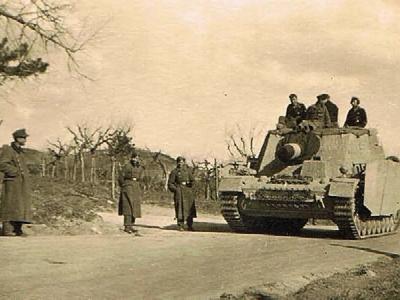
Brummbar panzer
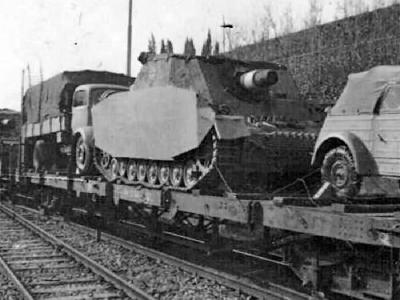
Brummbar rail trasnport
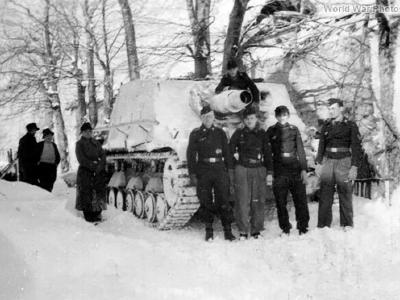
Brummbar Winter
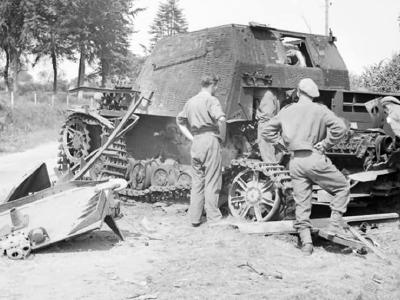
Destroyed Brummbar of the Sturmpanzer-Abteilung 217
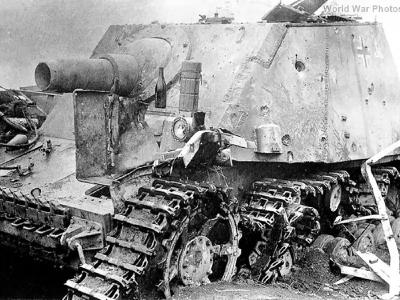
Destroyed StuPa
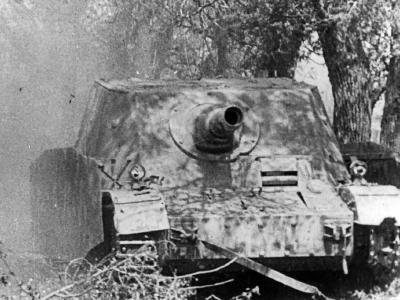
Heavy assault gun Sturmpanzer IV, Summer 1943
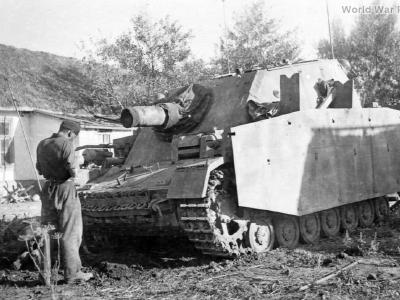
Italy 1944
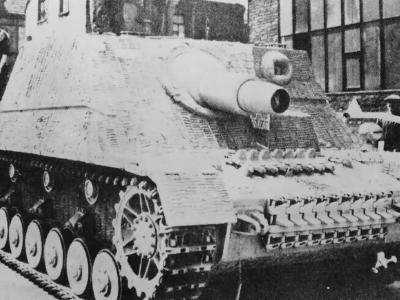
Late Brummbar with zimmerit, Duisburg 1944
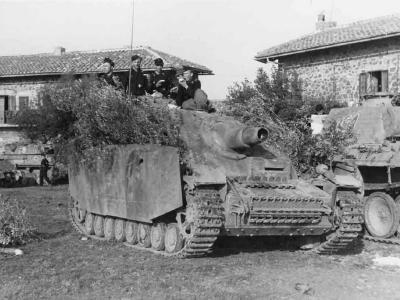
Panther and Brummbar of the Sturmpanzer-Abteilung 216, Italy 1944
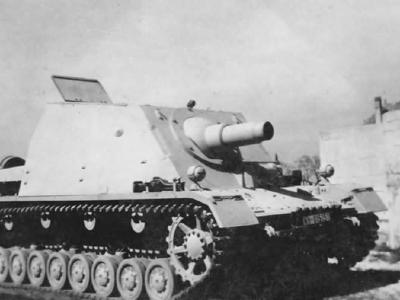
Prototype of Sturmpanzer IV
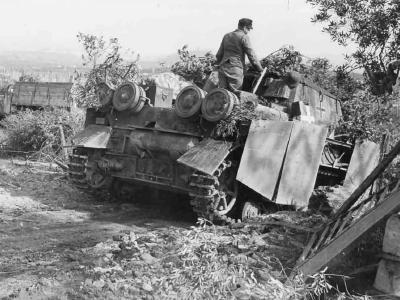
Sturmpanzer 43 of the Sturmpanzer-Abteilung 216, Italy 1944

Sturmpanzer 43 Sturmpanzer IV Brummbar Sd Kfz 166 St. Polten 1944
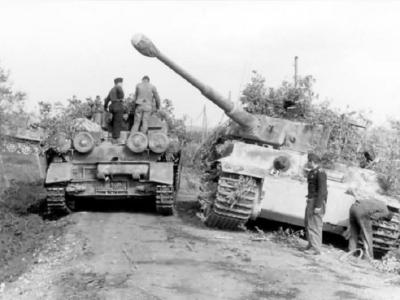
Sturmpanzer Brummbar and Tiger of schwere-Panzer-Abteilung 508 near Nettuno Italy 1944
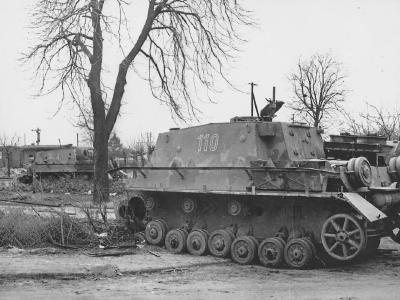
Sturmpanzer Brummbar number 110 of the Stu.Pz.Abt. 219, 1945
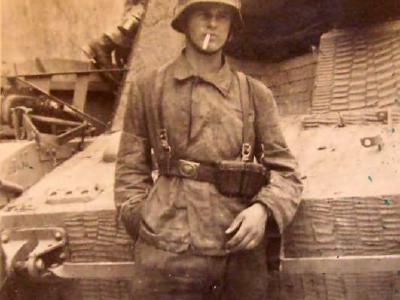
Sturmpanzer Brummbar with zimmerit
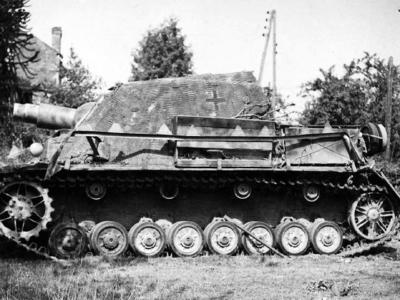
Sturmpanzer IV (mid production) left side
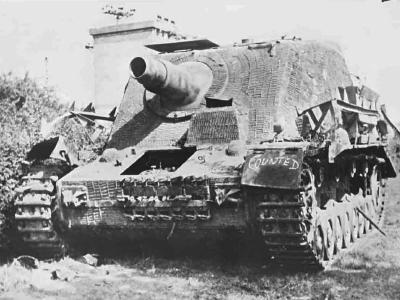
Sturmpanzer IV Brummbar (mid production)
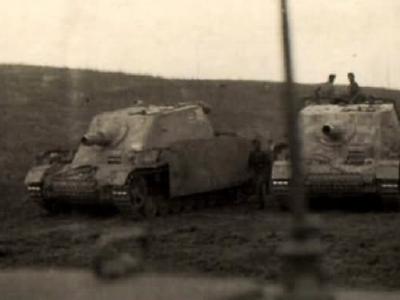
Sturmpanzer IV Brummbar german gun. Battle of Kursk "Operation Citadel "
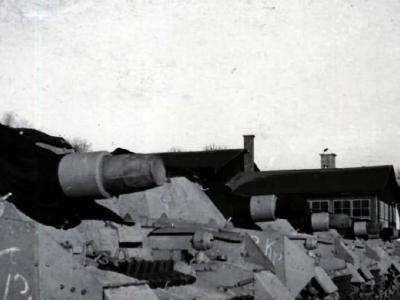
Sturmpanzer IV Brummbars
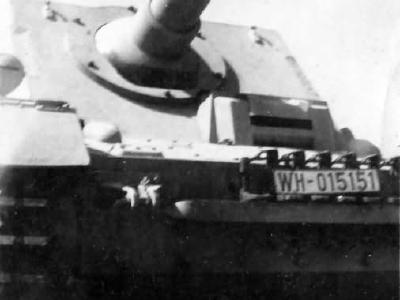
Sturmpanzer IV Sd.Kfz. 166 Brummbar prototype
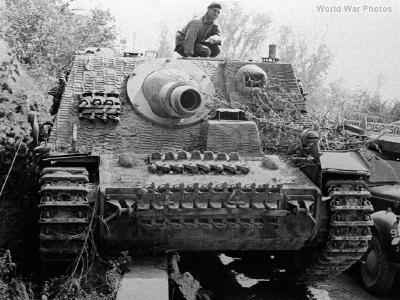
Sturmpanzer-Abteilung 217
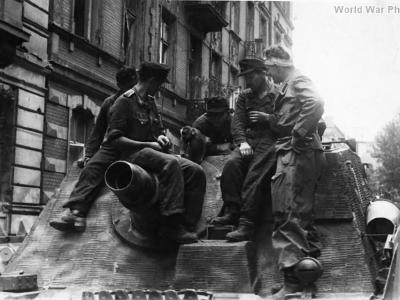
Sturmpanzer-Kompanie z.b.V. 218
Sturmpanzer IV Brummbär was german armoured infantry support gun based on the Panzer IV chassis. Also known as Sturmpanzer 43 or Sd Kfz 166.
History
Since the StuG assault guns were used more and more as tank destroyers, the infantry lacked a support vehicle. Moreover, during the battles in Stalingrad, it turned out that the previous assault guns did not have sufficient firepower in the city battle. The available vehicles were gapped fillers such as the SiG 33 B on Sturmgeschütz III chassis or like the Sturmpanzer I on converted chassis antiquated tanks, both equipped with a 15 cm howitzer sIG 33. The StuG III, on the other hand, was unable to bring down an average city building with two or three shots, as was now demanded. On June 9, 1941 it was therefore demanded to mount a 15 cm sIG 33 on a heavily armored chassis. Therefore, it was decided to construct a large-caliber on the chassis of the Panzerkampfwagen IV. The result was Sturmpanzer IV, called "Brummbär" by the allied forces. The German troops cut off this name with "StuPa". He received the Sturmhaubitze 43 from the sIG 33 in a caliber of 150 mm and was thus ideally suited for the task of infantry support. The design was strongly oriented to the highly successful StuG III. On 20 October 1942, after seeing Alketts plans Hitler demanded that 40 - 60 Sturmpanzer IV be built as soon as possible. On 7 February 1943 the first wood models were presented to him in original size. Convinced of the troops' need for these vehicles, he ordered an investigation to see if and how destroyed and damaged Panzerkampfwagen IV could be converted. The production was approved. A first series of 40 vehicles should be completed by 12 May, another 20 vehicles should follow. By April 1943, the vehicle had been designated Gerät 581 – Sturmpanzerwagen 604/16 (Alkett) sIG auf Panzer IV mit kardanischem Fahrwerk. In April 1943 the type number Sd.Kfz. 166 have been awarded. On Hitler's instructions, the vehicle was not assigned to the artillery as the assault-guns, but fell into the responsibility of the Panzerwaffe, and he also ordered the name Sturmpanzer. The most common designations are the Sturmpanzer IV or the Sturmpanzer 43. On the basis of repaired Panzerkampfwagen IV chassis, the Heereszeugamt Wien set up twenty vehicles in April 1943, another 40 followed in May. A major revision took place for the second and third constructions of which 60 vehicles were produced between November 1943 and May 1944 on the basis of new chassis of the Nibelungenwerke in Sankt Valentin. The superstructure was made in the Eisenwerken Oberdonau and Böhler in Kapfenberg. The Austrian companies Saurer and Simmering-Graz-Pauker were responsible for the production. From spring 1944 the development and production responsibility was transferred to the Deutschen Eisenwerke in Duisburg. The first vehicles produced there were delivered from June 1944 onwards. The first tests showed a weight of 28.2 tons (including 5 men, crew and 38 rounds of ammunition for the 15 cm sIG 33), so the engine and chassis were heavily overloaded. After initail run, the production of a long term series went ahead in November 1943 and continued until the end of the war. The 60 vehicles of the early production were equipped with the 15-cm-Sturmhaubitze 43 L/12. Starting from December 1944 the 15 cm Sturmhaubitze 43/1 L / 12 was used. Compared to the previous model, this was lighter in weight. From the late version, an MG 34 was installed in the front of the superstructure.The following two types of ammunition were used in Sturmpanzer IV: Igr 38 FES - 38 kg HE grenade against buildings, bunkers and field positions Igr 39 H.I/A - a 25 kg shell against fighting armored vehicles Total production: 306 guns.
Specifications
| crew | 5 |
| armor | front: 100 mm, sides: 50 mm, rear 20 mm, top: 20 mm, bottom: 10 mm |
| main armament | 15 cm StuH 43 L/12 (32 rounds) |
| secondary armament | 1 x MG34 or MG42 (600 rounds) |
| weight (kg) | 28200 |
| length (mm) | 5800 |
| width (mm) | 2860 |
| height (mm) | 2450 |
| track base (mm) | 3520 |
| ground pressure (kg/cm2) | 0,85 |
| engine | Maybach HL 120 TRM, 300 hp at 3000 rpm. 12 cylinder, water-cooled, gasoline 11867 cm3 |
| transmission | ZF SSG 76 Aphon, 6 forward, 1 reverse |
| fuel capacity (l) | 470 |
| fuel consumption (l) (road / off road) | 250/350 |
| range (road km/ off-road km) | 210/130 |
| speed (km/h) | 40 |
| number of links per track | 99 (type: Kgs 61/400/120) |
| ground clearance (mm) | 400 |
| trench crossing (mm) | 2200 |
| vertical obstacle (mm) | 600 |
| fording ability (mm) | 1200 |
| climbing ability (degrees) | 30 |
| turning circle (mm) | 5920 |
| manufacturer | Nibelungenwerke |
| chassis numbers | 80501 - 84400, 86601 - 87100, 89101 - ? |
Bibliography and sources
- Nashorn, Hummel, Brummbär, Waffen-Arsenal 3 (german)
- Markus Jaugitz: Der Sturmpanzer IV "Brummbar", Waffen-Arsenal 160 (german)
- George Parada, Krzysztof Mucha: Sturmpanzer IV Brummbar, Kagero Photosniper 12 (Polish/English )
- Janusz Ledwoch: Hummel, Nashorn, Brummbär - Wydawnictwo Militaria 16
- Waldemar Trojca, Markus Jaugitz: Sd.Kfz.166 Sturmpanzer "Brummbär" Vol.1, Trojca 4
- Tom Cockle: Battle on Two Fronts 1944-45, Concord Armor At War Series 7048
- Samir Karmieh, Krzysztof Mucha, Łukasz Gładysiak: Sturmpanzer IV Brummbär, Kagero Photosniper 3D
- Hiromu Araki: Achtung Panzer No. 4