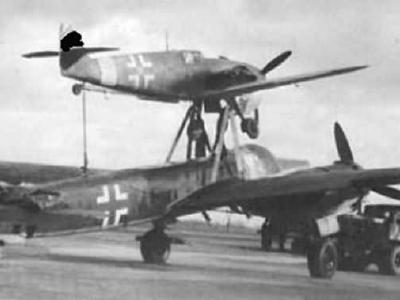
Mistel
Click the thumbnails to enlarge them
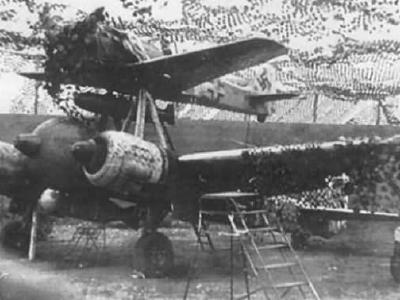
Mistel 2 Ju88 and Fw 190
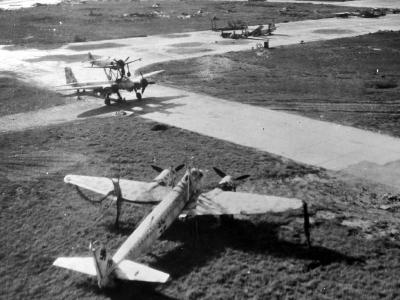
Mistel aircrafts in Bernburg
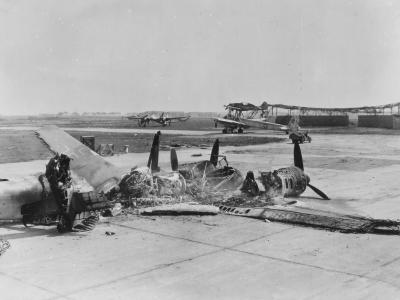
Mistel Bernburg Junkers factory 1945
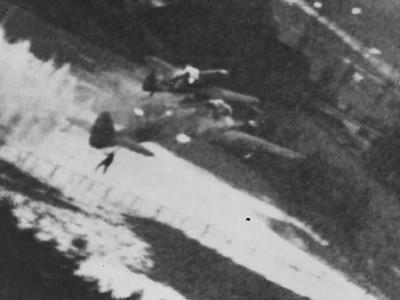
Mistel Bf109 + Ju88 in gun camera
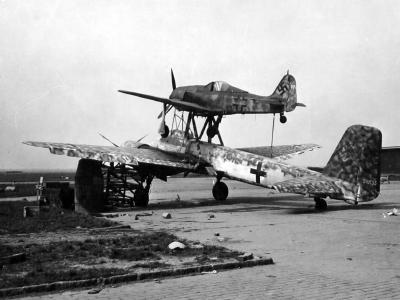
Mistel Fw190 + Ju88 590153 Merseburg Germany
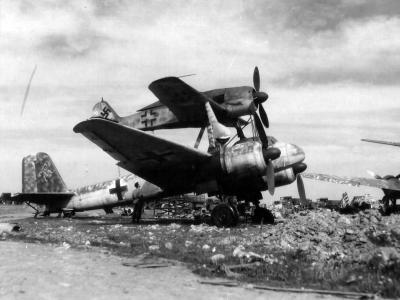
Mistel Fw190 + Ju88 found by the Allies just after the war.

Mistel in gun camera Germany 3 February 1945
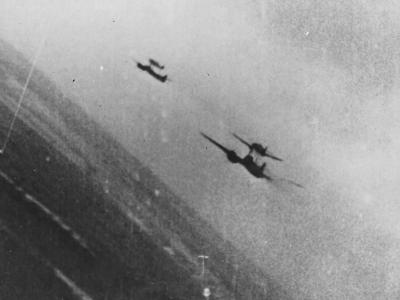
Mistel in gun camera over Belgium
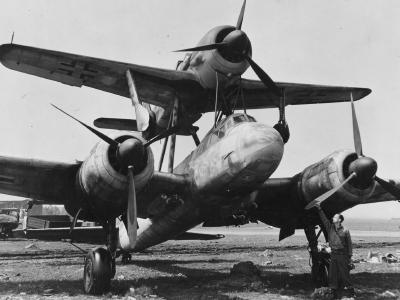
Mistel Ju88 + Fw190 found by the Allies just after the war. in Bernburg
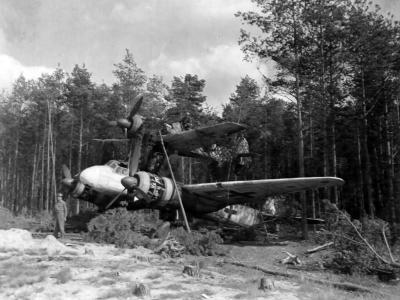
Mistel near Gardelegen Germany
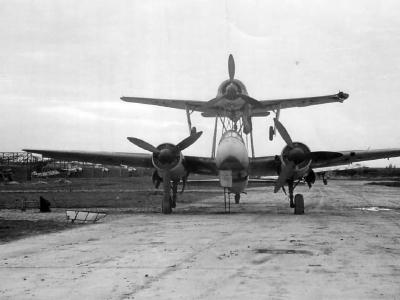
Mistel S2 aircraft
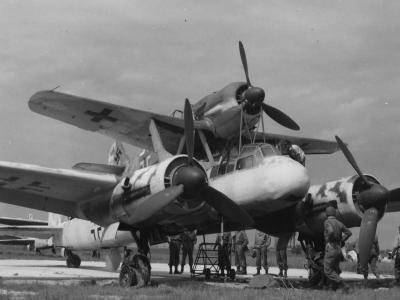
Mistel S2 Bernburg
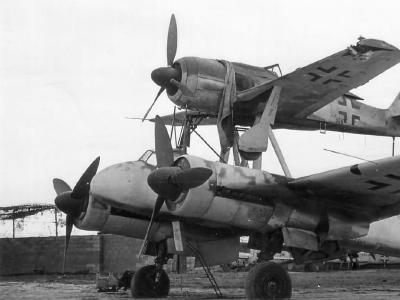
Mistel S2 Fw190 and Ju88 found by the Allies just after the war.

Mistel S2 Ju 88 and Fw 190 Merseburg Germany 1945
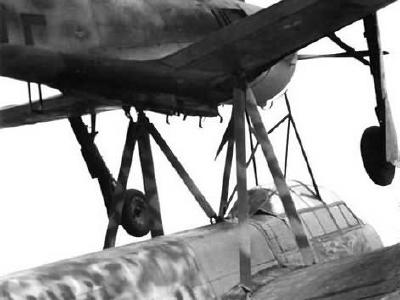
Mistel S2 Ju88 + Fw 190
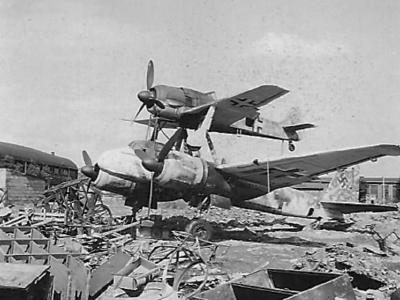
Mistel S2 Ju88 + Fw190 1945
The Mistel composite, also know as the Beethoven-Gerät, consisted of the Ju 88 bomber as the lower component. Above the Ju 88, which was an unmaned flying bomb, there was a single-engine fighter placed on a special scaffolding called Huckepack. The combination was being steered by a pilot in the fighter. In principle, the Mistel would approach the target (at a distance of about 3km) and the pilot, after seeing an object of the attack, would trigger the mechanism coupling the sighting devices of both aircraft. Then, after a short dive at an angle of 30˚ the single-engine fighter would detach itself from the bomber which would be programmed to continue the flight toward the target. The initiator of the construction of the new weapon was Siegfried Holzbauer the engineer working at Junkers company. Initially, his idea was lukewarmly received by the RLM and rejected in 1941. However, in 1942 at the DFS institute the Hozbauer’s concept was recovered. First trials, with varying degrees of success, were carried out on the light aircraft and gliders. In 1943, the Technisches Amt ordered the standard Mistel version consisting of the Junkers Ju 88 bomber and the Messerschmitt Bf 109 F. In 1943, the first batch of 15 Mistels S1 was produced and directed to IV/KG 101 in order to train crews. The training was very hard due to the unusual aerodynamics of the composite. Because of the Allied air superiority the results of the Mistels attacks were rather average and the losses were high. The Germans, though, placed high hopes in their new “wonder-weapon”. Even in 1945 several projects were created to adapt jet aircraft to carry flying bombs. All of those projects, however, weren’t realized due to the end of hostilities. After the war, several copies of the Mistels were in the hands of the Allied Armies. However, they didn’t arouse their enthusiasm. Siegried Holzbauer’s automatic sight was a different matter. It aroused a great interest. It was copied and became the basis for subsequent homing systems.